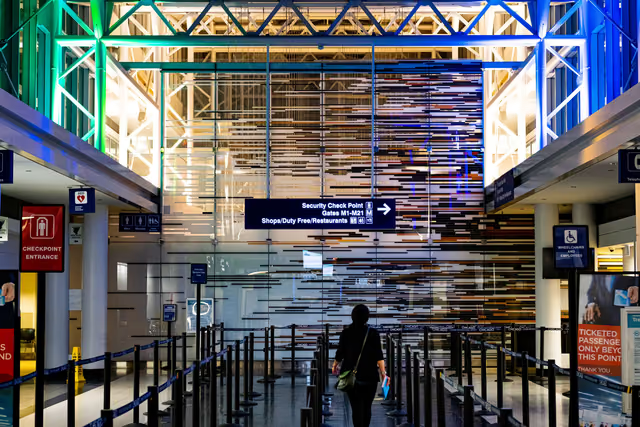



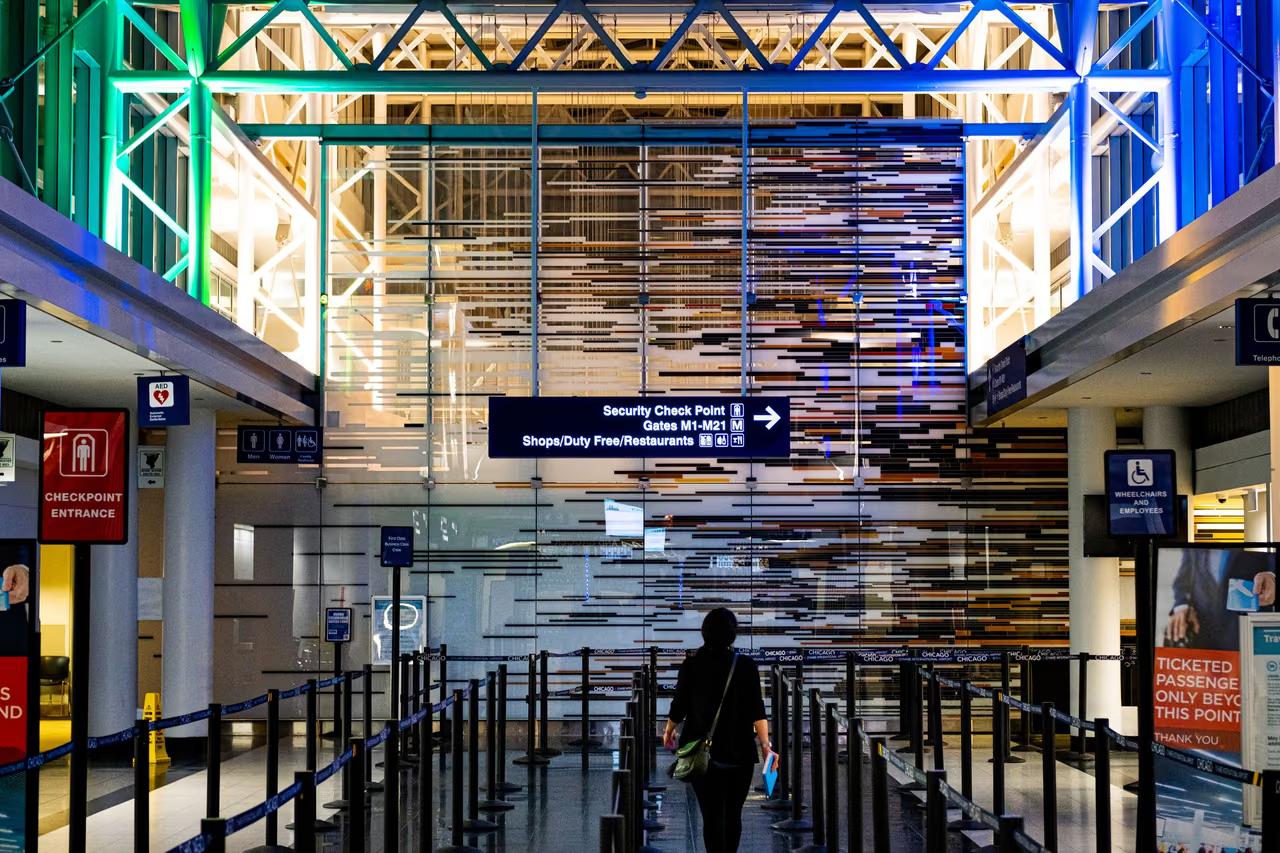
Every perk has a shelf life. I think TSA PreCheck just reached the end of its first one.
That's the cheeky version of this column, and I'll admit it's fun to say. In August 2024, TSA said PreCheck had passed 20 million active members, a record for a program that launched in December 2013. A shortcut that crowded starts to look a lot like the main road.
But the honest answer to whether TSA PreCheck is still worth getting is yes, get it anyway. What changed is the reason, and that change matters for anyone deciding which airport perk to pay for next.
I've seen the version of this that doesn't work. More than once, at checkpoints where TSA was clearly short on staff, I've been handed a card or coupon for "PreCheck." All it got me was a pass on the body scanner. I still took my shoes off, still pulled my laptop out of my bag and still followed every other rule of the regular lane.
That card said PreCheck, but all it really did was fill a lane on a bad day. And it's a pretty good picture of what happens to a perk once everyone gets one: the name survives, and the thing it named gets thinner. The lane itself is changing too: TSA's administrator has said the agency plans redesigned PreCheck lanes with body scanners at seven airports within six weeks.
A Perk Is Only a Perk While It's Scarce
Here's the economics, minus the textbook. A shortcut is valuable because most people aren't on it. Every new person who joins makes it a little less of a shortcut, and past some point the people who never joined become the ones who notice.
The value doesn't vanish. It moves from having the thing to the cost of not having it.
Say a checkpoint runs one special lane and one regular lane. If one traveler in ten qualifies for the special lane, those few people breeze through and everyone else barely notices. If eight in ten qualify, the special lane is the busy one, and the two people stuck in the regular lane are the ones having a bad morning.
Nobody in that second picture feels lucky to be in the special lane. They'd only feel unlucky to be out of it.
PreCheck made joining about as easy as it gets. TSA's own page promises "five years of benefits for $85 or less," and the same page lists a new enrollment with its three providers at $79.75 (IDEMIA), $85.00 (Telos) and $84.95 (CLEAR). TSA keeps a page of credit cards and loyalty programs that "may cover the application fee."
Children 12 and under can go through the PreCheck lane with a parent who has the indicator, and teens 13 to 17 can when the indicator is on their own boarding pass. TSA also says military service members are eligible for free PreCheck.
Cheap, often reimbursed, and shared with the kids. In my view, that's how PreCheck went from a shortcut for frequent travelers to the baseline for frequent travelers. If you fly a lot and have a travel card, you probably have it, and I'd bet most of the people in your boarding group do too.
The Penalty Moved to the Regular Lane
This is where the cheeky premise falls apart, at least on the numbers TSA publishes. TSA's PreCheck page says "TSA PreCheck lanes move faster. About 99% of passengers wait less than 10 minutes." When TSA announced the 20 million mark, it said its wait time benchmarks were "under 10 minutes" for PreCheck lanes and "under 30 minutes for standard lanes." By TSA's own yardstick, the PreCheck lane is still the faster one.
TSA's page still lists benefits at the bin, too. TSA says that with PreCheck you "leave in your bag electronics and 3-1-1 liquids" and leave on belts and light jackets.
So the lane still works. What I think changed is who's left behind. The frequent flyers moved to the PreCheck lane years ago, and the regular lane is now the place for people who fly once or twice a year, and for anyone who didn't bother.
Skipping PreCheck used to mean passing on a nice extra. Now it means opting into the slow line on purpose.
One thing PreCheck never was is a guarantee. TSA puts it plainly: "All travelers will be screened, and no individual is guaranteed expedited screening."
The Next Scarce Thing Costs More
When a perk becomes the floor, the edge moves up a tier, and the next tier always asks for more.
The first one is TSA PreCheck Touchless ID, which uses facial comparison in dedicated lanes. TSA says it's available at 65 airports. To use it, you need current PreCheck, a valid passport, and an airline profile with a participating airline (American, Alaska, Delta, Hawaiian, Southwest or United) or Google Wallet.
You still have to carry a REAL ID-compliant physical ID and show it if an officer asks. The price of entry here is a passport and flying from the right airports.
The second is CLEAR+, which CLEAR sells for $219 a year with access to more than 150 CLEAR+ Lanes across 62 airports. You can add up to three adults for $125 each, and kids 17 and under join free. CLEAR says its members "save 4 hours per year on average." If you enroll in PreCheck through CLEAR, TSA's page notes you get a one-time code to join CLEAR+ for $134.
That's the pattern. The thing everyone has costs $85 or less for five years. The next tier up costs $219 every year. Scarcity is what you're paying for, and the points traveler's job is to decide which tier actually pays back.
What I'd Do
Treat PreCheck as the minimum, then think harder about the next step.
- Get PreCheck. It's the floor now, and standing below it costs you time on every trip. Our TSA PreCheck guide covers cost, enrollment and what the lane gets you.
- Don't pay for it yourself if you can help it. TSA lists cards and loyalty programs that may cover the fee, and our rundown of ways to get PreCheck, Global Entry and CLEAR for free shows the routes. To compare the cards side by side, see our list of the best credit cards with TSA PreCheck and CLEAR benefits.
- Opt in to Touchless ID if you qualify. If you have a passport and fly one of the participating airlines, our Touchless ID guide walks through opting in.
- Decide on CLEAR by your own airports. CLEAR earns its fee when your home airport and the ones you fly to most have CLEAR+ Lanes and you fly often enough to use them. Our breakdown of PreCheck vs. CLEAR helps you run that math for your trips.
And once you're in whichever lane you picked, keep your phone out of the bin. Here's where your phone should go at security instead.
If everyone has PreCheck, no one has an edge from it. Get it anyway, then spend your real decision on whether the next tier is worth paying for at the airports you actually use.