


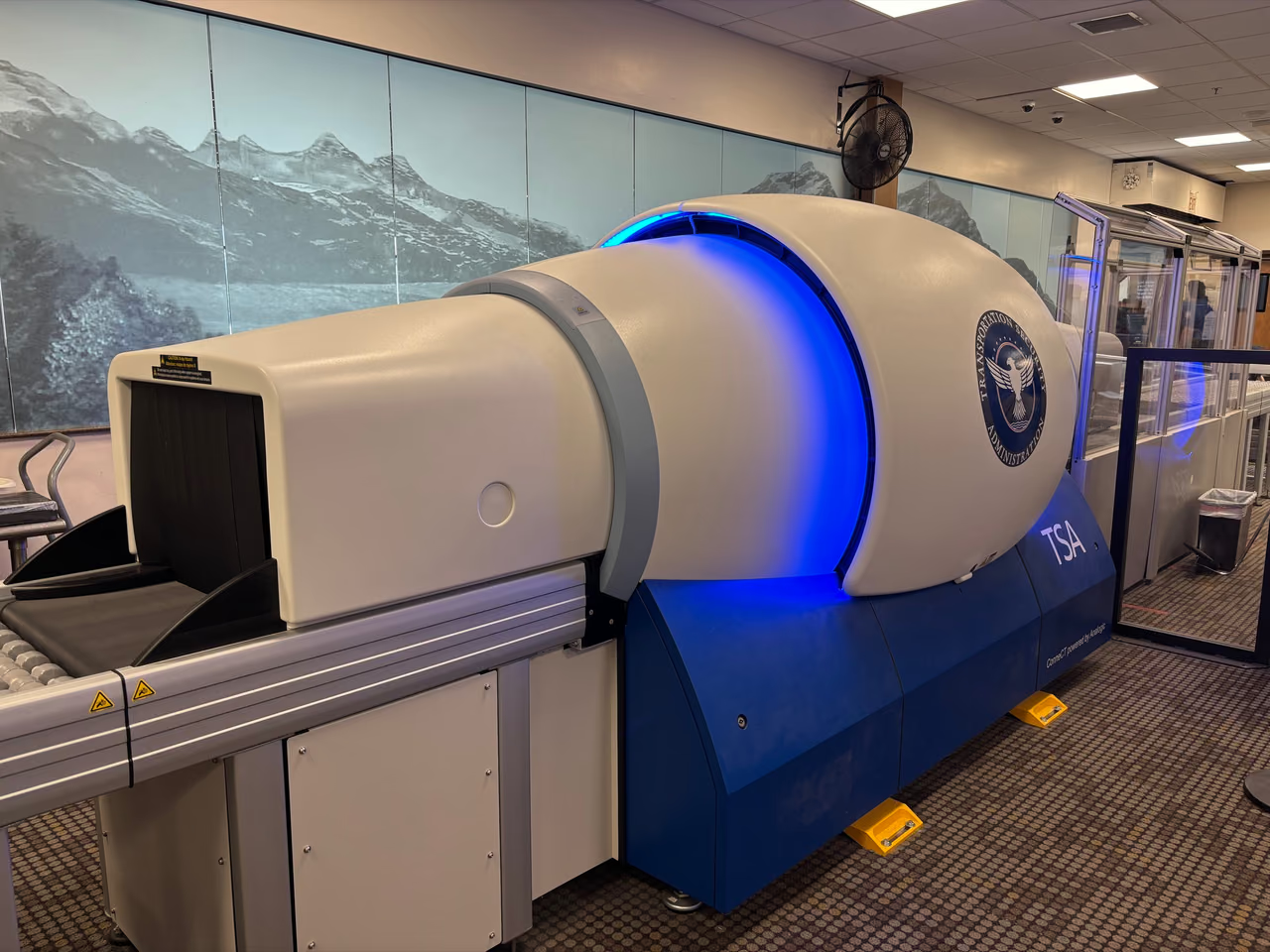
TSA says its CT checkpoint scanners have a slightly smaller entry tunnel and that not all larger carry-on bags will fit. Its advice is to check large carry-on items with the airline. TSA said this in a July 13, 2026 release on new CT machines at Juneau International Airport, and it's the line to know as of October 1, 2026, if you travel with a carry-on packed to the limit.
A bag your airline accepts in the cabin isn't the same test as a bag that fits through TSA's machine. Here's what TSA has said about CT lanes and how to avoid a trip back to the check-in counter.
What TSA Says About Bag Size
The wording comes from TSA's Juneau release: "CT units have a slightly smaller entry tunnel, and not all larger carry-on bags will fit into the units. TSA recommends that large carry-on items be checked with the airline."
Your airline sets the carry-on limit, and our carry-on size chart lists those limits for ten major airlines. TSA's machine is a separate check at the checkpoint.
Everything Goes in a Bin
The other change at a CT lane is the bin. In the same release, TSA says that with the new CT scanners, "all carry-on items, including roller-bags, need to be placed into a bin for screening instead of being placed directly on the conveyor belt."
If you're used to sliding your roller bag straight onto the belt, plan for a bin at CT lanes.
What You Can Leave in Your Bag
TSA's two pages word this a little differently. The Juneau release (July 13, 2026) says passengers at those CT machines can leave laptops and other electronics in their carry-on bags, and don't need to remove travel-sized 3-1-1 liquids. TSA's computed tomography page says laptops are allowed to remain in the bag under current screening procedures for this technology, and calls keeping both laptops and 3-1-1 liquids in the bag a goal for the future.
Follow the officers' instructions at your lane. If you still pack liquids, the 3-1-1 rules apply.
How CT Screening Works
TSA's CT page describes the machines as checkpoint X-ray equipment that builds a 3-D image of a bag, which officers can rotate 360 degrees. Algorithms flag explosives and other threats, including liquids. In the Juneau release, TSA says this ultimately reduces the number of carry-on bags that need to be opened and inspected by hand, though an officer will still inspect a bag that needs more screening.
How to Avoid a Bag That Won't Fit
- Check it if it's big. That's TSA's own recommendation for large carry-on items, and it's far easier at the start of your trip than after you've stood in the security line.
- Empty your pockets into your bag. TSA asks travelers to put keys, phones and loose change in their carry-on instead of in bins, so nothing gets left behind.
- Get there early. TSA encourages it, and it gives you time to check a bag if you need to.
If you fly often, our TSA PreCheck guide covers what PreCheck still saves you at the checkpoint.
The Bottom Line
TSA says some larger carry-ons won't fit its CT scanners and recommends checking them. At CT lanes, every carry-on item goes in a bin. If your bag is at or near your airline's limit and bulging, check it at the counter before security.