


Royal Caribbean and Norwegian sell the same thing at roughly the same price, and the fare you compare on a booking site is not the number that decides which one costs you less.
The difference shows up in what is bundled, what is sold onboard, and how each line's dining model shapes the rest of your week. Get those three right and the value question answers itself for your particular trip. Compare headline fares alone and you will pick wrong about half the time.
Here is how the two lines actually differ, and the method for pricing them against each other properly.
The Structural Difference
Norwegian built its product around removing fixed schedules. No assigned dining times. No assigned tables. The line calls it freestyle cruising. You eat when you want, where you want, in whatever you happen to be wearing.
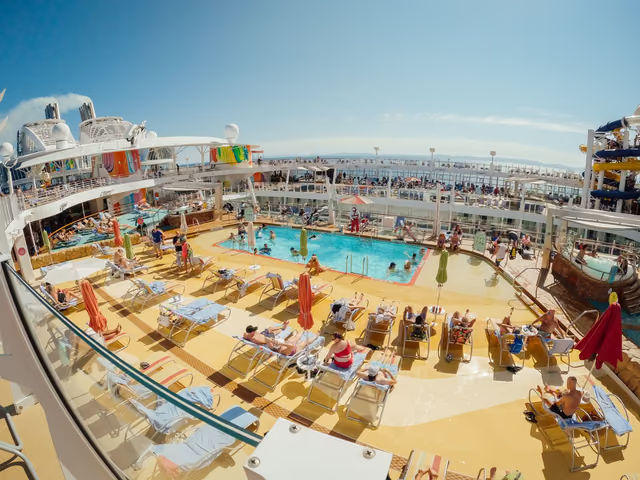
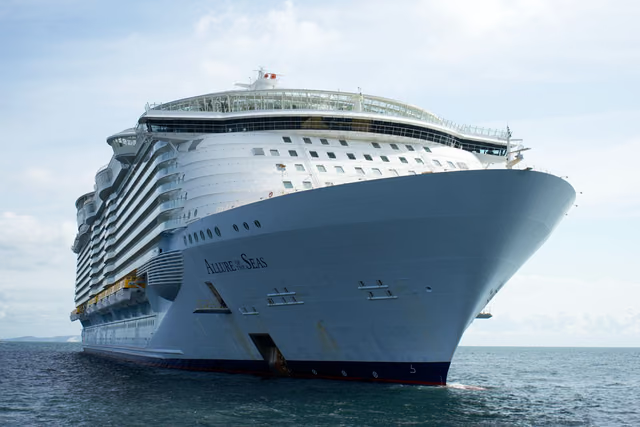
Royal Caribbean kept more of the old structure. It offers main dining room seatings alongside flexible options, and put its energy into the ships instead. The largest ones are built as destinations. Multi-deck attractions, big stage shows, and a schedule of things to do that runs from morning until late.
That single split drives most of what follows. Norwegian optimizes for flexibility. Royal Caribbean optimizes for onboard experience density.
Neither is better in the abstract. They suit different weeks.
Why the Fare Comparison Misleads
Both lines run a base fare plus a stack of additional charges, and the mix differs enough that two similar fares can produce very different final bills.
The charges that move the number most:
- Gratuities, typically charged per person per day and often auto-added to your onboard account
- Beverage packages, which are the single largest add-on for most travelers
- Specialty dining, since the included restaurants are a subset of what is on the ship
- Wi-Fi, which remains expensive at sea on both lines
- Shore excursions booked through the line rather than independently
- Port fees and taxes, which are sometimes shown separately from the advertised fare
Norwegian has historically leaned on promotional bundles that fold several of these into the fare at booking. Royal Caribbean more often prices them separately and runs periodic sales on individual packages.
So a bundled Norwegian fare can look higher and land lower. An unbundled Royal Caribbean fare can look lower and land higher. Or the reverse, depending on what each line is promoting when you book. Both change promotions often, so any claim about which line is cheaper goes stale fast.
The Only Comparison That Works
Price both trips as a total, per person, per day, all in.
Build the number this way. Start with the fare for your actual cabin category on your actual dates. Add gratuities for the full sailing. Add the beverage package only if you would genuinely use it, and be honest about that, since the break-even is usually four to six drinks a day. Add specialty dining for the nights you would actually book it. Add Wi-Fi if you need to be reachable. Add port fees and taxes if they are quoted separately.
Divide by the number of nights and the number of people.
Now compare. That number is the only one that means anything, and it routinely reorders which line is cheaper relative to the headline fare.
Two things to hold constant while you do it. Compare the same cabin category, since an interior on one line against a balcony on the other tells you nothing. And compare the same itinerary length, because per-day costs shift on shorter sailings where fixed fees spread across fewer nights.
Where Each One Fits
Royal Caribbean suits activity-driven trips. If you are travelling with children or teenagers, or with a group that wants a full schedule, the larger ships carry more to do than a week can absorb. The entertainment production values are genuinely high. If your idea of a good sea day involves not running out of options, this is the stronger fit, and our look at a Wonder of the Seas cruise shows what a family gets on one of the largest ships.
It also suits travelers who want the ship to be the destination, and some Bahamas sailings add a paid beach day too, as our guide to Royal Beach Club Paradise Island prices and booking explains. On the largest vessels, the ports are almost secondary.
Norwegian suits flexible, adult-leaning trips. No fixed dining time is a bigger quality-of-life difference than it sounds, particularly for couples, for late risers, and for anyone who dislikes being assigned a table with strangers for seven nights.
It also tends to suit travelers who prefer a bundled purchase. If the promotion running when you book folds in the drinks and some specialty dining, you have removed most of the onboard decisions and most of the bill volatility in one step.
Both do the Caribbean well and neither is a specialist. Want expedition itineraries, small ports that big ships cannot enter, or a true luxury product? Look elsewhere. That is not a knock on either one. They are mainstream big-ship lines and they are good at it.
Cabin Choice Moves the Number More Than the Line Does
One more thing that outweighs the line you pick: which cabin you book.
The jump from an interior to an oceanview, and again to a balcony, is usually the largest single line item in the whole comparison. On a seven-night sailing it can exceed every add-on combined.
So decide the cabin first, then compare lines within that category. People who shop the other way around end up comparing a Royal Caribbean interior against a Norwegian balcony and drawing a conclusion about the lines that is really a conclusion about the rooms.
If you spend your days off the ship and only sleep in the cabin, an interior on either line frees up real money for excursions. If sea days are the point, pay for the window.
The Loyalty Programs
Both lines run tiered loyalty programs that reward cumulative sailing, and both follow the same broad shape: benefits accumulate slowly at first and become meaningful several cruises in.
Norwegian's program is Latitudes Rewards, and we have a full breakdown of how Latitudes works including how tiers are earned and what each unlocks. Royal Caribbean runs its own equivalent on similar principles.
Here is the honest guidance on cruise loyalty. For a single trip, it should be near the last thing you weigh. Entry-tier benefits are thin on both lines. The higher tiers take enough sailings that they only matter to people already loyal to one line. Picking a worse trip to chase a tier is a poor trade, and a common one.
If you already hold meaningful status with one of them, that is a real reason to stay. If you do not, book the better trip.
Paying for It
This is where the points side matters more than the loyalty programs do.
A cruise fare is one large charge. That makes it useful for hitting a card's welcome bonus minimum spend. A deposit and final payment together will clear most minimums on their own.
For earning and protection, a general travel card usually beats a cruise-line cobrand. The flexibility is worth more than line-specific perks for most people. Trip protection matters more here than on almost any other trip. Miss embarkation and you have not missed a flight, you have lost the week. Our comparison of why travel cards beat cruise line cards works through that, and there is a fuller roundup of the best cards for booking cruises.
On redemption, cruises are generally a weak use of transferable points compared to premium-cabin flights or high-end hotels, but they are a reasonable use of a balance you have no better plan for. The mechanics differ by issuer and portal, and our guide to booking cruises with points and miles covers the routes that work.
One booking note worth more than any of the above: buy travel insurance that covers missed connections, or fly in the day before. The most expensive cruise mistake is a delayed flight on embarkation day.
Verify Before You Book
Both lines change what is bundled, what gratuities cost, and what promotions are running on a frequent basis. Anything a comparison article tells you about specific inclusions has a short half-life, including this one.
Before you book, check the current promotion on both lines for your specific sailing date, the current per-person-per-day gratuity rate, what the beverage package actually costs and covers, and which restaurants are included versus surcharged on the specific ship. Ships within the same line differ, and a comparison built on the wrong ship is worthless.
The Verdict
For a family or a group that wants a packed schedule and does not mind structure, Royal Caribbean is the stronger pick, and the larger the ship, the more that holds.
For couples, adult groups, and anyone who values eating when they feel like it, Norwegian's model is more pleasant to live inside for a week, and its bundled promotions can make the total bill easier to predict.
On pure cost, there is no durable winner. The line that is cheaper depends on what each is promoting when you book, which cabin you want, and whether you would use a drink package. Price both as a per-person-per-day total with everything included, compare the same cabin on the same length of sailing, and take whichever number comes out lower.
That method will serve you better than any ranking, because it is the only one that survives the next round of promotional changes.
Updated October 19, 2026: Royal Caribbean and Norwegian cruise costs.