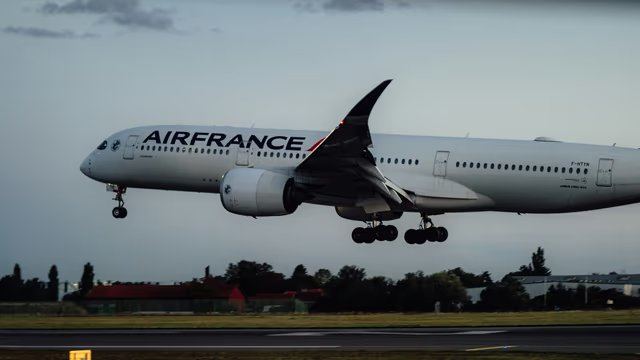




Flying Blue is the Air France-KLM loyalty program, and for U.S. travelers its best use is simple: transfer points from Amex, Chase, Citi or Capital One at 1:1 and book Delta flights without the fuel surcharges Air France and KLM add to their own. The second draw is Promo Rewards, a monthly list of routes at up to 25 percent off the standard award price.
Most readers will never fly Air France or KLM on a points booking. What they will do is use Flying Blue miles on Delta, including in business class, where Delta's own SkyMiles pricing is dynamic and can run high. That single mechanic is the reason Flying Blue belongs in a U.S. points stack even for travelers who have never set foot in Paris or Amsterdam.
There are constraints. Air France and KLM-operated long-haul flights carry real fuel surcharges, and those went up in March 2026. Changes and cancellations cost a flat fee. The award search engine is functional but not great.
Why Flying Blue Matters in 2026
The Flying Blue case starts with Delta. Delta SkyMiles has pushed further into dynamic pricing, and the business-class redemptions U.S. readers used to celebrate can now price very high. Flying Blue is a separate way to book some of the same Delta flights, with the kicker that Flying Blue does not pass fuel surcharges on Delta-operated flights. Prices move by date, so run both searches for the trip you want before you transfer anything.
Set against the alternatives, Flying Blue holds its lane. Virgin Atlantic Flying Club also books Delta award space, sometimes at sharper prices for specific routes, so check both. United MileagePlus and Air Canada Aeroplan are Star Alliance programs that do not touch Delta. Flying Blue combines easy U.S. earning, Delta access, no surcharges on Delta flights, and a monthly discount mechanic.
The constraint to internalize: this program is best when you fly Delta on the booking. The moment you board an Air France or KLM-operated long-haul flight, fuel surcharges show up in the taxes-and-fees column, and the math gets less interesting in a hurry.
How to Earn Flying Blue Miles
For U.S. readers, Flying Blue partners with all four major transferable points currencies, plus Marriott Bonvoy, plus flying.
The four flexible currencies are the main earning paths. American Express Membership Rewards transfers to Flying Blue at 1:1 with regular transfer bonuses. The Amex Gold and Amex Platinum are the two cards most U.S. readers should consider first for building a balance. Chase Ultimate Rewards transfers at 1:1. The Chase Sapphire Reserve and Chase Sapphire Preferred both feed Ultimate Rewards. Citi ThankYou Points transfers at 1:1 as well, and the Citi Strata Premier is the workhorse card on that side of the stack.
Capital One also transfers to Flying Blue at 1:1. Capital One's own transfer page lists Flying Blue among the partners at that ratio. The 2:1.5 ratio that gets attached to Flying Blue in a lot of writing belongs to Emirates Skywards, EVA Air and Japan Airlines Mileage Bank instead. Transfer times differ by bank, so allow extra time for Capital One and Citi.
Marriott Bonvoy transfers to Flying Blue at 3:1 with a 5,000-mile bonus per 60,000 Marriott points transferred, which works out to 60,000 Marriott to 25,000 Flying Blue. Not a great rate. Use it only when you are a few thousand miles short of a specific booking.
Flying on Air France, KLM, Delta or any SkyTeam partner credits miles to Flying Blue at fare-class-dependent rates. Frequent paid Delta flyers should at least model whether Flying Blue is a better home for their miles than SkyMiles.
There is a U.S. co-brand card, the Air France KLM Visa Signature from Bank of America. Bank of America's page lists 3 miles per dollar on Air France, KLM and SkyTeam airline purchases, 3 on dining and 1.5 on everything else, for an $89 annual fee. For most readers the four transferable currencies above are still the better engine, because those points are not locked to one airline.
The Sweet Spots
Flying Blue's partner prices are dynamic, so treat any figure as a starting point and check the search results for your date.
Delta business class transatlantic. This is the headline. Delta-operated flights booked with Flying Blue carry taxes and fees well below an Air France or KLM long-haul ticket because Flying Blue does not pass Delta's fuel surcharges. Compare the Flying Blue price with the same seat in SkyMiles before you move points.
Air France and KLM business class to Europe. The miles cost can be fine, but the fuel surcharges land, and they rose in March 2026. Expect several hundred dollars in carrier-imposed fees on a round-trip business-class ticket. For travelers willing to absorb the surcharge to get specific routes or schedules, the value can still hold. Go in eyes open.
Africa via Paris. Air France's African network is one of the most extensive in the world, which gives U.S. travelers access to routes most U.S. programs cannot touch. The catch is fuel surcharges on the Air France-operated portion.
Intra-Europe. Short-haul European economy can be a cheap positioning hop after a transatlantic redemption, though Air France and KLM short-haul segments still carry some surcharges.
Promo Rewards: The Monthly Discount Mechanic
Promo Rewards is the feature that separates Flying Blue from the pack. Each month, Flying Blue publishes a list of routes at up to 25 percent off the standard award price. Discounts apply to specific cabins, specific origin and destination pairs, and a defined travel window.
The new list is released on the first day of each month, and the discounted inventory is real but limited. The play is to check the list early in the month, decide if the routes fit a trip you actually want to take, and transfer points to book quickly if the answer is yes. Treat Promo Rewards as a monthly check-in, not a list to memorize.
One catch to read before you book: the Promo Rewards price is for the Light fare, which has restrictions on changes, so read the fare conditions on your booking before you pay.
A practical note on timing: because the discounted window can close, and because Capital One, Citi and some Amex transfers can take longer than Chase's, do not transfer points speculatively for a Promo Rewards deal you have not confirmed is bookable. Confirm award availability through the Flying Blue search engine first, then transfer, then book.
The Fuel Surcharge Map
Surcharges are the single most misunderstood part of Flying Blue. Here is the map that matters.
Delta-operated flights: No fuel surcharges through Flying Blue. This is the core sweet spot.
Air France and KLM-operated long-haul: Real fuel surcharges, higher since March 2026. Short-haul Air France and KLM segments carry smaller surcharges.
Other SkyTeam partners: Mixed. Surcharges depend on the operating carrier, and some partners carry them. Always check the taxes-and-fees line in the Flying Blue search results before transferring miles. This is the single most expensive mistake new Flying Blue users make.
The takeaway: when you are reaching for Flying Blue specifically to dodge Delta's SkyMiles dynamic pricing, you are reaching for Delta-operated flights specifically. The moment you swap to an Air France or KLM-operated segment, ask whether the cash component still makes the trade worth it.
Award Booking Workflow
The workflow that works:
Step one, search before you transfer. Flying Blue's award search lives on flyingblue.com once you sign in, and it shows standard awards, Promo Rewards and partner space across SkyTeam. The engine is imperfect and occasionally misses partner space, but it is good enough to confirm availability before you move points.
Step two, transfer the points. Chase transfers tend to land quickly, and other banks can take longer. Do not transfer speculatively.
Step three, book. If the seat is there and you have the miles, ticket right away. Award space disappears fast on competitive routes.
Change and Cancellation Rules
Flying Blue charges a flat 70 EUR to change or cancel (redeposit) a partner award, including Delta. Air France and KLM awards depend on the fare type: Light fares can't be changed or cancelled unless you hold Platinum status or above, Standard fares cost 70 EUR, and Flex fares are free. Platinum members don't pay change or cancellation fees on award tickets. Changes and cancellations must be made before check-in closes, or the ticket is forfeited.
Budget time for the miles to return to your account before counting on them for another booking. Taxes and fees refund to the original payment method on the issuing bank's timing.
Flying Blue Versus the Alternatives
For Delta partner awards, the question is Flying Blue versus Virgin Atlantic Flying Club. Virgin sometimes prices specific Delta routes more cheaply, so for specific routes it is worth checking both. For a U.S. reader who wants predictable access to Delta business class to Europe, Flying Blue is the cleaner starting point.
For SkyMiles itself, compare prices for your date. SkyMiles can be useful on cheap domestic fares and for spending down a balance built through Delta-branded Amex spending. For a premium-cabin transatlantic redemption on Delta, check Flying Blue first.
For Star Alliance travel, Flying Blue does not apply. That side of the alliance is United MileagePlus territory, or Air Canada Aeroplan for the better partner pricing and stopover rules.
Status Program
Flying Blue's status tiers (Silver, Gold, Platinum) are earned by flying, and for U.S. readers who do not fly Air France or KLM frequently they will be hard to reach. For most readers reaching Flying Blue through transferable points, status is not the play. The program is an award-booking tool, not a status home.
When NOT to Use Flying Blue
Flying Blue is not the right tool for every booking.
Short-haul European travel on British Airways or other oneworld carriers can price more cheaply through British Airways Avios, which charges by distance.
Domestic U.S. travel rarely warrants reaching for Flying Blue. Any other domestic carrier such as Southwest, JetBlue, Alaska or American sits outside the SkyTeam alliance and cannot be booked through Flying Blue.
Pure economy long-haul is usually a poor use of Flying Blue miles, since any major transferable currency can often match it through a portal booking.
And anything that requires routing on an Air France or KLM-operated long-haul segment where you are not comfortable with the fuel surcharges. The miles cost might be fine. The cash add-on might not be.
Action Plan
If you do not have a Flying Blue account yet, open one. It takes five minutes, and miles can sit there as long as you keep some earning or redemption activity going. Then audit your transferable points balances. If you have Amex Membership Rewards, Chase Ultimate Rewards, Citi ThankYou Points or Capital One miles, you are sitting on Flying Blue currency at 1:1. Hold those points and do not transfer until you have a specific booking ready.
Build a habit around Promo Rewards. The list drops at the start of each month. Most months will not have a route you want. The months that do will pay for the habit.
The first redemption to plan, for most readers, is a transatlantic Delta business-class booking. Find a route and date that work, confirm Flying Blue shows availability on the Delta-operated flight, and transfer points only when you are ready to ticket. Book the same day.
Flying Blue is not the most exciting program in the points world. But it solves a specific, expensive problem (getting U.S. travelers onto Delta metal without fuel surcharges) better than any other program in the U.S. points stack. For that one job, it earns a spot.
Updated October 17, 2026: fees and surcharges.