



Amtrak won nearly $3 billion in federal grants to buy new trains and upgrade service across the country. The Department of Transportation announced the awards, and Amtrak confirmed them on August 14, 2026.
The money goes toward new equipment and infrastructure work on routes well outside the Northeast Corridor. That is the part worth paying attention to.
Amtrak has spent a decade concentrating its best equipment between Washington and Boston. Most of the rest of the network still runs cars that entered service in the 1980s.
What the Money Buys
New trainsets are the headline. Amtrak's Airo fleet is already replacing older equipment on the Northeast Regional, where the NextGen Acela took the first round of new trainsets, and this funding extends that kind of replacement to state-supported and long-distance routes.
The practical difference on board is not subtle. Airo equipment brings power at every seat, better Wi-Fi, and level boarding at more stations. On routes still running Amfleet cars from the Carter administration, that is a genuine change in what the trip feels like.
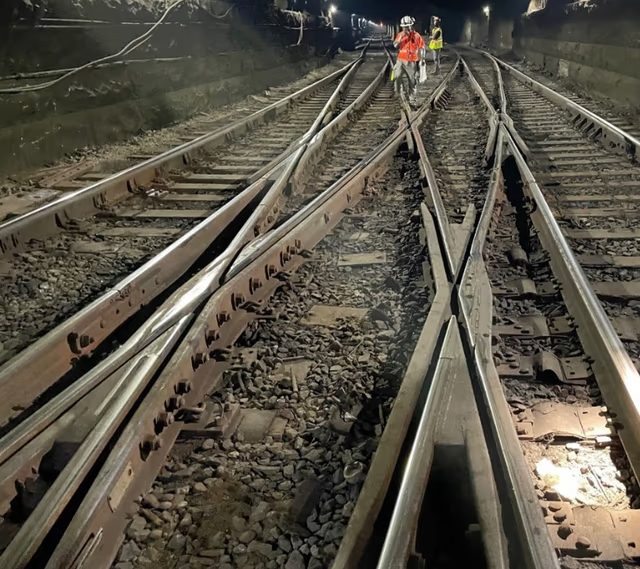
Infrastructure work is the less visible half. Track, signals and station upgrades set how fast and how often trains can run, and they are the reason some corridors have stayed at two trains a day for thirty years.
Why This Matters If You Do Not Live in the Northeast
Most rail coverage is Acela coverage, which describes a service that maybe a tenth of Amtrak passengers use.
The routes this funding touches are the ones where rail competes with a five-hour drive rather than a flight.
Chicago to St. Louis. Los Angeles to San Diego. Seattle to Portland.
Those corridors carry real volume and have been running tired equipment for years.
When the equipment improves on a route like that, the trip stops being a fallback and starts being a choice. That is the shift the money is aimed at.
I would temper expectations on timing. Rolling stock orders take years to deliver, and grant awards are not the same as trains in service. Nothing announced in August 2026 changes what you ride in 2026.
What to Do With This Now
Nothing urgent, which is an honest answer.
If you travel a state-supported corridor regularly, the useful move is watching for equipment swaps on your specific route rather than tracking the national number. Amtrak announces those route by route, usually a few months ahead.
State departments of transportation are the other place to look. They co-fund these corridors and often publish equipment and schedule plans earlier than Amtrak does, because they have to take them to a legislature first.
If you are choosing between rail and driving on a medium-length trip, the calculus already favors rail more often than people assume once parking and fuel are counted. Our Amtrak USA Rail Pass review covers the multi-city math for anyone stringing several segments together.
For a single trip, the pass rarely wins. It is built for a specific kind of traveler with a flexible calendar, and it is not the default answer for someone taking one round trip.
There is a structural point underneath all this that gets lost in the funding numbers.
Amtrak does not own most of the track it runs on outside the Northeast. Freight railroads do, and they dispatch their own trains first. New equipment does not fix a train sitting in a siding waiting for a coal train to pass.
That is why the infrastructure half of this award matters more than the rolling stock half, even though the trains are what get photographed. Sidings, signals and capacity upgrades are what turn a route from two trains a day into something you can plan around.
The number to watch next is delivery schedules. A grant announcement tells you what Amtrak intends to buy. A delivery date tells you when you can sit in it.