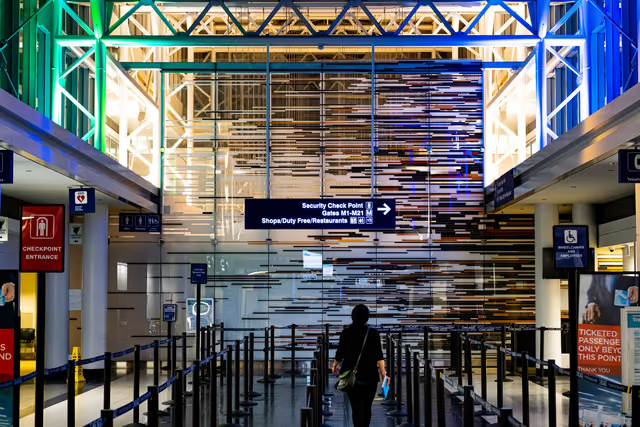



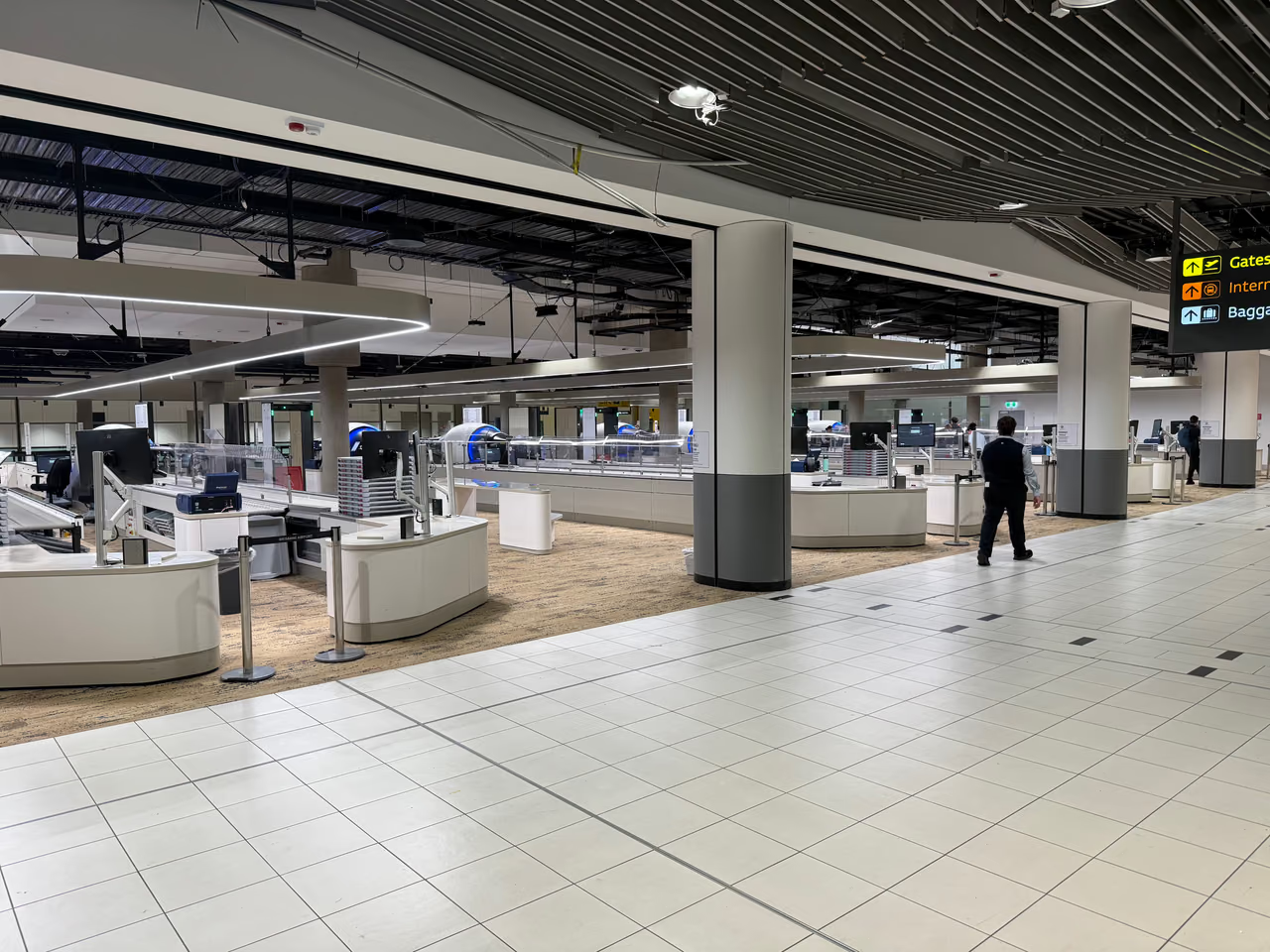
The packing checklist that matters isn't the one that tells you to bring socks. It's the short list of rules that decide which bag each thing goes in, because that's what gets you stopped at the checkpoint or, worse, separated from your medication.
Four rules cover almost everything. Liquids over 3.4 ounces go in checked bags, and spare batteries and power banks go in your carry-on and nowhere else.
Sharp things and anything that could be swung go in checked bags. Firearms go in a locked hard case, declared at the counter.
Everything below comes from TSA's and the FAA's own pages, read on September 12, 2026. The checklists by trip type come after the rules, because the rules are what make the lists make sense. For packing the bag itself, our carry-on packing tips cover size limits and layering.
The Four Rules That Decide Everything
Liquids, in a quart bag. TSA's liquids rule says you may bring "a quart-sized bag of liquids, aerosols, gels, creams and pastes in your carry-on bag and through the checkpoint," and that these "are limited to travel-sized containers that are 3.4 ounces (100 milliliters) or less per item." Anything bigger goes in checked baggage.
The full version of the rule, the one people remember as 3-1-1, is spelled out on TSA's travel checklist: "3.4 ounces or less per container," "1 quart size, clear, plastic, zip top bag (all liquids must fit in bag)," and "1 bag per passenger."
Batteries fly with you. The FAA's lithium battery rules are blunt: "Spare (uninstalled) lithium ion and lithium metal batteries, including power banks and cell phone battery charging cases, must be carried in carry-on baggage only." If your bag gets gate-checked, the FAA says the batteries come out and stay with you.
Size matters too. Lithium ion batteries are "limited to a rating of 100 watt hours (Wh) per battery," and with airline approval you may carry up to two larger spares in the 101 to 160 watt hour range. Above 160 watt hours, the FAA says power banks and power stations "are not allowed on passenger aircraft."
Sharp and swingable go below. Knives, box cutters and razor blades not in a cartridge are carry-on prohibited and checked allowed. So are bats, golf clubs, hockey sticks, ski poles, pool cues and lacrosse sticks. TSA's reasoning, from its baseball bat page: "Sports equipment that can be used as a bludgeon (such as bats and clubs) is prohibited in the cabin of the plane and must be transported in your checked baggage."
Two exceptions worth knowing. Scissors are allowed in carry-on if "they must be less than 4 inches from the pivot point," and tools "7 inches or shorter may be allowed in carry-on baggage," with anything longer checked. Tennis rackets are fine in the cabin.
Firearms are a checked-bag-only process. TSA: "You may transport unloaded firearms in a locked hard-sided container as checked baggage only. Declare the firearm and/or ammunition to the airline when checking your bag at the ticket counter." Ammunition is prohibited in carry-on, and must be "packaged in a fiber (such as cardboard), wood, plastic, or metal box specifically designed to carry ammunition and declared to your airline."
The Base List, for Every Trip
This is what goes in the carry-on on any flight, regardless of trip type.
- Your ID, and the right kind. Since May 7, 2025, per TSA, "state-issued driver's licenses and IDs that are not REAL ID compliant are no longer accepted as valid forms of identification at airports." A passport works as the alternative. TSA also accepts expired ID "up to two years after expiration" for the forms on its list.
- A fallback if your ID is wrong. Since February 1, 2026, TSA says that if you can't produce acceptable ID, "you will have the option to pay a $45 fee to use TSA ConfirmID," after which TSA attempts to verify your identity.
- Medication, in the cabin. TSA allows "larger amounts of medically necessary liquids, gels, and aerosols in reasonable quantities for your flight, but you must declare them to TSA officers at the checkpoint for inspection."
- Phone, laptop, chargers and every power bank. Carry-on only, per the FAA rule above.
- The 3-1-1 bag, where you can reach it. TSA's checklist says to "Place your 3-1-1 bag with liquids, gels and aerosols in the front pocket of your carry-on for accessibility."
- Large electronics on top. Same checklist: "Pack large electronics on top layer of carry-on for screening accessibility."
One habit that saves the most time: TSA's checklist says to "Start with an EMPTY bag (make sure all pockets and compartments don't have any items in them)." Most checkpoint problems are a forgotten water bottle or a pocketknife from a camping trip. Pack a payment backup too: our guide to carrying a backup credit card explains which cards to bring and where to keep them.
Weekend Trip, Carry-on Only
The short domestic hop is where a carry-on-only rule pays, and where the liquids rule bites hardest.
- Toiletries decanted into containers of 3.4 ounces or less, all inside one quart bag.
- Solid toiletries where you can. A bar of soap or a shampoo bar isn't a liquid, and TSA treats solids differently.
- One power bank, charged, in the carry-on.
- Any medication in its own bag, ready to be declared.
- Shoes and a light jacket you can leave on if you have PreCheck. TSA says PreCheck members "leave in your bag electronics and 3-1-1 liquids and leave on belts, light jackets, and shoes."
Long-Haul International
Two rules change on an international trip, and both catch experienced travelers.
Duty-free liquids have their own exemption. TSA allows duty-free liquids over 3.4 ounces in your carry-on if they were bought internationally on a trip to the United States with a connecting flight, if they are "packed in a transparent, secure, tamper-evident bag by the retailer and do not show signs of tampering," and if "The original receipt for the liquids is present and the purchase was made within 48 hours." Miss any of those and the bottle goes in the bin.
Food is a solid-versus-liquid question. TSA's rule is that "Solid food items (not liquids or gels) can be transported in either your carry-on or checked baggage." Liquid or gel foods over 3.4 ounces belong in checked bags, which covers yogurt, soups, salsa, jam, honey and, yes, peanut butter. Our guide to packing food for air travel goes deeper on the edge cases.
Also pack powders with care. TSA encourages you "to place powder-like substances over 12 oz. / 350 mL in your checked bags," because larger amounts may need secondary screening.
Traveling With a Baby or Toddler
This is the trip type where the rules are most generous and least known.
TSA: "Formula, breast milk, toddler drinks, and baby/toddler food (to include puree pouches) in quantities greater than 3.4 ounces or 100 milliliters are allowed in carry-on baggage and do not need to fit within a quart-sized bag." They're treated as medically necessary liquids.
Three details that surprise people:
- Cooling accessories count too. Ice packs, freezer packs and gel packs are allowed "regardless of presence of breast milk," along with liquid-filled teethers.
- The child doesn't have to be there. TSA says "Your child or infant does not need to be present or traveling with you to bring breast milk, formula and/or related supplies."
- You still have to say something. TSA asks you to "Inform the TSA officer at the beginning of the screening process that you are carrying formula, breast milk, toddler drinks, and baby/toddler food (to include puree pouches) in excess of 3.4 ounces," and to remove them for separate screening.
TSA also suggests, without requiring, clear translucent bottles rather than pouches, because pouches may not scan and may need to be opened. Our packing hacks for traveling with kids covers the rest of the trip.
Ski, Beach and Outdoors Trips
Gear is where checked bags earn their fee.
- Ski poles are checked. So are bats, clubs, sticks and cues, per TSA's bludgeon rule.
- Sunscreen and hairspray follow the toiletry rule. The FAA's medicinal and toiletry articles entry covers "aerosols, hair spray, perfumes, colognes, nail polish, rubbing alcohol, shaving cream, inhalers, medicines, sunscreen," with a total of 2 kilograms or 2 liters per person and no container over 500 milliliters. The FAA adds the line that matters at the checkpoint: "Liquids, gels, and aerosols in carry-on baggage are further limited to 100-ml (3.4 oz) containers at the TSA security checkpoint."
- One lighter, one book of matches. The FAA allows one absorbed-liquid or butane lighter and one book or packet of safety matches on your person or in carry-on. "Strike-anywhere matches are forbidden in carry-on and checked baggage," and torch lighters are banned from both.
- Non-toiletry aerosols are mostly out. The FAA says "Flammable aerosols that don't qualify as a medicinal or toiletry article are forbidden in carry-on and checked baggage." That covers spray paint, cooking spray and WD-40.
- Frozen food and coolers. If you're bringing fish home, TSA says ice or ice packs "must be completely frozen when brought through screening," and partially melted packs with liquid at the bottom "will not be permitted."
The Business Trip
Short, repetitive and the easiest to systematize.
- Laptop in the top layer, out at a standard lane. TSA: "You will be asked to remove personal electronic devices larger than a cell phone from your carry-on bag and place them into a bin with nothing placed on or under them for X-ray screening."
- With PreCheck, that laptop stays in the bag.
- Tools only if they're 7 inches or shorter, which covers a small screwdriver set and not much else.
- A power bank sized under 100 watt hours, which nearly every consumer model is.
The Things That Never Go in Carry-on
Keep this list in your head and you'll clear the checkpoint on the first pass: knives, box cutters, loose razor blades, firearms and ammunition, bats and clubs and sticks, strike-anywhere matches, torch lighters, flammable aerosols, and any liquid over 3.4 ounces that isn't medication, formula or duty-free with a receipt from the last 48 hours.
And the one that surprises people going the other way, into checked bags: spare batteries and power banks can't go there at all.
When the Airline Overrules the Rulebook
TSA and the FAA decide what may fly. Your airline decides how much of it you may bring, and in several places the agencies say so themselves.
The FAA's battery page is explicit: "Many airlines, both domestic and international, may have stricter quantity and Wh limits to include how many power banks/portable chargers each passenger is allowed to travel with, regardless of Wh capacity. Please check with your air carrier for its specific restrictions before traveling."
TSA says the same about alcohol: "Check with your airline before bringing any alcohol beverages on board." It also sets the hard limit on what you can check: drinks "with more than 24% but not more than 70% alcohol are limited in checked bags to 5 liters (1.3 gallons) per passenger and must be in unopened retail packaging." Below 24% alcohol, TSA sets no checked limit.
On firearms, TSA defers twice over, telling travelers to "Ask your airline about limitations or fees that may apply" and to "check with your airline for quantity limits for ammunition."
So the sequence is always the same. Clear the agency rule first, then check your airline's page for the number.
Before You Zip the Bag
Three checks, in order.
Empty pockets. TSA's checklist asks you to "Ensure pockets are empty (keys, tissues, currency, wallets, cell phones, etc.) and remove bulky jewelry."
Check the ID. REAL ID compliant, or a passport, or the $45 ConfirmID route if you're stuck.
Check the batteries. Every spare cell and every power bank in the bag that's coming on the plane with you.
The rules above only tell you where things go. What you actually need is still your call.
Updated October 19, 2026: packing checklist by trip type.