


If your Alaska itinerary lets you choose, pick Glacier Bay for a full day of ranger narration, mountains and wildlife, and pick Hubbard Glacier for one enormous wall of ice. That's the core of the Hubbard Glacier vs. Glacier Bay decision: a national park day against a single giant glacier.
Holland America's page says its 7-day Alaska Explorer cruises give guests a choice between the two, and it marks each one "on select cruises." The National Park Service says ships typically spend 9 to 10 hours in Glacier Bay, and its Wrangell-St. Elias pages call Hubbard North America's largest tidewater glacier. Here's how each stop works and how to match one to your sailing.
A Day in Glacier Bay National Park
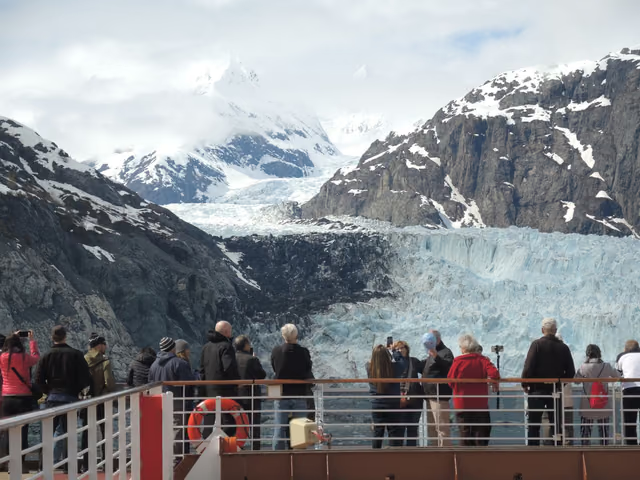
Glacier Bay is a national park, and the Park Service says cruise ships don't dock anywhere in it. Ships typically spend a full day, 9 to 10 hours, in the bay, including a stop at a major tidewater glacier. The park says your ship will stop in front of a tidewater glacier for approximately one hour, so find out when that's scheduled.
Park rangers board to narrate, give special presentations, run Junior Ranger activities and staff an information desk. The park also describes calving glaciers and frequent wildlife sightings, including brown bears, sea otters, humpback whales and seabirds. Its fact sheet says seven of the park's 62 named glaciers are active tidewater glaciers that calve icebergs into the sea.
Entry is limited. The park's concession page says no more than two cruise ships can enter per day, year-round, and the park warns that many Alaska cruises don't visit Glacier Bay at all. Our guide to Glacier Bay cruise ships and permits explains how to check whether your sailing goes in.
What Hubbard Glacier Offers
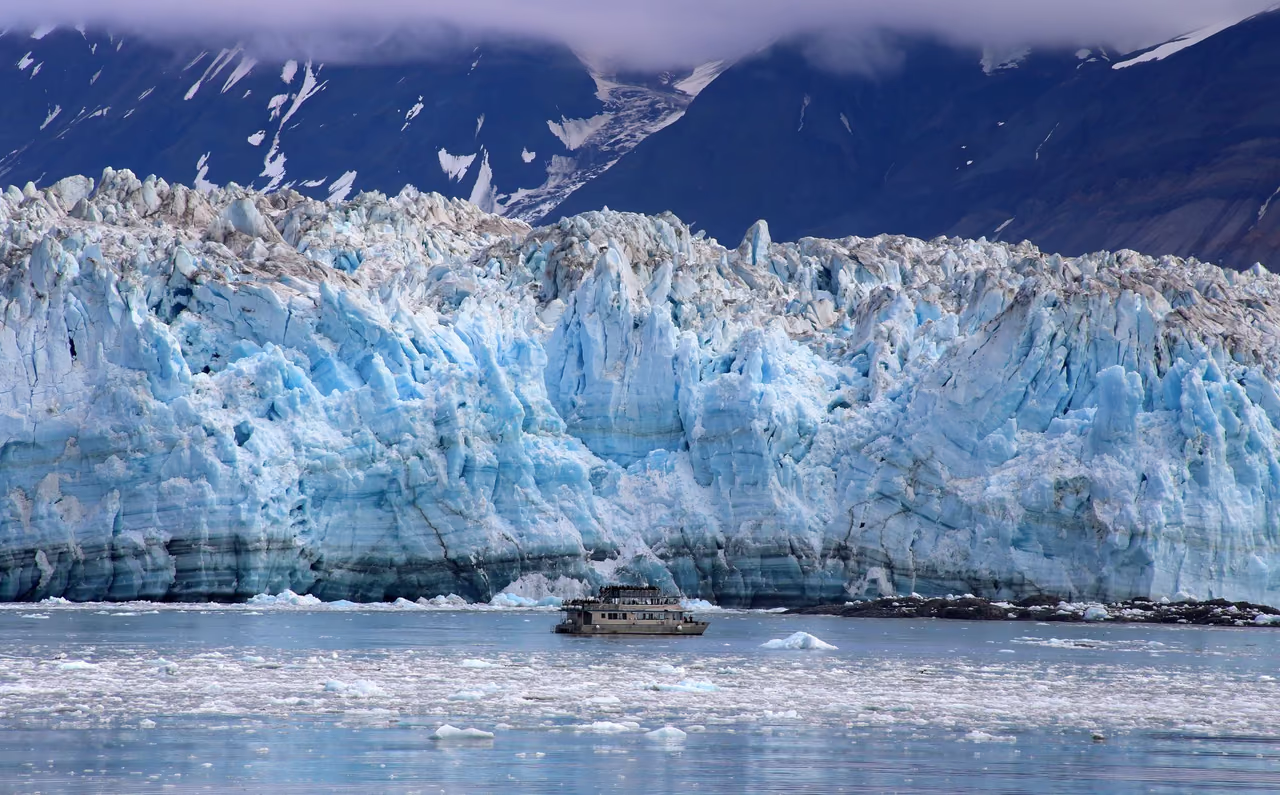
The Park Service's Wrangell-St. Elias page says Hubbard is 76 miles long and 600 feet tall at its terminal face, with 350 feet exposed above the waterline. It starts at Mt. Logan in Canada's Yukon Territory and ends within Wrangell-St. Elias National Park & Preserve.
Hubbard is unusual because it's been advancing. The page says its terminus is in a stable position after advancing over the last 100 years, and that the glacier continues to thicken. Most Alaska glaciers are retreating, and Holland America says Hubbard is called "the Galloping Glacier" for advancing while others recede. In the summer of 2002, the park says, the glacier pulsed forward and closed Russell Fiord from the sea before the ice dam was later breached.
Getting there takes a boat or a plane. The park says the only way to see Hubbard is to visit Yakutat, Alaska, and that several cruise companies include it on their Alaska itineraries. Holland America says it calves frequently and dramatically, sometimes with three-story icebergs.
How to Choose
Match the stop to what you want from the day.
- Choose Glacier Bay if you want a full day inside a national park, rangers aboard and a chance at bears, otters and whales alongside the ice.
- Choose Hubbard Glacier if the glacier itself is the draw, with a face the park puts at 600 feet tall and a terminus it calls stable.
- Choose by itinerary if the sailing you like offers only one. Holland America's Alaska Explorer page lists both as "on select cruises" and says the glacier you get depends on the itinerary.
Read the itinerary page for the glacier by name before you book. Holland America's Glacier Guarantee says that if your Alaska journey doesn't include a glacier visit, you'll receive a Future Cruise Credit equal to 15% of your fare, with an exception for certain Denali and Yukon itineraries that have no glacier experience. Our Alaska cruise ports of call guide covers the other glacier days, and our month-by-month guide to cruising Alaska covers timing.
Which One to Book
If you want ranger commentary and a long day on the water, book a sailing that names Glacier Bay National Park. If you want to stand in front of what the park calls North America's largest tidewater glacier, book one that names Hubbard Glacier. When the itinerary lists both, ask your cruise line which one your sailing date includes.