


Introduction
Virgin Atlantic will become the first UK airline to install free, fleet-wide Starlink Wi-Fi, with the first aircraft going live in the third quarter of 2026 and the rollout completing by the end of 2027. The carrier confirmed the program in a corporate announcement, framing it as part of a broader investment in passenger experience. For travelers booking premium-cabin redemptions on Virgin's transatlantic routes, the practical change is straightforward: the airline is removing the paid Wi-Fi pass and putting streaming-grade connectivity into every seat, including coach.
The Cabins and Lounges in the Same Announcement
The Wi-Fi was one part of a wider announcement. The cabin and lounge numbers below come from Virgin Atlantic's own release.
The A330neos arriving from Q3 2026 carry six Retreat Suites, 48 Upper Class seats, 56 Premium seats and 128 in economy. That's the layout to look for if you're booking a redemption on a new-delivery aircraft.
The Boeing 787-9 fleet gets a full refurbishment, rolling out from 2028 and completed by 2030. Virgin gives the before and after: eight Retreat Suites where there are none today, Upper Class going from 31 seats to 44, Premium from 35 to 56, and economy from 192 down to 127. That's a large shift of the cabin toward the front, and it's the biggest change to award availability in this announcement, because premium award seats come out of premium cabins.
Three Clubhouses. The Los Angeles Clubhouse opened in March 2025. Virgin says London Heathrow and New York JFK are getting multi-million-pound refurbishments, which covers both ends of its busiest route.
The Starlink terms haven't changed from what's described below: free, streaming-quality and unlimited for Flying Club members, installing across the A330neo, A350 and 787 fleets from Q3 2026 and finishing at the end of 2027.
What Virgin Atlantic Announced
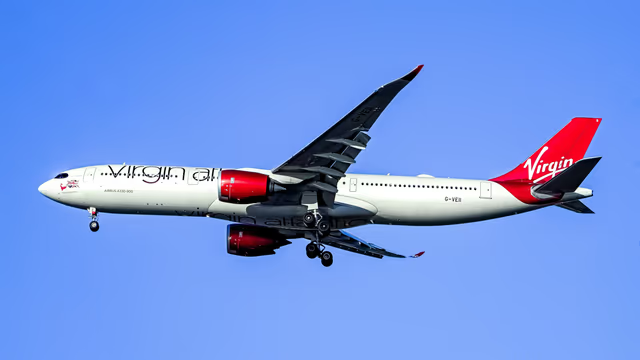
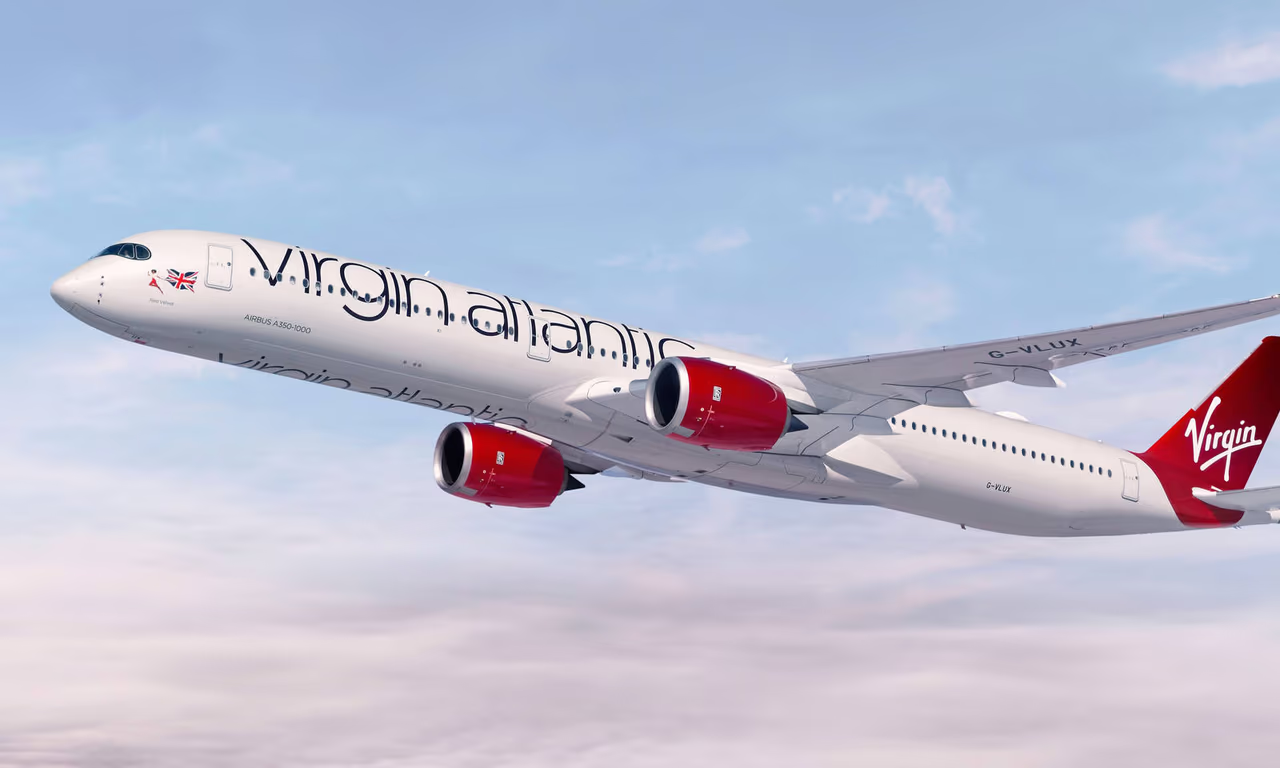
The Starlink rollout was confirmed in Virgin Atlantic's own corporate communications and reported by Bloomberg and the major travel news outlets. The carrier said installations will start in the third quarter of 2026 and conclude by the end of 2027, covering the three aircraft families that make up its modern long-haul backbone: the Airbus A330neo, the Airbus A350-1000, and the Boeing 787-9. The remaining A330-300s, which the airline plans to retire by 2028, will not receive the kit.
Access will be free for Flying Club members on every flight, with sign-up to the loyalty program also free. Virgin's existing Wi-Fi product, currently a paid pass running upward of $25 for a full-flight session, will be replaced as aircraft are converted. The carrier separately announced upgrades to its Boeing 787 cabins and an expansion of premium seating on incoming A330neo deliveries, but the connectivity rollout is the near-term change passengers will actually notice in 2026.
How It Compares Across the Industry
Virgin Atlantic is following a path other carriers paved first. Hawaiian Airlines was the launch partner for SpaceX's airline product, putting Starlink on its long-haul A330 fleet beginning in 2024. JSX, the public-charter operator, was the first U.S. carrier to install Starlink, completing its fleet in 2023.
United Airlines confirmed its own Starlink rollout in 2024 and has been retrofitting its regional and mainline fleet since 2025, with United Express E-175s among the first aircraft to go live. Air New Zealand selected Starlink for its domestic regional fleet in 2024 and started rolling out service in 2025.
Qatar Airways, which isn't a Virgin Atlantic competitor on the North Atlantic but is the most-cited reference point for what Starlink delivers in the air, has reported in-flight speeds in the 200 Mbps range on its Starlink-equipped Boeing 777s. That's enough for streaming video, video calls, and gate-to-gate use without the cruise-altitude lockout most legacy systems still enforce.
Virgin's principal U.K. competitor, British Airways, has been in talks with Starlink and Amazon's Project Kuiper but hasn't announced a confirmed deal or installation timeline as of April 2026. That makes Virgin the first U.K. carrier across the line.
What Changes for the Reader
The most concrete change for travelers booking Virgin Atlantic over the next 18 months is that the paid Wi-Fi pass is going away. Today, full-flight Wi-Fi on a London Heathrow to New York JFK sector runs roughly $20 to $25, and the speeds aren't in the same class as Starlink. Once a given aircraft is converted, the Wi-Fi is free and meaningfully faster.
For premium-cabin travelers, the upgrade matters less than it might first appear, because the seat itself is still the bigger driver of the experience. Where it does matter is on long workdays in the air. Virgin's transatlantic schedule includes daytime departures from Heathrow to JFK, Boston, and Washington Dulles, and from Manchester to JFK and Orlando, where reliable Wi-Fi is the difference between a productive shift and a write-off.
For coach travelers, the change is larger in proportion. Free streaming-grade connectivity in economy is rare on the North Atlantic, and Virgin's announcement puts it ahead of most competitors on that specific point.
For Flying Club members holding award redemptions on the older A330-300s, the practical takeaway is that those aircraft won't receive Starlink before retirement. If connectivity matters for a specific trip, check the aircraft type at booking and again 24 hours before departure. Equipment swaps happen, and Virgin will have a mixed fleet for the duration of the rollout.
What to Watch
Two questions the announcement doesn't fully answer: whether the free tier will include any caps as installation scales up, and whether the Boeing 787-9 retrofit (which involves a separate cabin program running 2028 through 2030) will sequence ahead of, behind, or alongside the Starlink installs on those aircraft. Virgin hasn't published an aircraft-by-aircraft schedule. Expect the first converted aircraft to be A330neos and A350-1000s, with the 787-9 fleet following.
For travelers planning bookings now, the safer assumption is that the rollout proceeds on Virgin's stated timeline, with first aircraft in Q3 2026 and the remainder following through end of 2027. Anything earlier is upside.