



Introduction
Most travelers don't need an airline credit card in 2026. A flexible-points card that transfers to several airlines covers most of what a co-brand does, and a co-brand pays off mainly when you fly one airline often, use its companion certificate or lounge, or chase the Southwest Companion Pass. Annual fees on the premium co-brands now top $600. So the real question is not whether airline credit cards are worth it in general. The question is whether one is worth it for you, given how often you fly, which airline you fly, and what else is already in your wallet. This guide walks through the math, the per-airline picks, and a clear decision framework so you can stop guessing.
Quick Answer
Most travelers should not carry an airline-branded credit card in 2026. A flexible-points card like the Chase Sapphire Preferred or the Capital One Venture earns transferable points that book the same award seats with less long-term risk. Airline cards win only in narrow cases: heavy single-airline flyers, families chasing the Southwest Companion Pass, and travelers using elite-status accelerators on Delta.
Why the Bar Is Higher in 2026
Three forces have shifted the airline-card calculus over the last 18 months.
The first is fee creep. Premium co-brands now sit firmly in flexible-card territory on price. The Delta SkyMiles Reserve runs $650 a year. The Citi AAdvantage Executive sits at $695. The United Club Card is $695. These are not impulse buys; they are deliberate commitments to a single carrier.
The second is award pricing. Award prices on the major U.S. airlines move with demand, so the miles you earn on a co-brand don't have a fixed value.
The third is the rise of flexible-points alternatives. Chase Ultimate Rewards, Amex Membership Rewards, and Capital One miles all transfer to multiple airline programs at 1:1. That portability is a hedge: when one airline devalues, you book through another. Airline-branded miles do not have that hedge.
Put together, the bar for keeping an airline-only card has gotten higher. The cards still make sense; they just make sense for fewer people than the marketing suggests.
The 2026 Airline Card Landscape
Here is what the major U.S. airline lineups look like right now, with annual fees and the standout benefit each card actually delivers.
Delta
Delta has the deepest co-brand stack in the country, which is both a strength and a trap. The full ladder reads:
- Delta SkyMiles Blue: $0 annual fee. Useful only if you want a Delta-branded card with no commitment. For most readers, a flexible-points card is a better $0 alternative.
- Delta SkyMiles Gold: $0 introductory annual fee for the first year, then $150. First checked bag free for you and others on the same reservation (up to nine per reservation) and a free second checked bag for you on domestic Delta flights, plus priority boarding. This is the practical entry point if you fly Delta a few times a year and check a bag.
- Delta SkyMiles Platinum: $350 annual fee. Adds an annual companion certificate good on a Delta Main round trip within the U.S. or to Mexico, the Caribbean or Central America, an MQD headstart toward status, and stronger earning rates. The companion certificate alone covers the fee for most couples.
- Delta SkyMiles Reserve: $650 annual fee. Adds Delta Sky Club access (15 visits each Medallion Year when flying Delta, with unlimited access unlocked by spend), a companion certificate good on a Delta First, Delta Comfort or Delta Main round trip within the U.S. or to Mexico, the Caribbean or Central America, and an MQD headstart for status seekers.
Delta is the airline where the co-brand math works best for the most people, mainly because the companion certificates on Platinum and Reserve are real cash value, not a vague perk.
United
United runs a tighter lineup. The mid-tier United Explorer card has a $0 intro annual fee for the first year, then $150, and gets you a free first checked bag on United-operated flights, priority boarding, and two one-time United Club passes per year. For frequent United flyers based at a hub, that is fair value. The premium United Club Card runs $695 and includes full United Club lounge access plus stronger earning, but at that fee you are paying flexible-card prices for a single airline's miles.
American Airlines
American calls Citi "the exclusive issuer of the AAdvantage co-branded card portfolio in the U.S." The Citi AAdvantage Platinum Select has a $0 intro annual fee for the first year, then $99, and is the standard "free checked bag and priority boarding" card. At the top, the Citi AAdvantage Executive runs $695 and includes Admirals Club access, which is the real reason to hold it. Hold one of these only if you are genuinely loyal to American or based at DFW, ORD, MIA, or CLT.
Alaska Airlines
Alaska's card, the Atmos Rewards Ascent Visa Signature from Bank of America, sits at $95 and remains one of the strongest mid-tier airline cards in the country. The reason is the annual companion fare: each account anniversary after you spend $6,000 or more on purchases in the prior anniversary year, you get a $99 Companion Fare (plus taxes and fees from $23). For West Coast couples or anyone who flies Alaska to Hawaii, that one benefit covers the fee multiple times over in a single trip.
Southwest
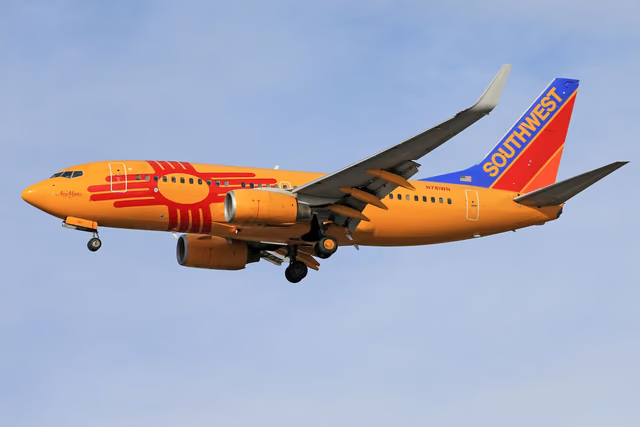
Southwest's lineup centers on the Southwest Rapid Rewards Priority Card at $229 and a few lower-tier siblings. The big draw is the Companion Pass, not the card itself. Through the end of 2026, earning 135,000 qualifying points or flying 100 qualifying one-way flights in a calendar year earns a pass for the rest of that year and the full next year, and the card adds a boost of 10,000 Companion Pass qualifying points each calendar year.
Southwest replaces that system on January 1, 2027. After that date, 95,000 Tier Qualifying Points or 75 qualifying one-way flights unlocks three Companion Pass trips, and 140,000 points or 100 flights makes trips unlimited. Card spend counts at 1 point per dollar, but welcome bonuses, anniversary points and bonus points from spend stop counting toward the pass. A pass earned in 2026 keeps unlimited trips through December 31, 2027.
The Math: When Does an Airline Card Pay for Itself?
The honest break-even on most airline cards comes from one of three sources: bag fees, lounge access, or a companion certificate. Run the numbers before you apply.
Bag-fee break-even. On a domestic Delta flight, a first standard checked bag costs $45 each way and a second costs $55; American charges $45 each way for a first bag paid online. Say you check one bag on two domestic Delta round trips a year: at $45 each way, that's $180, which covers the $150 Delta SkyMiles Gold fee. If you fly the right airline and check bags, the entry-level cards almost always pencil out.
Lounge-access break-out. Premium-card lounge math gets harder. A $650 to $695 fee has to be covered by visits you would otherwise pay for, and most domestic flyers do not visit lounges that often. If you want lounge access without picking a single airline, look at the best credit cards with airport lounge access and the best credit cards for Priority Pass. Those guides cover flexible-card alternatives that work across carriers.
Companion-certificate break-out. This is where premium co-brands win. Say you use the Delta Platinum's companion certificate on a $400 Delta Main domestic round trip: the companion's fare is covered, and you pay government-imposed taxes and fees of between $22 and $250 depending on the itinerary. Say you use the Reserve's certificate on a $1,200 first-class round trip: the companion's fare is covered apart from those taxes and fees. The Alaska card's $99 companion fare scales the same way: the pricier the companion's ticket, the more it returns.
Status-accelerator value. This one is harder to quantify but matters. Spending on a Delta card moves you up the status ladder faster, which compounds into upgrade priority and baggage waivers. If you are already close to the next Medallion tier, the spend-based bump can be worth real money. If you are not actively chasing status, ignore this lever.
Devaluation Risk: The Quiet Cost
Even when an airline card pencils out today, you are still buying into miles that may be worth less tomorrow. Major U.S. airlines price awards against demand, so the miles you earn on a co-brand do not have a fixed value.
Flexible-points programs do not solve devaluation entirely, but they spread the risk. If Chase points stop transferring to a strong partner, you still have other partners. If a Capital One transfer ratio worsens, you can pivot to portal redemptions. Airline-branded miles do not give you that flexibility. They are a bet on one program, and the program has every incentive to make your miles worth less over time.
For a deeper read on how one specific program is changing, the Delta SkyMiles program overview walks through current earning, redemption, and award sweet spots.
When Airline Cards Actually Win
Here are the four reader profiles where carrying an airline-branded card is the right call in 2026.
You fly one airline 10+ times a year from your home airport. If your job, your family, or your geography puts you on the same carrier weekly or monthly, you are leaving real money on the table without the co-brand. Free bags, priority boarding, and earn rates on that airline all compound. Pair the airline card with a flexible-points card; do not rely on the airline card alone.
You are chasing the Southwest Companion Pass. If you and a partner fly Southwest several times a year, the pass is still one of the strongest benefits in the category. It takes more flying or spend under the 2027 rules, and sign-up bonuses no longer count toward it.
You qualify for status through Delta card spend. The Delta Platinum and Reserve include an MQD headstart, and card spend moves you toward Medallion status, which makes the upgrade and baggage-waiver value reachable. This is a small group of readers, but if you are in it, the math works.
You actually use the lounge. The Delta Reserve and Citi AAdvantage Executive only make sense if you visit the relevant lounges 10+ times a year. Business travelers and people with long connections at hub airports can hit that bar. Most domestic leisure flyers cannot. Be honest about your travel patterns before you commit.
When Flexible-Points Cards Beat Airline Cards
For everyone outside those four profiles, a flexible-points card is the better wallet anchor. The Chase Sapphire Preferred at $95 transfers Ultimate Rewards points 1:1 to United, Southwest, JetBlue, Air Canada Aeroplan, British Airways, and several other strong programs. The Capital One Venture does the same with Air Canada, Air France/KLM, Avianca, Turkish, and others. Both cards earn 2x or more on travel and let you book whichever airline has the best award price.
That portability matters because the best award is rarely on the carrier you fly most often. A Sapphire Preferred holder can book a United domestic award through Chase points, an Air France business-class award through Air France's program, and a Hyatt hotel night through Chase transfers, all from the same balance. An airline-card holder can only book on one airline.
If you also want lounge access, the Capital One Venture X ($395) and similar premium flexible cards include lounge networks that span multiple airlines. For the broader picture on premium-card credits, the travel cards with annual credits guide covers what each card actually returns in usable value.
The Decision Framework
Run through these five questions before applying for any airline card.
- How many times a year do you fly the airline in question? Under five: skip the co-brand entirely. Five to nine: consider the entry-level card ($95-$150) only. Ten or more: the mid-tier or premium card likely makes sense.
- Do you check bags? If yes, the entry-level card pays for itself in two trips. If no, you need lounge access or a companion certificate to justify the fee.
- Is there a companion certificate? Delta Platinum, Delta Reserve, the Atmos Rewards Ascent Visa Signature, and Southwest's Companion Pass all qualify. Run the certificate's expected value against the annual fee. If it covers the fee, the card is worth a hard look.
- Do you already carry a flexible-points card? If you do not, get one first. A flexible card is the foundation of any rewards wallet. If you do, an airline co-brand can be a useful add-on for a single carrier you fly heavily.
- Will you actually use the lounge? Be honest. If you fly fewer than 10 times a year through the relevant hub, the lounge is not worth $500+ in fee.
If you answer "yes" to four or five of those questions, the airline card is probably worth it. If you answer "yes" to two or fewer, it almost certainly is not.
Common Mistakes to Avoid
- Holding multiple airline cards across carriers. This dilutes your spending across programs, slows your progress on any single status track, and stacks fees you will not break even on. Pick one airline at most.
- Ignoring the flexible-points alternative. If a Sapphire Preferred or Venture transfers to the airline you fly anyway, you may not need the co-brand at all.
- Forgetting to use the companion certificate. Delta Platinum and Reserve certificates expire annually. An unused certificate erases the card's main value proposition. Set a reminder.
- Overpaying for lounge access you do not use. A $650 Delta Reserve fee for two lounge visits a year works out to $325 a visit.
- Ignoring devaluation risk. Earning 100,000 airline miles only to watch award prices climb is a real outcome. Hold flexible points first.
Final Verdict
Airline credit cards still have a place in 2026, but a smaller one than the marketing implies. For most readers, a flexible-points card is the smarter wallet anchor. Add an airline co-brand only when you fly that carrier heavily, when a companion certificate covers the fee, when you are chasing the Southwest Companion Pass, or when you genuinely use the lounge enough to break even. Run the math on your real travel patterns, not the version of you the marketing imagines, and the right answer becomes obvious quickly.
Updated October 17, 2026: Delta companion certificate terms and the Southwest Companion Pass changes starting in 2027.