Key Points
- Delta's net promoter score on JFK-LAX runs 9.2 to 12.7 points below its own domestic average, a remarkable gap on the airline's single highest-revenue domestic route.
- The airline is blaming operational delays, but frequent flyers and the data point to a deeper problem: aging aircraft, an inconsistent hard product, and a widening gap between the lounge experience and what happens once you board.
- If you're burning Delta SkyMiles or paying premium fares on this route, understanding these trade-offs right now could save you a significant redemption mistake.
A leaked Delta internal memo is making the rounds this week, and the numbers are hard to ignore. Delta has flagged that its net promoter score on flights between New York JFK and Los Angeles LAX runs 9.2 points below its national domestic average on the eastbound leg and 12.7 points below on the westbound leg. For context, this is Delta's single most important domestic market by revenue and the largest domestic route in the U.S. by seat capacity.
The airline sent the memo to pilots, urging better communication during delays and reminding them of Delta's "Impactful Behaviors" framework. That's a fine ask. But if you've flown Delta One on this route recently, you already know that better delay announcements aren't going to close a 12-point NPS gap.
This matters to points travelers specifically because JFK-LAX is one of the most popular routes for aspirational redemptions. People burn SkyMiles expecting a premium experience — and as we've covered in our guide to why Delta SkyMiles are so hard to use, the program's dynamic pricing means you can pay a lot of miles for a disappointing result. Right now, many redemptions on this route are delivering exactly that.
What's Actually Driving the Dissatisfaction?
Delta frames this as an operational reliability issue. That's partially true. The airline has struggled with recovery after weather events in recent years, and JFK's complex airspace doesn't help. But blaming delays alone doesn't explain a persistent, route-specific NPS gap this wide.
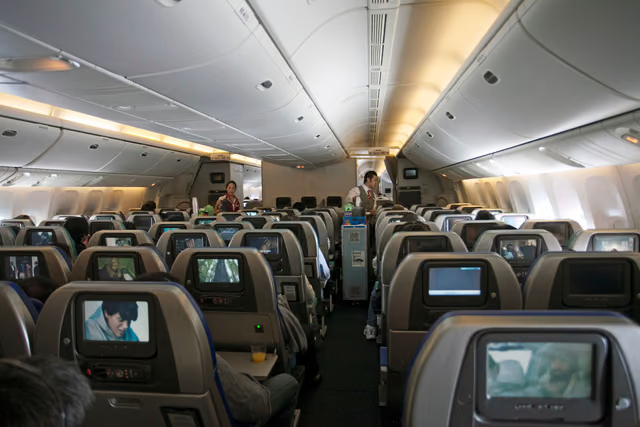
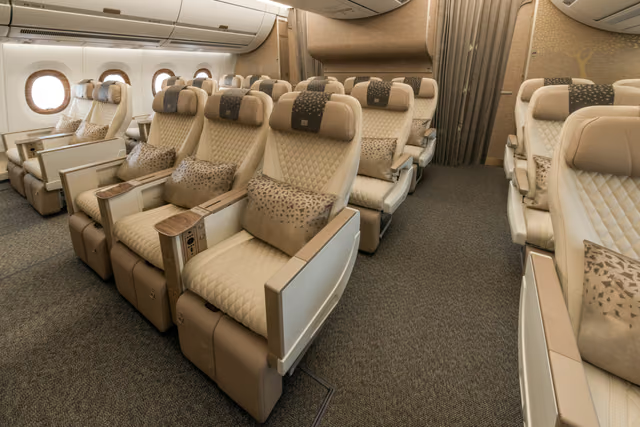
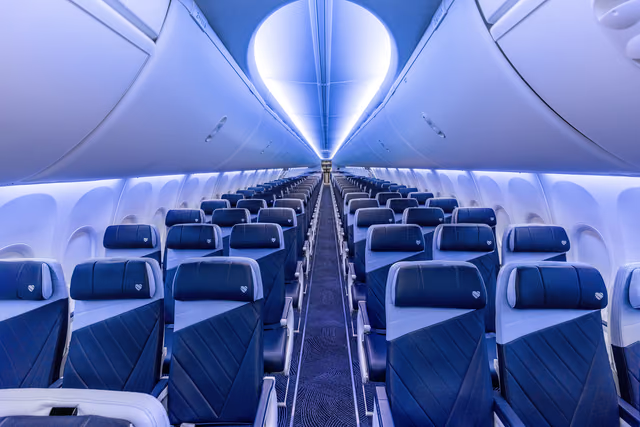
The more honest answer involves the aircraft. Delta operates the JFK-LAX corridor primarily with Boeing 767-300ERs and 767-400ERs, with occasional Airbus A330 service. In economy, the 767's 2-3-2 layout is genuinely comfortable for a domestic widebody. But Delta One on the older 767-300 is a different story.
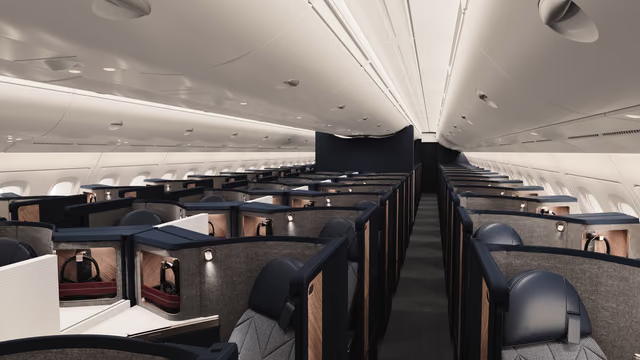
Those seats are narrow, the configurations vary wildly depending on which variant you board, and the food and beverage service on this specific route doesn't match what Delta One delivers on international flights. Reader reports consistently flag the same issues: cabin crew who seem checked out, drinks placed wordlessly on the armrest, no coat service, no sense of occasion. Delta has retrofitted some 767-400s with newer suites, but without doors, and consistency remains the core problem.
The contrast with the ground experience makes it worse. The Delta One Lounge at JFK and the one at LAX are legitimately excellent — among the best domestic airport lounges in the country. Walking from that environment onto a 767 with 1990s overhead bin geometry is a jarring transition that no amount of pilot PA announcements will fix.
If you hold the Delta SkyMiles Reserve American Express Card, you're paying a significant annual fee partly on the promise of a premium Delta experience. On this specific route, that promise is harder to keep.
Where Does This Leave Your SkyMiles?
This isn't a reason to write off the JFK-LAX corridor entirely, but it is a reason to be strategic about how and when you redeem.
Equipment matters more than ever on this route. Before booking any Delta One redemption, check the specific aircraft assigned to your flight. The A330neo is the standout option when you can find it — you'll get a genuinely modern business class seat. The 767-400 with the newer retrofit is a reasonable second choice. The standard 767-300ER in Delta One is, frankly, hard to justify at the SkyMiles prices Delta charges for transcontinental business class.
JetBlue Mint is worth a serious look. JetBlue's Mint product on JFK-LAX is widely regarded as the best business class seat in the domestic market. You won't get Delta One Lounge access, but the private suites, quality food, and service that actually matches the price point have converted a lot of former Delta loyalists. TrueBlue points aren't as flexible as SkyMiles, but the product gap is real.
United is quietly becoming the stronger premium play out of the New York region. United is running Boeing 787-9 and 787-10 flights between Newark and LAX with full Polaris pods, and those are a genuine step above anything Delta is offering on 767s. Yes, it's EWR instead of JFK, and that matters depending on where you live. But if you're flexible, the Chase Sapphire Preferred and Chase Sapphire Reserve both transfer Ultimate Rewards points to United MileagePlus at a 1:1 ratio — and we walk through exactly how that works in our guide to transferring Chase points to United. Polaris on a 787 is a meaningfully better experience than Delta One on a 30-year-old widebody.
If you're committed to Delta, go in informed. The Delta One Lounges at JFK and LAX are worth arriving early for. The route does operate at a premium product tier compared to the domestic norm, and the lounge access alone adds real value to a Delta One booking if you have time to use it. Just set your expectations for what happens after you board.
The Bigger Picture for Delta Loyalists
This NPS story is a symptom of a broader tension at Delta. The airline has invested heavily in its lounge network, its co-brand credit card, and its brand positioning as a premium carrier. But a significant portion of its domestic fleet, including the planes doing the heaviest lifting on the country's most visible domestic route, hasn't kept pace with that positioning.
Delta has A350s on order and has been gradually refreshing its international fleet. The domestic widebody situation is slower to resolve. Until it does, the gap between what Delta promises and what it delivers in the air on JFK-LAX is going to keep showing up in the data.
For points travelers, that gap is the most important number in this story — not the NPS score itself, but what it tells you about where to direct your most valuable miles. If you're building a points strategy around flexible currencies, our guide on why the Chase Sapphire Preferred is still worth it covers exactly why keeping your options open across multiple transfer partners pays off on routes like this one.
Frequently Asked Questions
What aircraft does Delta fly on JFK-LAX?Delta primarily operates Boeing 767-300ERs and 767-400ERs on this route, with occasional Airbus A330neo service. The A330neo and the retrofitted 767-400 offer the best Delta One experience on this corridor.
Is Delta One worth it on JFK-LAX?It depends on the aircraft. On an A330neo, yes — the product is genuinely competitive. On a standard 767-300ER, the seat is dated and the experience is inconsistent. Check the equipment before redeeming SkyMiles for Delta One on this route.
What's the best business class option on JFK-LAX for points travelers?JetBlue Mint is the top-rated product on this route and can be booked with TrueBlue points or cash. United's Polaris on 787 flights from EWR-LAX is also strong for Chase Ultimate Rewards holders. Both offer a more consistent premium experience than Delta One on older 767 aircraft.
How many SkyMiles does Delta One cost on JFK-LAX?Delta uses dynamic pricing, so awards fluctuate. Transcontinental Delta One redemptions typically start around 25,000-35,000 SkyMiles one-way but can go significantly higher. Always check availability across multiple dates and compare the cash fare before deciding whether the redemption makes sense.
Does Delta One Lounge access come with a Delta One ticket on JFK-LAX?Yes. Delta One tickets on this route include access to the Delta One Lounge at both JFK and LAX, which are among the best domestic airport lounges in the U.S. Factoring that lounge access into your redemption value calculation can meaningfully improve the math on a Delta One booking.
This article contains affiliate links. If you apply through our links, we may earn a commission at no cost to you, which helps us continue sharing points and miles strategies with the community.