Key Points
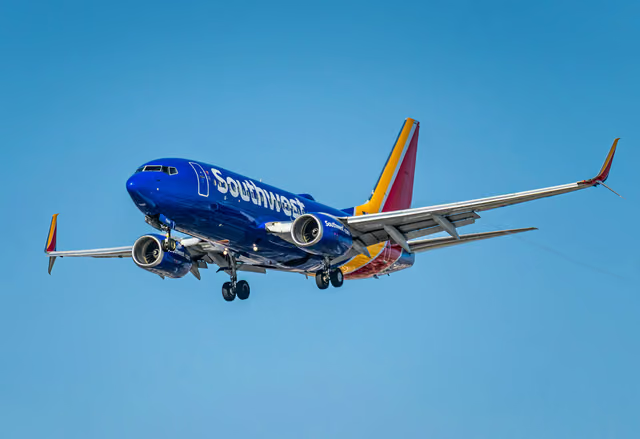
- American Airlines activated secondary cockpit security barriers today on newly delivered aircraft, becoming only the second major U.S. carrier after Southwest to deploy the measure.
- The barriers fulfill the final major aviation security recommendation from the 9/11 Commission, closing a chapter on post-attack safety reforms that began over two decades ago.
- Most travelers won't encounter the barriers anytime soon since only newly delivered planes are equipped, with no current plans to retrofit older aircraft.
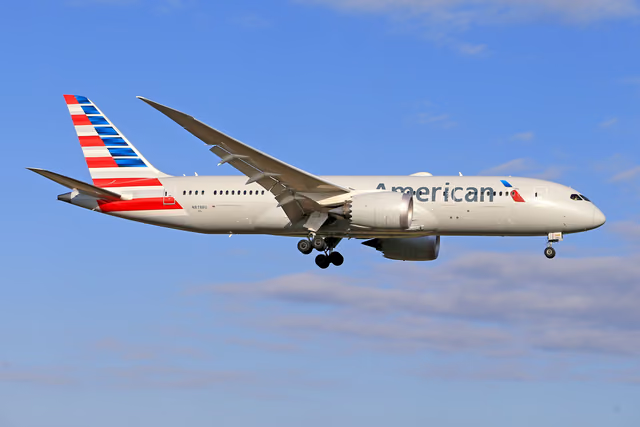
American Airlines quietly crossed a significant aviation security milestone today. Starting June 18, 2026, the carrier began actively using secondary cockpit barriers on select aircraft, a long-discussed layer of flight deck protection that has taken more than two decades to reach broad implementation at U.S. airlines. If you fly American regularly and haven't spotted one yet, that's entirely normal. Only a small portion of the fleet currently has them installed, and it'll take time before these barriers become a standard part of your flying experience. Here's what the change actually means, why it matters, and what you can realistically expect on your next American flight.
What Are Secondary Cockpit Barriers?
The reinforced cockpit door that became standard after September 11, 2001 solved the most obvious vulnerability in flight deck security. But it created a secondary one: every time a pilot needs to exit the cockpit mid-flight, the door has to open. For those brief seconds, the flight deck is momentarily accessible.
For years, airlines handled this the old-fashioned way. Flight attendants would wheel a galley cart into the aisle to physically block passenger access while the door was open. It worked, but it was informal, inconsistent, and dependent entirely on crew positioning and timing.
Secondary cockpit barriers replace that improvised solution with a dedicated, purpose-built barrier that blocks the aisle whenever the reinforced door is opened. Think of it as a secondary gate installed just behind the cockpit door that creates a buffer zone between the passenger cabin and the flight deck during those vulnerable transition moments.
Why American Airlines Is Doing This Now
The timing isn't random. The barriers being deployed today trace directly back to recommendations made by the 9/11 Commission in its 2004 final report. That report laid out dozens of aviation security improvements, most of which were implemented in the years following the attacks. Secondary cockpit barriers were on the list but remained unaddressed at most carriers for two decades.
Southwest Airlines moved first among major U.S. carriers, and American is now the second to follow. By installing barriers on newly delivered aircraft starting August 2025, American has been quietly building toward today's operational launch.
Regulators determined that even though no successful flight deck breach has occurred since reinforced cockpit doors were introduced, the layered approach to aviation safety argues for closing every identifiable gap before an incident forces the issue. That philosophy has defined U.S. aviation safety culture for decades: fix the vulnerability first, don't wait for proof it can be exploited. If you want to understand why frequent flyers remain loyal to American despite its occasional service stumbles, AAdvantage miles are a big part of that equation.
Who Pushed for This Change?
The momentum for secondary barriers didn't come only from regulators. Pilot unions, particularly the Allied Pilots Association representing American Airlines pilots, have been vocal advocates for this specific safety measure for years. Their argument was straightforward: the galley cart workaround was never designed as a security solution. It was an improvised procedure that happened to become standard practice. A dedicated barrier purpose-built for this function is simply a better tool for the job.
The FAA ultimately aligned with that position, and airlines were expected to incorporate barriers into newly manufactured aircraft going forward.
What Travelers Will Actually Experience
If you're flying American Airlines soon, the honest answer is that you probably won't notice anything different. Here's why.
The barriers are only on newly delivered aircraft. American has been taking delivery of new planes since August 2025 with the barriers pre-installed, but those aircraft represent a small fraction of the overall fleet. American operates hundreds of planes, and the legacy aircraft are not being retrofitted at this time.
When you do eventually fly a barrier-equipped plane, the experience from your seat is essentially unchanged. The barrier operates between the cockpit door and the forward galley, out of sight from most passengers. Flight attendants use it as part of their standard procedures when a pilot needs to exit the cockpit. You won't be asked to do anything differently.
Passengers seated in the first few rows of first class may occasionally notice crew activity near the cockpit door, but the barrier itself is designed to blend into the aircraft interior without drawing attention. Speaking of the front of the cabin, if you're not already earning miles toward those premium seats, it's worth knowing whether a travel credit card makes sense for your situation before your next booking.
The Broader Picture for U.S. Aviation Security
American joining Southwest puts meaningful pressure on the remaining major carriers. United Airlines, Delta Air Lines, and others will face increasing scrutiny over their timelines for adopting secondary barriers, particularly as the FAA signals that this is the direction the industry is heading.
The pattern here is familiar. One or two airlines move first, regulatory pressure builds, and the rest follow on similar timelines. Given that newly manufactured aircraft will increasingly arrive with barriers pre-installed, industry-wide adoption is less a question of whether and more a question of when.
Both Southwest and American are now ahead of the field on this specific safety measure. For travelers who regularly book American Airlines flights using AAdvantage miles, this is one more data point suggesting the carrier is taking its operational standards seriously across the board.
Should This Change How You Fly?
Not really, and that's actually the point. Good aviation security improvements work because you don't have to think about them. The reinforced cockpit doors introduced after 9/11 didn't change how passengers experience flying. Secondary barriers won't either.
What this does confirm is that American Airlines is participating in the industry's ongoing safety infrastructure work. For frequent flyers weighing carrier options, that context is useful.
If you want to maximize the value of your American Airlines flying, you have several strong card options. The Citi AAdvantage Platinum Select is the most practical entry point for most travelers, with bonus miles on American purchases, dining, and gas. The Barclays AAdvantage Aviator Red is another solid option worth considering, particularly for its companion certificate benefit. For frequent flyers who want Admirals Club access built into their card, the Citi AAdvantage Executive steps up with lounge access alongside elevated earn rates on American purchases. You can compare the full lineup in our roundup of American Airlines credit cards to find the right fit for your flying frequency. And if lounge access is a priority regardless of which airline you fly most, check out the best credit cards for airport lounge access for a broader look at your options.
What Happens Next
American will continue taking delivery of new aircraft with barriers pre-installed. As older planes cycle out of the fleet through normal retirement schedules, barrier-equipped aircraft will gradually represent a larger share of what you fly. There's no stated timeline for full fleet coverage, and retrofitting older planes remains off the table for now.
Watch for Delta and United to announce their own timelines in the coming months. The FAA's attention on this issue means the remaining holdouts are working toward their own implementation plans, even if nothing is public yet.
For passengers, the bottom line is simple: American Airlines flights are getting incrementally safer through the quiet work of closing a known vulnerability, and you won't need to do anything differently to benefit from it.
Frequently Asked Questions
Which American Airlines planes have the secondary barriers?
Only aircraft newly delivered since August 2025 are equipped with secondary cockpit barriers. Older aircraft in American's fleet are not being retrofitted at this time, so you won't encounter the barriers on every flight.
Do secondary cockpit barriers affect the passenger experience?
No. The barriers are installed in the forward galley area between the cockpit door and the passenger cabin. Most passengers won't see or interact with them at all.
Which other airlines have secondary cockpit barriers?
Southwest Airlines was the first major U.S. carrier to deploy secondary cockpit barriers. American Airlines is now the second. United and Delta have not yet publicly committed to timelines.
Why did it take so long to implement this recommendation?
The 9/11 Commission recommended secondary barriers in its 2004 report, but the measure faced a slow path through regulatory consideration, airline cost planning, and manufacturing logistics. The FAA's position solidified more recently, pushing airlines to incorporate barriers into new aircraft orders.
Is it safe to fly on planes without secondary barriers?
Yes. Reinforced cockpit doors, strict crew procedures, and heightened awareness among crew members and passengers have made in-flight security incidents exceptionally rare. Secondary barriers add one more layer to an already robust system.
This article contains affiliate links. If you apply through our links, we may earn a commission at no cost to you, which helps us continue sharing points and miles strategies with the community.