


Introduction
American Airlines just made a board appointment that's raising eyebrows across the travel industry. The airline tapped Mary Dillon, former CEO of Foot Locker and Ulta Beauty, to join its board of directors in March 2026. While Dillon brings impressive retail credentials, her background at McDonald's and Quaker Oats seems like an odd fit for an airline trying to position itself as premium. Here's what this move means for your AAdvantage strategy and future travel plans.
What Happened
American Airlines announced Mary Dillon's appointment to its board on March 25, 2026. Dillon previously served as CEO of Foot Locker, Ulta Beauty, and US Cellular. Earlier in her career, she held executive positions at McDonald's as CMO and at Quaker Oats as president.
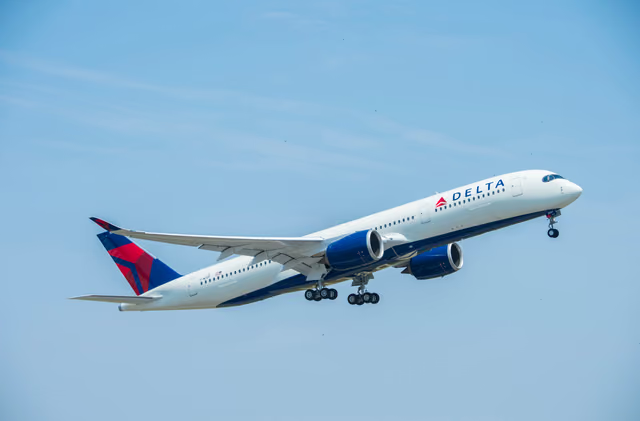
The appointment comes at a critical time for American. The airline didn't turn a profit in 2025, while competitors like Delta and United thrived by focusing on premium travelers. American has publicly stated its intention to shift toward a more premium positioning, mirroring the industry trend where virtually all recent profits have come from business and first-class cabins.
Dillon will serve on the Compensation Committee and the Corporate Governance and Public Responsibility Committee, giving her influence over executive pay and company policies.
Why This Matters for Points and Miles Travelers
American's board composition tells us a lot about where the airline sees itself heading. Former CEO Doug Parker previously complained that the board lacked airline expertise, noting it impacted their understanding of industry dynamics. Dillon doesn't change that equation.
What she does bring is brand experience, particularly in scaling consumer products. That could signal American's intention to approach its premium pivot more like a retail brand transformation than a traditional airline evolution. For AAdvantage members, this matters because retail-minded leadership often means more dynamic pricing, increased segmentation, and aggressive loyalty program changes.
The timing is particularly relevant. American Airlines has been playing catch-up on premium amenities while simultaneously devaluing AAdvantage miles through dynamic pricing. The airline faces a delicate balance: attracting premium travelers willing to pay cash fares while maintaining loyalty among points enthusiasts who've stuck with the program through recent changes.
The Premium Positioning Problem
American's challenge isn't just about adding a board member. The airline has struggled to define what "premium" means in its context. Recent moves include:
- Expanding Flagship Business class on transcontinental routes
- Adding more lie-flat seats to international aircraft
- Introducing Premium Economy across the fleet
- Raising checked bag fees and eliminating free changes on basic economy
But these hardware improvements haven't translated to consistent premium service delivery. American still ranks below Delta and United in customer satisfaction surveys, particularly among business travelers who generate the profits airlines covet.
The McDonald's and Quaker Oats association in Dillon's background creates an unfortunate brand perception problem. Both companies excel at mass-market scale and standardization, the opposite of premium positioning. While Dillon's Ulta Beauty experience is more relevant to premium retail, her food industry background becomes the easy narrative.
What AAdvantage Members Should Watch
Several strategic shifts could emerge from this board evolution:
Loyalty Program Changes: Expect American to continue pushing AAdvantage toward revenue-based earning and dynamic award pricing. The airline wants to reward customers who pay premium fares, not those who maximize credit card spend. If you're sitting on a large AAdvantage balance, consider booking high-value redemptions sooner rather than later.
Credit Card Relationships: American's co-branded cards remain valuable for elite status qualification and earning miles. The Citi AAdvantage Platinum Select currently offers 2x miles on gas and restaurants plus 2x miles on American Airlines purchases, making it a solid option for everyday spending. For premium perks, the Citi AAdvantage Executive provides Admirals Club access and 4x miles on American purchases. American calls Citi "the exclusive issuer of the AAdvantage co-branded card portfolio in the U.S."
However, watch for potential devaluations. The trend across the industry is toward higher spending requirements for the same benefits.
Elite Status Benefits: Premium positioning often means creating more tiers and raising qualification thresholds. American already has Executive Platinum and ConciergeKey levels above Platinum. Don't be surprised if the airline adds new perks for top spenders while reducing benefits for lower tiers.
Route Networks: Premium travelers want direct flights to business destinations. American may reduce service to leisure markets while adding frequency to key business routes. This could impact award availability and redemption options for vacation travelers.
The Board's Bigger Issues
Beyond Dillon's appointment, American's board faces accountability questions. The board has been criticized for not holding management responsible for the airline's underperformance compared to Delta and United. American's operational challenges, customer service issues, and profitability problems persist while executive compensation remains high.
The only board member with significant airline experience is Doug Steenland, former Northwest CEO. His tenure at Northwest was controversial, marked by massive executive payouts during bankruptcy while cutting employee wages. He now chairs American's Compensation Committee, a role that raises eyebrows given that history.
This governance context matters because board composition affects strategic decisions that trickle down to customer experience and loyalty programs. A board that prioritizes short-term financial metrics over long-term brand building could push for aggressive AAdvantage devaluations or service cuts that damage customer loyalty.
Strategic Advice for Points Enthusiasts
Given these industry dynamics, here's how to protect your AAdvantage strategy:
Book valuable redemptions now: If you've been eyeing a business class award to Europe or Asia, don't wait. Award pricing only moves in one direction under dynamic models.
Diversify your points portfolio: Don't keep all your miles in AAdvantage. Programs like Chase Ultimate Rewards and Amex Membership Rewards offer transfer flexibility that hedges against any single airline devaluation. The Chase Sapphire Preferred earns transferable points that work with multiple airline partners, while the American Express Gold Card earns 4x points on dining and groceries.
Focus on cards with transferable points: While co-branded airline cards have their place, transferable points give you options when one program becomes less valuable. The Chase Sapphire Reserve and Capital One Venture X both offer premium travel benefits alongside flexible points currencies.
Monitor elite status ROI: Calculate whether your AAdvantage elite status benefits justify the spending required. If the math doesn't work, consider shifting loyalty to programs offering better returns. Our guide on best credit card rewards programs can help you evaluate alternatives.
Looking Ahead
American Airlines clearly wants to compete for premium travelers, but execution remains the question. Adding a board member with brand experience makes sense in theory. Whether that translates to improved customer experience or just more sophisticated marketing remains to be seen.
For now, AAdvantage remains competitive for domestic travel and has some sweet spots for international redemptions. But the program's trajectory suggests more changes ahead, likely favoring cash-paying premium customers over points optimizers.
Stay flexible with your strategy, book valuable awards when you find them, and keep your options open by maintaining points in multiple programs. The airline industry's premium push isn't slowing down, and neither are the loyalty program changes that come with it. Check out our comprehensive guide on best travel credit cards to explore your options beyond American Airlines.
Updated October 1, 2026: Removed the Barclays AAdvantage Aviator Red as a card to apply for, since American names Citi its exclusive U.S. card issuer.