


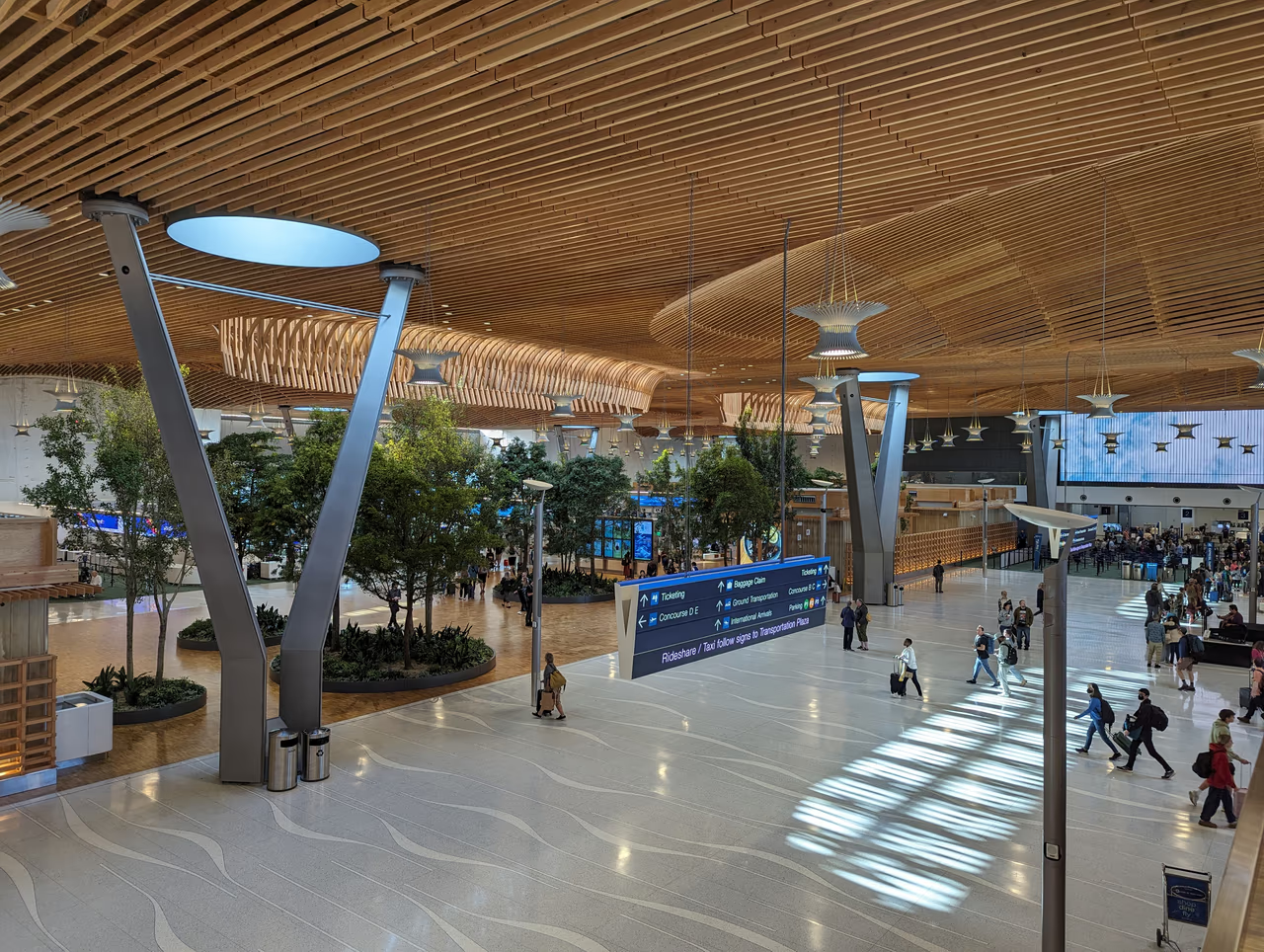
Portland's Alaska Lounge is the newest and one of the largest in the network, and it sits somewhere most people do not look for it. It is not on a concourse. It is upstairs in South Hall, on the mezzanine, above the terminal that Portland spent years rebuilding.
That location matters more than the amenities, because getting there takes a few minutes you need to have budgeted. This guide covers where it is, when it opens, every way in and what each one costs, and the one card that changes the arithmetic.
Every figure here was read on Alaska's own pages and the airport's own pages on September 4, 2026.
Where It Is and When It Opens
Alaska's lounge locations page lists the Portland lounge as South Hall, Mezzanine, open daily 4:30am to 10:30pm, with lounge passes available.
Alaska describes the space as "over 14,000 square feet" with "double the seating and more quiet space to relax, recharge or get work done," a fireplace, and views of the new terminal. That makes it one of the two largest in the network and, at 4:30am, the earliest opening of any Alaska Lounge.
The early open is the practical detail. Portland runs a heavy bank of first departures, and a 6am flight is the case where a lounge either earns its keep or does not. The Alaska Lounge is open ninety minutes before that flight boards. The alternative below opens at the same time.
What Alaska Says Is Inside
Alaska's own description of the Portland lounge is specific enough to be useful: a fireplace, "custom-designed, signature Loungers," and the offer to "treat yourself to a tasty bite, enjoy a complimentary local craft brew or West Coast wine, or perk up with a hand-crafted espresso."
Across the network Alaska describes the proposition as "thoughtfully designed spaces with fresh, seasonal foods and beverages," plus "a handcrafted latte, fast Wi Fi and ample power outlets."
Two things in that are worth separating from marketing. The espresso is barista-made rather than a machine in a corner, which is unusual at this tier of lounge. And the beer and wine are included rather than a paid bar, which is the difference that decides whether a $65 walk-up pass returns anything: two drinks and a plate at airport prices is most of the way to the pass price on its own.
The one thing Alaska does not claim is a full restaurant. This is a buffet-and-bar lounge, not a sit-down dining product, and if you are arriving hungry before a five-hour flight it is worth knowing that before you pay to get in.
Who Else Can Use It
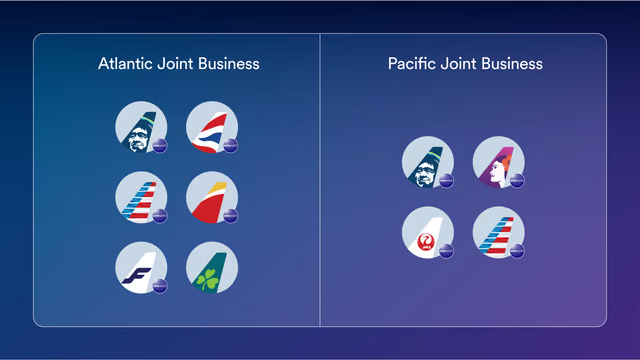
Access is not limited to people flying Alaska. Alaska's rule is same-day ticketed travel on "Alaska or Hawaiian Airlines, a fellow oneworld member airline, or one of our additional global partners."
That is a wide door. Alaska joined oneworld, and Hawaiian is now part of the same group, so a British Airways, American, Japan Airlines, Qantas, Iberia, Finnair or Qatar Airways ticket out of Portland qualifies on the same basis as an Alaska one. If you hold a Hawaiian Airlines card or fly the network on a partner, the lounge is available to you at the same prices.
The practical consequence is that the Portland lounge is a reasonable option on a partner itinerary where you would otherwise assume you had nothing. Check the operating carrier rather than the code on your ticket.
The Full Alaska Lounge Network
Five lounges, and the hours differ enough to matter when you are connecting.
| Location | Where | Hours |
|---|---|---|
| Portland (PDX) | South Hall, Mezzanine | 4:30am to 10:30pm |
| Anchorage (ANC) | Concourse C, near Gate C-1 | 5am to 1am |
| Los Angeles (LAX) | Terminal 6, mezzanine near Gate 64 | 5am to 11pm |
| Seattle (SEA), C Concourse | Mezzanine next to Gate C-16 | 5am to 7pm |
| Seattle (SEA), N Concourse | Mezzanine above Gates N13 to N18 | 5am to 11pm |
The Seattle C Concourse lounge closing at 7pm is the trap in that table. It is the one people plan an evening connection around and find shut.
Every Way in, and What It Costs
Four routes, and they are priced very differently.
A single-entry pass, $65. Alaska states the price as "$65 USD per person" and adds that "passes are sold when space is available and capacity may be managed based on operational needs." Two rules attach to it that catch people out. The pass is "valid only at the location of purchase," so a Portland pass does not get you into Seattle on the same trip. And passes "must be used in conjunction with same-day, ticketed air travel on Alaska or Hawaiian Airlines, a fellow oneworld member airline, or one of our additional global partners."
A membership. Alaska Lounge and Lounge+ memberships cover all Alaska Lounges, and the Lounge+ tier extends to partner lounges. Pricing is behind the enrollment flow rather than on a public page, which is why no figure for it appears in this article.
The Atmos Rewards Visa Summit Card. Covered in its own section below, because it is the route that actually changes the math.
Military access. Alaska gives complimentary day passes to "U.S. military personnel traveling on official government-sponsored travel booked through SATO and ticketed to fly on an Alaska flight departing within 3 hours." All other Active Duty personnel with valid ID can buy a pass at a discounted $35 when traveling on Alaska, at any Alaska Lounge location.
Two more rules worth knowing before you arrive with family. One pass is required per person, but "children younger than 2 can accompany an adult member at no charge," and "guests under 18 must be accompanied by an adult."
The Card That Changes the Arithmetic
The Atmos Rewards Visa Summit Card carries a $395 annual fee and, in Alaska's words, gives you "two Alaska Lounge day passes each quarter for access to any Alaska Lounge before your flight."
That is eight passes a year. At the $65 walk-up price Alaska charges for the same thing, eight passes is $520 of lounge access against a $395 fee. That figure is arithmetic on two numbers Alaska publishes, not a valuation, and it is the cleanest case for the card if you fly Alaska out of Portland with any regularity.
Two details make the passes better than they first appear. Alaska states each pass "is valid for your entire travel day, so you can access multiple lounges along your journey," which quietly solves the location-of-purchase restriction that applies to bought passes. And each one "includes entry for up to two accompanying children."
Through 2026, Alaska also says Summit cardholders "visiting the Alaska Lounge receive access to an all-new premium bar experience when they show their Summit Card."
The card's other headline benefits sit outside the lounge question but belong in the decision: 80,000 bonus points and a 25,000-point Global Companion Award after $4,000 of purchases in the first 90 days, a 25,000-point Global Companion Award on each anniversary, 3 points per dollar on dining and on Alaska and Hawaiian purchases, and a $50 voucher when an Alaska flight is canceled or delayed two hours or more on the day.
Our guide to the Summit card's status benefits covers the earning side, and Alaska's 2026 program changes explain the rename from Mileage Plan to Atmos Rewards that reshaped all of this.
The Other Lounge at PDX
The Alaska Lounge is not the only option, and for a large number of travelers it is not the right one.
Portland's airport lists an Escape Lounge, post-security on Concourse D, open daily 4:30 AM to 12:00 AM. It opens at the same hour as the Alaska Lounge and stays open ninety minutes later.
Escape prices walk-up entry at $30 per person, less than half the Alaska price. It admits American Express Platinum card members free when traveling that day, Delta SkyMiles Reserve card members free when traveling on a Delta-marketed flight that day, and Priority Pass members who pre-book. Children under 3 enter free.
That produces a clear split. If you hold a Platinum card, you already have a Portland lounge and do not need to buy anything. If you fly Alaska and hold the Summit card, you have the Alaska Lounge. If you hold neither, the $30 Escape entry is the cheaper walk-up by a wide margin.
Our roundup of lounge-access cards compares the networks properly, and our Priority Pass comparison covers which cards still include it and with what caps.
The Arithmetic, Laid Out
Three ways to buy the same seat, priced against how often you actually fly Alaska from Portland.
| Trips a year through an Alaska Lounge | Pay per visit | Summit card |
|---|---|---|
| 2 | $130 | $395 |
| 4 | $260 | $395 |
| 6 | $390 | $395 |
| 8 | $520 | $395 |
| 12 | $780 | $395, and you run out of passes at eight |
Six visits is roughly where the card stops costing more than the passes, on lounge access alone. Below that the card has to be justified by the companion award and the earning rather than by the lounge, and above eight the passes run out and you are back to paying or holding a membership.
That table is deliberately narrow. It prices one benefit against one cost and ignores everything else the card does, which is the honest way to answer "should I get this for the lounge." The companion award alone is worth more than the fee to some people and nothing at all to others, and no table settles that.
Is the Alaska Lounge Worth It at Portland
Three cases, and they resolve differently.
You fly Alaska out of Portland more than four times a year. The Summit card is the answer. Eight passes cover eight trips, the fee is below the walk-up value of the passes alone, and the companion award is worth more than the lounge. Getting to the card through the Atmos Rewards program is the first step.
You fly out of Portland occasionally, on any airline. Escape at $30 is the better buy, and if you carry a Platinum card it costs nothing. Paying $65 for the Alaska Lounge makes sense only if you are on an Alaska itinerary and want the specific product.
You are connecting rather than originating. Check the hours in the table above rather than assuming. Portland runs to 10:30pm, which covers most Alaska evening departures, but the Seattle C Concourse lounge at 7pm does not, and that is the one most likely to disappoint on a westbound evening connection.
Before You Go
Four things, quickly.
Budget the walk. South Hall mezzanine is not on a concourse. Give yourself ten minutes from the lounge to your gate that you would not need at an airport where the lounge sits beside it.
Buy the pass at the airport you are using it in. A purchased pass is valid only where you bought it. A Summit card pass is not, which is the difference worth paying for if you connect.
Confirm you are on a qualifying ticket. Same-day travel on Alaska, Hawaiian, a oneworld carrier or an Alaska global partner. A pass with no qualifying flight is a pass you cannot use.
Check space before you count on it. Alaska says passes are sold "when space is available and capacity may be managed based on operational needs." On a heavy morning bank in Portland that is not boilerplate, and it is the reason a Summit card pass is worth more than the $65 it replaces: a pass you already hold does not depend on the desk having capacity to sell you one.
One More Thing Worth Knowing
Alaska renamed its loyalty program from Mileage Plan to Atmos Rewards, and the card names changed with it. If you are searching for the old names you will find outdated pages, including pages that still describe lounge access under the previous card lineup.
The lounge product itself did not change in that transition. The locations, the hours, the $65 pass and the same-day-travel rule are all as Alaska publishes them today. What changed is the branding on the card that carries the passes, and the points currency the card earns. Our coverage of Alaska's 2026 program changes sets out what moved and what did not, and the Atmos for Business launch covers the business side of the same rebrand.