
Back

Virgin Points 70% Bonus: Buy at 0.89p or 1.47¢ (Through March 31)

Airlines
February 25, 2026
The Points Party Team
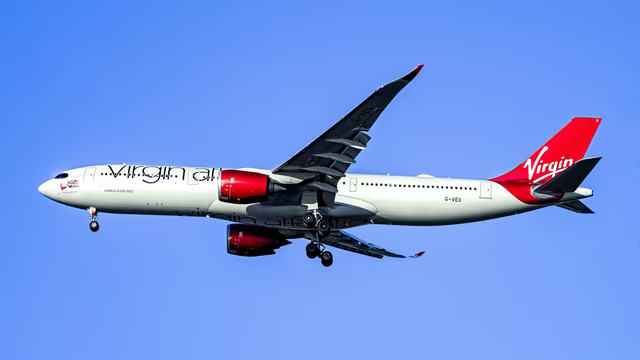
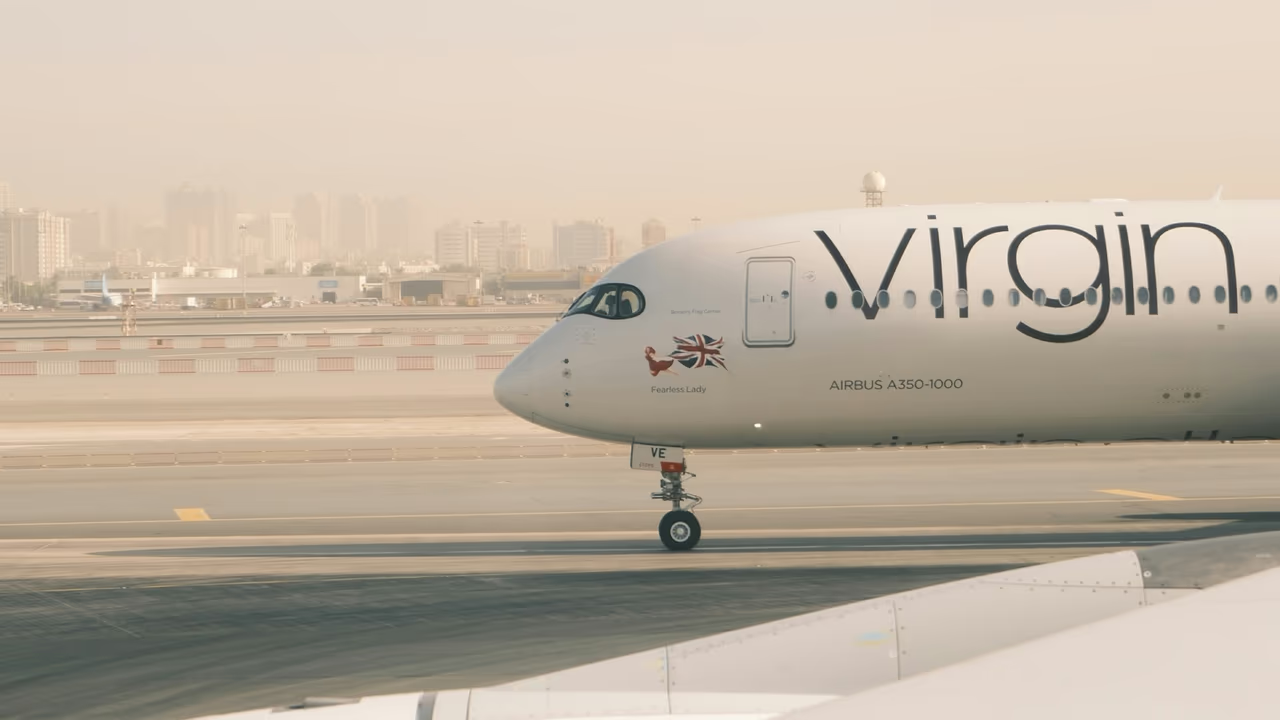
Virgin Atlantic A350 on runway.

Virgin Atlantic is offering up to 70% bonus points through March 31, 2026, bringing the cost down to just 0.89 pence or 1.47 cents per point when you buy 125,000+ points. This is their standard promotional rate that appears every few months, but it's worth jumping on if you have specific redemptions in mind.

Here's what makes this deal work: Virgin Atlantic joined SkyTeam in March 2023, dramatically expanding your redemption options beyond just Virgin Atlantic flights. You can now book Delta, Air France, KLM, and the entire SkyTeam network using Virgin points, often at better rates than transferring to the airlines directly.

The bonus structure is straightforward. Buy 5,000-24,000 points and get 20% bonus. Purchase 25,000-69,000 and receive 40% bonus. Go for 70,000-124,000 points and you'll get 60% bonus. The sweet spot is 125,000-300,000 points, earning you 70% bonus and the lowest per-point cost.

At the maximum tier, buying 300,000 points gets you 510,000 total points for $7,522 (US residents) or £4,515 (UK/other countries). That works out to 1.47 cents or 0.89 pence per point. UK residents get the better deal due to currency pricing.

Is it worth buying? That depends entirely on your redemption plan. Virgin Atlantic charges hefty fuel surcharges on their own flights, but partner awards often have minimal fees. ANA first class bookings through Virgin are legendary deals, and Delta redemptions can offer solid value when paid fares are high.

The catch: Virgin Atlantic switched to dynamic pricing in October 2024, so award costs fluctuate based on demand. You need flexibility and a specific use case to make purchased points worthwhile.

Bottom line: If you've found available award space for a trip you're taking anyway, and the math works out cheaper than buying a ticket, this bonus makes sense. If you're buying speculatively hoping to find a deal later, you're taking a gamble on dynamic pricing and availability.

Buy Virgin Points with 70% bonus here →

Complete Guide: When Buying Virgin Points Actually Makes Sense

Understanding the Real Cost

Let's cut through the marketing and look at what you're actually paying. The base price is £15 per 1,000 points plus a £15 transaction fee, or $24.50 per 1,000 points plus a $22 transaction fee for US customers.

That transaction fee matters a lot at lower purchase amounts. Buying 5,000 points costs you £90 total (£75 + £15 fee), but you receive 6,000 points with the 20% bonus. That's 1.5 pence per point—not a great deal. But buying 300,000 points at the top tier costs £4,515, and you receive 510,000 points. Now you're paying 0.89 pence per point, nearly half the cost.

Here's the complete pricing breakdown:

UK Pricing (Pounds Sterling):

  • 5,000 points purchased → 6,000 received (20% bonus) = 1.50p per point
  • 25,000 points purchased → 35,000 received (40% bonus) = 1.11p per point
  • 70,000 points purchased → 112,000 received (60% bonus) = 0.95p per point
  • 125,000 points purchased → 212,500 received (70% bonus) = 0.89p per point
  • 300,000 points purchased → 510,000 received (70% bonus) = 0.89p per point

US Pricing (Cents):

  • 5,000 points purchased → 6,000 received (20% bonus) = 2.45¢ per point
  • 25,000 points purchased → 35,000 received (40% bonus) = 1.85¢ per point
  • 70,000 points purchased → 112,000 received (60% bonus) = 1.58¢ per point
  • 125,000 points purchased → 212,500 received (70% bonus) = 1.48¢ per point
  • 300,000 points purchased → 510,000 received (70% bonus) = 1.47¢ per point

The currency difference exists because Virgin Atlantic sets separate pricing for US and UK customers. If you have addresses in both countries, use your UK address for the better rate.

When the Math Actually Works

Buying points makes sense in three specific scenarios: topping off your account for a confirmed redemption, booking partner airlines with low surcharges, or securing hard-to-earn points for aspirational redemptions.

Topping off scenario: You have 45,000 Virgin points and found award availability for an ANA first class seat that costs 110,000 points. You need 65,000 more points. The cheapest way to get there is buying 70,000 points for £1,065 ($1,772), receiving 112,000 points with the 60% bonus. You'll pay 0.95p or 1.58¢ per point for exactly the points you need.

Partner airline redemptions: Virgin's fuel surcharges on their own flights are brutal (£300-600 on transatlantic routes), but partner awards often have minimal fees. Booking Delta between the US and Europe can cost just $100-150 in taxes. If you're paying 1.47¢ per point and redeeming for flights that would cost $2,000+ in cash, you're getting 4+ cents per point in value—more than double your purchase cost.

Aspirational redemptions: ANA first class Tokyo to New York costs 110,000 Virgin points one-way. The cash price for this ticket regularly exceeds $15,000. Buying 125,000 Virgin points (receiving 212,500 with bonus) for $3,147 lets you book this flight twice with points left over. Your effective price per flight: $1,573. That's extraordinary value for one of the world's best first class products.

The math falls apart when you buy points without a specific redemption plan. Virgin's dynamic pricing means award costs fluctuate. That Delta flight you researched at 50,000 points might jump to 80,000 points when you're ready to book. Now your cost per point calculation is worthless.

Virgin Atlantic's Fuel Surcharge Problem

Virgin Atlantic adds carrier-imposed surcharges to award tickets on their own flights. These "fuel surcharges" aren't actual fuel costs, they're revenue for the airline. On a London to New York business class award, you might pay 50,000 points plus £450 in surcharges. At 0.89p per point, you've spent £445 on points plus £450 in cash—£895 total ($1,460). You can often find paid business class fares for similar prices during sales.

Partner awards typically avoid these massive surcharges. Delta flights booked with Virgin points usually have $100-200 in taxes. Air France and KLM are moderate, around €150-250. ANA charges minimal fuel surcharges, making those redemptions particularly valuable.

Before buying points for Virgin Atlantic flights, calculate your total out-of-pocket cost including surcharges. Search award availability first, note the points required and cash taxes, then do the math. You might find the "deal" isn't actually cheaper than buying a ticket.

The SkyTeam Factor Changes Everything

Virgin Atlantic joined SkyTeam in March 2023, and this partnership transformed the value proposition of Virgin points. You can now book any SkyTeam airline using Virgin points, often at better rates than transferring points to that airline directly.

Delta redemptions through Virgin Atlantic frequently beat Delta's own pricing. Where Delta might charge 70,000 SkyMiles for domestic first class, Virgin might price the same flight at 40,000-50,000 points. International Delta business class can run 200,000+ SkyMiles, while Virgin prices similar routes at 100,000-150,000 points.

Air France and KLM bookings work similarly. Virgin's award chart (when they show reasonable dynamic pricing) often undercuts Air France Flying Blue's rates. The catch is availability—you can only book what SkyTeam makes available to partner airlines, which isn't always the same inventory you'd see searching directly.

Other SkyTeam partners accessible through Virgin include Aeromexico, China Eastern, Czech Airlines, Garuda Indonesia, ITA Airways, Kenya Airways, Korean Air, Middle East Airlines, Saudia, Tarom, Vietnam Airlines, and Xiamen Airlines. This gives you genuine worldwide coverage.

The best strategy is using award search tools like Award Tool or Seats.aero to find availability across multiple programs, then comparing point costs. Virgin's pricing might win, or you might find a better deal transferring to Flying Blue or another program.

The Dynamic Pricing Reality

Virgin Atlantic switched to dynamic pricing in October 2024. Award costs now fluctuate based on demand, route, season, and Virgin's revenue management decisions. The old fixed award charts are gone.

Dynamic pricing has winners and losers. Off-peak routes see cheaper awards than before. Peak summer and holiday travel costs more—sometimes dramatically more. You can't predict what an award will cost six months from now.

This unpredictability makes buying points riskier. The safest approach is finding available award space first, confirming the point cost, then buying only the points you need for that specific redemption. Buying speculatively and hoping for good redemption rates later is gambling.

Virgin generally prices awards between 0.8-2.0 cents per point in value compared to cash fares. On the low end, you're barely breaking even after buying points. On the high end, you're getting solid value. Check the specific redemption before buying.

Better Alternatives to Buying Points

Before you buy Virgin points, consider whether earning them makes more sense. Several credit card programs transfer to Virgin Atlantic, often with bonuses that beat this 70% purchase bonus.

Amex Membership Rewards transfers to Virgin Atlantic 1:1. Amex frequently offers 30-40% transfer bonuses to Virgin, occasionally hitting 50%. If you have Membership Rewards points already, wait for a transfer bonus instead of buying points. You'll get better value.

Chase Ultimate Rewards transfers 1:1 to Virgin Atlantic. Chase runs transfer bonuses less frequently than Amex, but when they do it's usually 30%. If you have Chase points sitting idle, a transfer bonus beats buying.

Citi ThankYou Points transfers 1:1. Citi rarely offers Virgin transfer bonuses, but the base rate is solid if you have ThankYou points to convert.

Capital One Miles transfers 1:1. Capital One occasionally offers transfer bonuses across their partner network, though Virgin isn't typically included.

The math is simple: transferring existing credit card points costs you nothing extra. Buying points costs real cash. If you have transferable points, use those first.

Strategic Purchase Amounts

The bonus tiers create strategic purchase amounts that maximize value. Don't buy random quantities—target these sweet spots.

125,000 points minimum for best rate: This is the threshold for 70% bonus. You'll pay £1,890 ($3,147) and receive 212,500 points. Below this threshold you're paying more per point. If you don't need this many points, reconsider whether buying makes sense.

200,000 points for flexibility: Buy 200,000 and receive 340,000 points for £3,015 ($5,022). This gives you enough points for most business class redemptions or multiple economy awards. It's a reasonable balance between cost and flexibility.

300,000 points maximum: This is Virgin's purchase limit. Buy 300,000 and receive 510,000 points for £4,515 ($7,522). You'll have enough for two long-haul business class awards or aspirational first class redemptions. Only do this if you have multiple specific bookings planned.

Avoid buying at the bottom tiers unless you're topping off for a confirmed redemption. The 20% bonus on 5,000 points isn't enough to offset the transaction fee and higher per-point cost.

The Account Zero Balance Restriction

Here's an annoying catch: Virgin Atlantic won't let you buy points if your account balance is zero. You need at least some points in your account to access the purchase page.

The workaround is simple but requires planning. Transfer a small amount of points from Amex, Chase, or another credit card partner. The minimum transfer is usually 1,000 points. Once those points post to your Virgin account (typically within 24-48 hours), you can buy additional points.

This restriction means you can't impulse-buy Virgin points during a promotion if you've never engaged with the program. You need to establish your account first.

Tax Implications and Payment Strategy

Buying Virgin points is a cash transaction, not a credit card spending bonus. You won't earn credit card points on the purchase. However, you can still optimize how you pay.

Use a no foreign transaction fee card: Virgin charges in pounds or dollars, but your bank might add a foreign transaction fee anyway depending on their processing. Use a card with no FTF to avoid unnecessary fees.

Consider cards that earn extra on travel purchases: Some cards code Virgin point purchases as travel. The Capital One Venture X and Chase Sapphire Reserve both earn bonus points on travel spending. Test a small purchase first to confirm how it codes with your issuer.

Don't use a card you're trying to meet minimum spend on: Buying points doesn't count as organic spending for welcome bonus purposes. Use a card where you're already past the minimum spend threshold.

Consider cash back cards: If point purchases don't code as travel, use your best flat-rate cash back card. Earning 2% cash back on a £4,515 purchase saves you £90.

UK residents paying in pounds sometimes see better exchange rates using a UK-issued card versus an international card. Test both options if you have access to cards from multiple countries.

Checking Award Availability First

Don't buy points until you've confirmed award availability for your intended trip. Virgin's award space is limited, and finding availability requires patience and flexibility.

Virgin releases award space 355 days before departure. Popular routes and dates book up quickly, especially in business and first class. The window for good availability is often 6-12 months out, with a secondary surge 2-3 weeks before departure when Virgin releases unsold inventory.

Use award search tools to check availability before buying:

Virgin Atlantic's website: Shows only Virgin Atlantic availability, not partner airlines. Search specific routes and dates to see what's bookable. The website is slow and frustrating, but it's the only place to see Virgin's own inventory.

Award search tools: Services like Award Tool and Seats.aero aggregate availability across multiple programs. You can see Virgin award space alongside Delta, Air France, and others to compare rates and availability. Award Tool costs $12/month but saves hours of manual searching. [Use code TPP20 for 20% off].

Partner airline websites: Search Delta's website for Delta flights, ANA's website for ANA flights, etc. If you see partner award space there, it's usually bookable through Virgin. Confirm point costs on Virgin's site before buying.

The worst scenario is buying 200,000 points then discovering your desired flight isn't available or costs far more points than expected. Always search first.

The 14-Day Refund Window

Virgin Atlantic offers a 14-day refund window on point purchases, but there's a critical restriction: you can only get a refund if you haven't used any of your purchased points.

This creates a narrow use case. You could buy points, book an award, and if something goes wrong with the booking (cancelled flight, schedule change you don't like), cancel the award and request a refund within 14 days. The points return to your account, and you can request a refund of your purchase.

The refund policy doesn't help much for speculative purchases. If you buy points hoping to find availability later, those points are essentially non-refundable once you've started using them.

Read this as: buy points only when you have a specific redemption ready to book immediately. The 14-day window is an emergency escape hatch, not a trial period.

Fuel Surcharge Workarounds

Virgin's fuel surcharges on their own flights are painful, but you have options to minimize or avoid them entirely.

Book partner airlines: Delta, ANA, Air France, KLM, and other SkyTeam partners have lower surcharges. Delta typically charges $100-200 in taxes. ANA is similar. You're booking with Virgin points but flying on partner metal, avoiding Virgin's carrier-imposed charges.

Fly from different airports: Surcharges vary by country of origin due to local regulations. UK departures have the highest surcharges. US departures are moderate. Departing from other countries can be even cheaper. If you have flexibility, search awards from different cities to compare total costs.

Book positioning flights separately: If your ideal routing requires a Virgin Atlantic flight segment, consider booking that portion with cash or other points and using Virgin points only for the segments with low surcharges. This is complex but can save hundreds in fees.

Mix and match programs: Sometimes the optimal strategy is using Virgin points for part of your trip and other programs for other segments. Virgin points for an ANA flight between Tokyo and New York, then Delta miles for your US domestic positioning, might cost less overall than trying to do everything through one program.

The key is calculating your total out-of-pocket cost including all taxes and fees. Points are part of the equation, but cash costs matter just as much.

How Often This Promotion Runs

Virgin Atlantic runs this exact promotion—up to 70% bonus—roughly every 2-3 months. Looking at the historical pattern:

  • February 2026 (current)
  • December 2025
  • September 2025
  • June 2025
  • February 2025
  • October 2024
  • June 2024
  • March 2024
  • December 2023
  • September 2023

The bonus percentage and tier structure remain consistent. The only variables are promotion duration (usually 3-5 weeks) and maximum purchase limit (300,000 points during this promotion).

This consistency means you don't need to panic-buy during every promotion. If you miss this one, another will likely appear in 8-12 weeks. However, if you have a specific redemption ready to book now, don't wait hoping for a better deal. This 70% bonus is Virgin's standard best offer.

The one exception: Virgin occasionally runs transfer bonuses from credit card programs instead of purchase bonuses. If you have Amex Membership Rewards, a 50% transfer bonus is better than buying points at 70% bonus since transferring doesn't cost cash. Wait for transfer bonuses if you have points to convert.

Real Example Scenarios

Let's work through specific examples to see when buying points makes financial sense versus when it doesn't.

Scenario 1 - ANA First Class Tokyo to New York:

  • Award cost: 110,000 Virgin points
  • Taxes and fees: ~$150
  • Cash ticket price: $15,000+
  • Point purchase cost: Buy 125,000 points (receive 212,500) for $3,147
  • Total redemption cost: $3,147 + $150 = $3,297
  • Savings versus cash: Over $11,000
  • Verdict: Excellent value

Scenario 2 - Virgin Atlantic Business Class London to New York:

  • Award cost: 50,000 Virgin points
  • Taxes and fees: £450 ($735)
  • Cash ticket price during sale: $1,500
  • Point purchase cost: Buy 70,000 points (receive 112,000) for $1,772
  • Total redemption cost: $1,772 + $735 = $2,507
  • Savings versus cash: -$1,007 (you lose money)
  • Verdict: Terrible value, buy a cash ticket

Scenario 3 - Delta Business Class New York to Paris:

  • Award cost: 90,000 Virgin points (dynamic pricing)
  • Taxes and fees: $180
  • Cash ticket price: $3,500
  • Point purchase cost: Buy 125,000 points (receive 212,500) for $3,147
  • Total redemption cost: $3,147 + $180 = $3,327
  • Savings versus cash: $173
  • Verdict: Marginal value, but you get business class

Scenario 4 - Using Existing Points Plus Top-Up:

  • You have: 80,000 Virgin points from credit card transfers
  • You need: 110,000 for ANA first class
  • Buy: 25,000 points (receive 35,000 with bonus) for $647
  • Total redemption cost: $647 + $150 taxes = $797
  • Cash ticket price: $15,000+
  • Verdict: Phenomenal value when topping off

These examples show the pattern: partner airlines with low surcharges offer the best value. Virgin's own flights often fail the math test. Topping off existing points balances beats buying speculatively.

Virgin Points Never Expire

One genuine advantage: Virgin points never expire as long as your account remains active. You can buy points now and save them for years without worry.

Most airline programs have expiration policies. United miles expire after 18 months of inactivity. American and Delta reset every 24 months unless you earn or redeem. Virgin points never expire, period.

This doesn't mean you should buy points without a plan and let them sit forever. Dynamic pricing means future redemption values are unpredictable. But if you have a trip planned for 12 months from now and want to lock in today's pricing, buying points now won't trigger expiration concerns.

The no-expiration policy also makes topping off strategies work better. If you're 30,000 points short of an award, you can buy those points today and wait several months for the right award availability without rushing.

Bottom Line: Should You Buy?

Buy Virgin points during this promotion only if:

  1. You've found specific award availability you want to book
  2. You've calculated total out-of-pocket cost including all taxes and fees
  3. The redemption saves you meaningful money versus buying a cash ticket
  4. You're targeting partner airlines with low surcharges, not Virgin Atlantic's own flights
  5. You're buying at the 125,000+ point tier to get the best rate

Don't buy if:

  1. You're buying speculatively hoping to find a good deal later
  2. You have transferable credit card points and could wait for a transfer bonus
  3. The redemption doesn't save you money versus a cash ticket after accounting for surcharges
  4. You're buying at lower tiers with worse per-point costs

Virgin points can unlock incredible value on specific redemptions, particularly ANA first class and Delta business class. But they're not a universal good deal. Do the math for your specific use case before buying.

Ready to buy? Get your 70% bonus Virgin points here →

Want to maximize your points strategy beyond Virgin Atlantic? Check out our guides to Chase Ultimate Rewards, Amex Membership Rewards, and Capital One Miles to see which program fits your travel goals.

This article contains affiliate links. If you apply through our links, we may earn a commission at no cost to you, which helps us continue sharing points and miles strategies with the community.

No items found.
Tags: 
Airlines