
Back

TSA Delays Hit 3 Hours: Your Survival Guide for the 2026 Government Shutdown

Travel
March 9, 2026
The Points Party Team
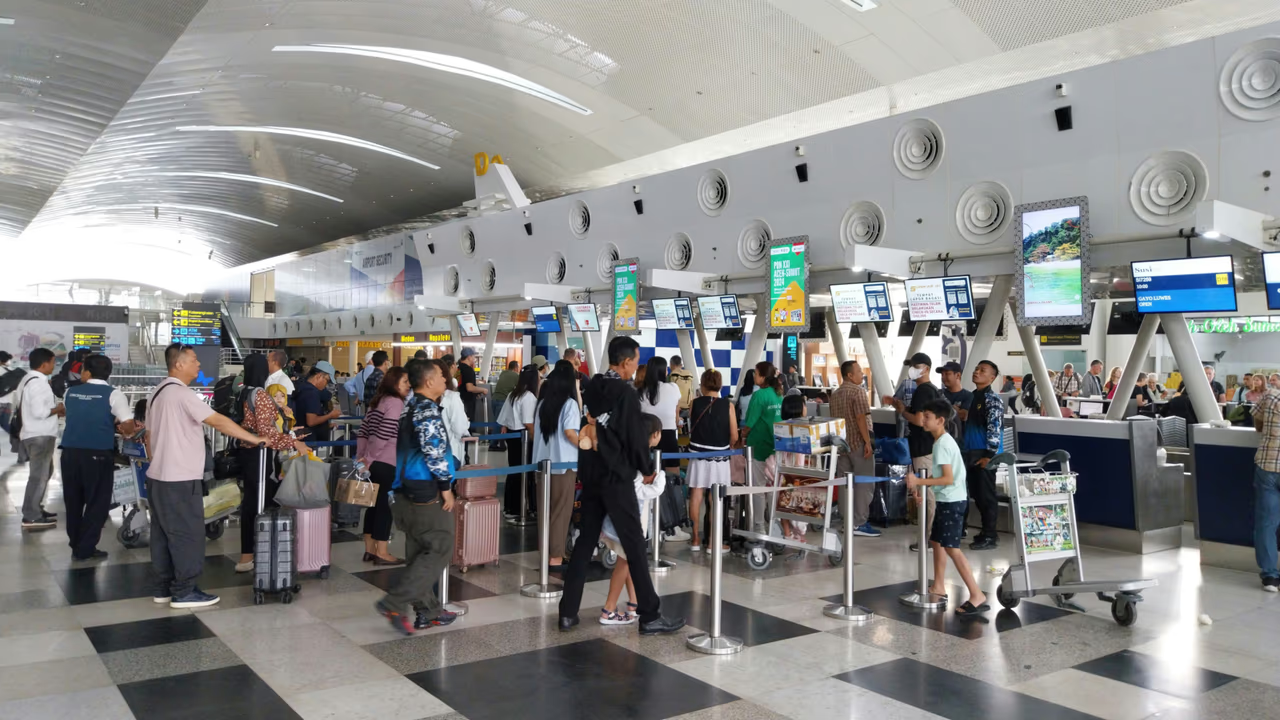
Passengers with luggage waiting at an airport check-in counter

TSA Delays Hit 3 Hours: Your Survival Guide for the 2026 Government Shutdown

Key Points:

  • TSA security wait times are reaching three hours at major airports like Houston Hobby and Atlanta as 63,000 unpaid TSA officers call out sick during the fourth week of the DHS shutdown.
  • TSA PreCheck remains operational but Global Entry is suspended indefinitely, leaving international travelers without expedited customs clearance when returning to the U.S.
  • Arriving 3-4 hours early is now essential, but strategic rebooking, credit card protections, and alternative airports can help you avoid missed flights and maximize your points in the chaos.

The partial government shutdown affecting the Department of Homeland Security just entered its fourth week, and airport security lines are collapsing under the strain. TSA wait times hit three hours at Houston's William P. Hobby Airport over the weekend, with similar multi-hour delays reported in Atlanta, New Orleans, and Charlotte. If you've got travel planned in the coming weeks, you need a game plan that goes beyond just showing up earlier.

Here's everything you need to know about navigating TSA delays during the shutdown, protecting your trip with credit card benefits, and making smart points decisions when rebooking becomes necessary.

What's Actually Happening at TSA Right Now

TSA officers received only a partial paycheck on February 28 and are set to miss their first full paycheck on March 14. The predictable result? Mass callouts from workers who can't afford to work without pay.

The damage isn't evenly distributed. Here are the airports seeing the worst delays:

Critically Affected Airports:

  • Houston Hobby (HOU): 3-hour average wait times, with the airport advising passengers to arrive 4-5 hours early
  • Atlanta (ATL): 1-hour average delays, compounded by recent weather disruptions that canceled 4% of Sunday's flight schedule
  • New Orleans (MSY): 1-2 hour waits with lines stretching into the parking garage
  • Charlotte (CLT): 47-minute average delays
  • Houston Bush (IAH): 51-minute delays

TSA screens an estimated 2.8 million passengers daily during March and April, the peak spring break travel season. The timing couldn't be worse.

TSA PreCheck vs Global Entry: What Still Works

Here's the critical distinction that's confusing travelers:

TSA PreCheck: Still Operating

Despite earlier confusion when DHS initially announced PreCheck would shut down on February 22 before reversing course, the expedited security program remains functional. However, TSA will evaluate operations "on a case-by-case basis" and adjust according to staffing constraints.

What this means in practice: PreCheck lanes are open, but they may move slower than usual or temporarily close at smaller airports if staffing becomes critical. It's still your best bet for avoiding the worst delays.

Global Entry: Completely Suspended

Global Entry kiosks remain closed at airports nationwide, forcing international travelers to use standard customs lanes when returning to the U.S. This adds significant time to your arrival process, especially at major international gateways.

Your alternative? Mobile Passport Control, which is free and doesn't require the in-person interview that Global Entry does. Download the app before your next international trip.

Your 5-Step Survival Strategy for Flying During TSA Chaos

1. Arrive Earlier Than You Think You Need To

The standard advice of "2 hours for domestic, 3 hours for international" is dangerously outdated right now. Airports in Houston, Atlanta, and New Orleans are telling passengers to arrive 3-4 hours before departure.

But here's the smarter approach: Check your specific airport's social media before you leave. Atlanta's Hartsfield-Jackson, Houston Hobby, and New Orleans MSY are all posting real-time wait estimates. If they're reporting 2+ hour delays at 6 AM, assume it'll be worse by your 10 AM flight.

Your arrival formula:

  • Normal security time for your airport
  • Plus 90-120 minutes extra during the shutdown
  • Plus an additional 30 minutes if you don't have PreCheck
  • Plus weather delays if applicable

Yes, that might mean showing up 4 hours early for a domestic flight. Better bored at your gate than sprinting through the terminal just to watch your plane push back.

2. Use Your Credit Card's Trip Delay and Missed Connection Coverage

If you miss your flight due to TSA delays, your premium travel credit card likely has your back. Here's what major cards cover:

Chase Sapphire Reserve: Trip delay reimbursement kicks in after a 6-hour delay, covering up to $500 per ticket for meals and lodging. Missed connection coverage provides similar protection.

American Express Platinum: Trip delay insurance starts after just a 6-hour delay, reimbursing up to $500. The card also offers baggage insurance and lost luggage coverage if your bags get separated during rebooking chaos.

Capital One Venture X: Provides trip delay reimbursement after a 3-hour delay (the shortest wait period among premium cards), covering up to $500 per person.

The key is documenting everything. Take photos of the TSA wait time boards showing multi-hour delays, save your missed flight confirmation, and keep all receipts for meals and hotel stays. Most card issuers require claims within 60-90 days.

If you don't currently have one of these cards, now's the time to consider applying. The Chase Sapphire Reserve and Capital One Venture X both offer substantial trip protection benefits that could save you hundreds during this shutdown.

3. Rebook Strategically to Protect Your Points

If you booked with points and need to rebook due to TSA chaos, the rules vary wildly by program. Understanding these differences helps you preserve your hard-earned rewards.

Award Tickets That Redeposit Free:

  • Southwest Rapid Rewards: Cancel anytime, get points back immediately with no fee
  • Delta SkyMiles: No redeposit fee, though you may lose value if repricing
  • United MileagePlus: No redeposit fee for cancellations, though same-day changes cost $100
  • American AAdvantage: Free cancellation within 24 hours of booking; $150 fee after that on most awards

When Rebooking Makes Sense:

If you're facing a likely missed connection, don't just hope for the best. Call the airline while you're still in the TSA line. Here's the hierarchy of who to call:

  1. Elite status line (if you have it): Fastest answer
  2. Credit card travel benefits line: Cards like Amex Platinum give you access to priority phone support
  3. Main customer service: Expect 2+ hour holds right now

Ask about same-day confirmed changes or moving to a later flight. Many airlines are waiving change fees for travelers affected by the shutdown-related delays, though you'll likely pay any fare difference.

4. Consider Alternative Airports

If you live within driving distance of multiple airports, the smaller one might save your trip right now. Major hubs like Atlanta, Houston, and New Orleans are seeing the worst delays, while smaller regional airports with fewer TSA staffing requirements often have shorter lines.

Examples of alternative routing:

  • Instead of Houston Hobby (HOU), try Galveston (GLS) if Allegiant serves your destination
  • Skip Atlanta (ATL) for smaller Southeast options like Greenville-Spartanburg (GSP) or Savannah (SAV)
  • Avoid major California hubs (LAX/SFO) in favor of Burbank (BUR) or Oakland (OAK)

The tradeoff is fewer flight options and potentially burning more points or cash for connecting flights. But if your alternative is missing a flight you booked with 200,000 points, driving an extra hour to a smaller airport is worth it.

5. Book Morning Flights When Possible

TSA staffing is typically better earlier in the day before the cascade of missed breaks and callouts compounds. Sunday afternoon saw peak delays at Houston Hobby, suggesting the problems worsen as shifts progress.

If you need to rebook, prioritize flights departing before 10 AM. You'll deal with shorter initial lines and less chance of your TSA lane suddenly closing due to staffing gaps.

How This Shutdown Compares to Previous TSA Meltdowns

The 2025 government shutdown resulted in more than 9,000 delayed or canceled flights, impacting 6 million travelers and causing $6.1 billion in travel industry losses. That shutdown lasted longer and affected more agencies, including the FAA.

This time, the Federal Aviation Administration is fully funded and air traffic controllers are not impacted by the current shutdown. That's good news—it means the delays are isolated to security checkpoints rather than cascading into airspace management issues.

The bad news? This is the second shutdown in less than six months to impact TSA officers, meaning many workers are still recovering financially from the previous one. The callout rates could actually be worse this time as workers face compounding financial strain.

What Airlines Are Doing (And Not Doing)

Airlines for America CEO Chris Sununu stated that airlines "have done their part to prepare" by adding capacity, essentially throwing the problem back to Congress and DHS.

Here's what that means for you: Airlines are not proactively offering waivers or rebooking flexibility just because of TSA delays. You'll need to:

  1. Prove the delay: Take photos of wait time boards or get documentation from airport staff
  2. Request an exception: Call or message the airline with your evidence
  3. Escalate if denied: Use social media to tag the airline publicly with your situation

Some airlines are being more generous than others. Southwest and JetBlue have historically been quickest to waive fees during operational disruptions, while ultra-low-cost carriers like Spirit and Frontier typically hold firm on their policies.

The Points Strategy: When to Use Miles vs Cash

If you're facing a potential missed flight and need to make a quick rebooking decision, here's how to decide whether to use points or cash:

Use Points When:

  • Award availability is wide open on your needed route
  • You can rebook without fees (Southwest, Delta with status, etc.)
  • Cash fares are expensive (over 1.5 cents per point in value)
  • You have points expiring soon anyway

Use Cash When:

  • You need maximum flexibility to change plans multiple times
  • Award space is limited and you might get stranded
  • Your credit card offers strong trip protection (see section 2 above)
  • Cash fares are cheap and your points are worth more elsewhere

The shutdown could last weeks or even months. If you have multiple trips planned during this period, preserving your points for future travel when airports are functional again might be the smarter long-term play.

TSA PreCheck and CLEAR: Are They Worth Applying for Right Now?

TSA PreCheck: If you don't have it yet, this shutdown is making a strong case for paying the $78 application fee. While PreCheck may adjust operations on a case-by-case basis due to staffing, it's still dramatically faster than standard lanes.

The catch? During previous shutdowns, enrollment operations were disrupted. If you need an appointment for the in-person interview, you may face delays getting approved.

CLEAR: The private security screening service isn't affected by the government shutdown since it's not a federal program. If you fly frequently from one of the 50+ airports where CLEAR operates, the $189 annual fee could save you hours during this crisis.

Several premium credit cards offer CLEAR fee credits:

  • Amex Platinum: Up to $189 annual statement credit
  • Delta SkyMiles Reserve: $100 annual credit
  • United Club Infinite: Up to $189 credit

If you're applying for a new travel card anyway, choosing one with CLEAR benefits makes even more sense during the shutdown.

What Happens If the Shutdown Continues Through Spring Break

March and April are projected to see an average of 2.8 million daily passengers, an all-time high for TSA. If the shutdown extends into peak spring break season, you can expect:

Week 4-6 (Current):

  • Increasing callouts as TSA officers face mounting bills
  • Longer delays at major hubs, especially on weekends
  • Possible temporary checkpoint closures at smaller airports

Week 6-8 (If unresolved):

  • Potential flight cancellations as delays cascade
  • Airlines may reduce capacity at severely affected airports
  • Award space could become scarcer as travelers rebook multiple times

Beyond 8 Weeks:

  • Risk of full TSA PreCheck suspension if staffing becomes critical
  • Possible union actions or organized walkouts
  • Congressional pressure to resolve may intensify

Industry leaders warned that TSA workers with an average salary around $35,000 cannot afford to miss paychecks, suggesting the situation will likely get worse before it gets better.

The Bottom Line: Plan for Chaos, Hope for Better

The TSA delays during this government shutdown are real, widespread, and likely to worsen before Congress acts. Your best strategy is aggressive preparation: arrive absurdly early, use every advantage you have (PreCheck, CLEAR, credit card protections), and build flexibility into your travel plans.

For points and miles enthusiasts, this is also a reminder of why building balances across multiple programs matters. When disruptions force last-minute rebooking, having options in Southwest, Delta, United, and American gives you more ways to get home without burning your entire stash on emergency flights.

The shutdown will eventually end. Until then, adjust your expectations, protect your trips with the right credit cards, and give yourself enough buffer time that even a three-hour TSA wait doesn't cost you your vacation.

This article contains affiliate links. If you apply through our links, we may earn a commission at no cost to you, which helps us continue sharing points and miles strategies with the community.

No items found.
Tags: 
Travel