


Introduction
Status: Spirit Airlines ceased operations on May 2, 2026. The airline announced an orderly wind-down effective immediately and canceled all flights. None of the seats, bundles or benefits below can be booked. This page is a record of what Spirit shipped before it closed.
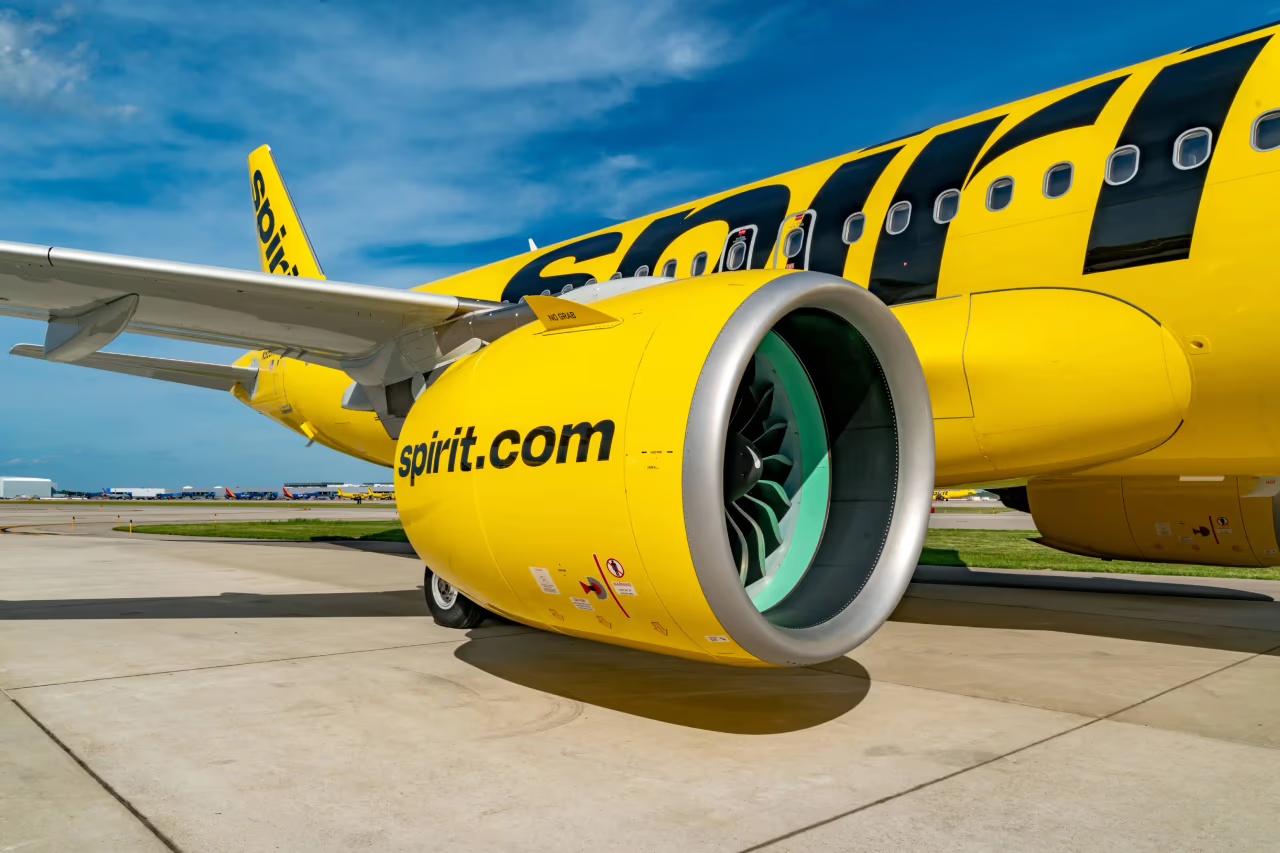
Spirit Airlines completed the bulk of its Go Comfy extra-legroom seat rollout in 2025, the most visible piece of a guest-experience program the carrier announced in May 2025 and confirmed in its own investor materials. The new seat delivers 32 inches of pitch, four more than Spirit's standard 28-inch coach, and slots between regular economy and the existing 36-inch Big Front Seat. By early 2026 Spirit sold three distinct seat products on most of its mainline aircraft, and Free Spirit members could pay for any of them in points.
What Spirit Confirmed
Spirit announced the package in a May 2025 press release framed as next major guest experience enhancements. The headline change was the Go Comfy bundle, which the airline reconfigured from a blocked-middle-seat product into genuine extra-legroom seating. According to Spirit's own announcement, Go Comfy offered seven rows of 32-inch pitch near the front of the aircraft, more than 40 seats per plane, a carry-on bag, no change or cancellation fees, priority boarding, reserved overhead bin space, and a complimentary snack and beverage. Bookings opened May 15, 2025, for travel beginning July 9, 2025, with fleet installations starting in June 2025 and the majority of aircraft completed by late 2025. The remaining aircraft were scheduled to finish in 2026.
The carrier also moved Free Spirit points redemption to cover every fare bundle, including Go Big (the package built around the Big Front Seat in the first two rows) and the new Go Comfy. Spirit cited an example of a Nashville-to-Boston Big Front Seat redemption at roughly 15,000 points plus taxes, which the airline used to anchor the value pitch.
The third change, complimentary upgrades for Free Spirit elites and Free Spirit Travel More Mastercard holders, took effect in June 2025. Upgrades were awarded at boarding, prioritized by status level, and extended to one companion on the same reservation. The Free Spirit Travel More Mastercard added two free checked bags later in 2025, and the carrier launched a Free Spirit Debit Card in fall 2025 with Group 2 priority boarding and a 25% in-flight purchase rebate.
Where Spirit's Transformation Stood
The product upgrades all landed roughly on schedule, but the broader corporate context shifted multiple times in 2025. Spirit emerged from its first Chapter 11 reorganization in March 2025, which set up the guest-experience push announced two months later. The carrier then filed for Chapter 11 a second time in August 2025 amid continued financial pressure, a development widely reported at the time. That second filing ended in the wind-down of May 2, 2026.
The seat math on the airplane was straightforward. Standard Spirit coach was 28 inches of pitch, among the tightest in U.S. domestic service. Go Comfy was 32 inches. The Big Front Seat was 36 inches in the first two rows. For comparison, most major U.S. carriers' standard economy is 30 to 31 inches, and their extra-legroom products typically run 34 to 36 inches.
Where Spirit Sat in the Market
The Go Comfy product moved Spirit closer to a true three-cabin domestic offering. Against the other ultra-low-cost carriers, Spirit's loyalty perks and seat options were more generous than what Frontier or Allegiant offered. Neither had an equivalent free-upgrade program for cobranded cardholders, and neither sold a comparable extra-legroom product across the bulk of its fleet. Against the legacy carriers, Spirit's base fares were lower, the route network narrower and the partner footprint thinner. By early 2026 the airline read more like a value carrier than an ultra-low-cost one.
What It Meant for Travelers at the Time
For occasional Spirit flyers, the all-in cost of a bundle had come to compare directly with a major carrier's basic economy on equivalent routes. On flights over two hours, the four extra inches of Go Comfy legroom plus the included carry-on, change-fee waiver and priority boarding could swing that comparison. On routes Spirit served nonstop where a legacy carrier connected, the bundle math was often the deciding factor.
For frequent Spirit travelers, two pieces of the program mattered most. The free upgrade benefit made Free Spirit Silver and Gold status genuinely useful in a way the program had not been before, because the upgrades landed on the Big Front Seat and Go Comfy rather than on minor seat-selection perks. The Free Spirit Travel More Mastercard, with its $79 annual fee waived in year one, bundled two free checked bags with that upgrade eligibility.
For award redeemers, the all-bundle redemption change was the most important practical update. Free Spirit points became usable on premium seats rather than only on basic fares, and Spirit had signaled further redemption categories were in development. On longer flights especially, redeeming points into Go Big or Go Comfy was where the program produced its best per-point value.
What Was Still Open When Spirit Closed
Three things were being tracked when this was written: completion of the Go Comfy retrofits on the remaining aircraft, any network or schedule changes out of the second Chapter 11, and any update to the Free Spirit redemption chart. The airline had said further point uses and premium experiences were coming, and none of it was published as an award structure before the wind-down.
The seat product Spirit built in its final year was materially better than what came before it. That is the part worth remembering.
Updated October 2, 2026: Spirit Airlines ceased operations.