


Spirit Airlines Shuts Down: How to Maximize Points on New Routes Added by Rivals
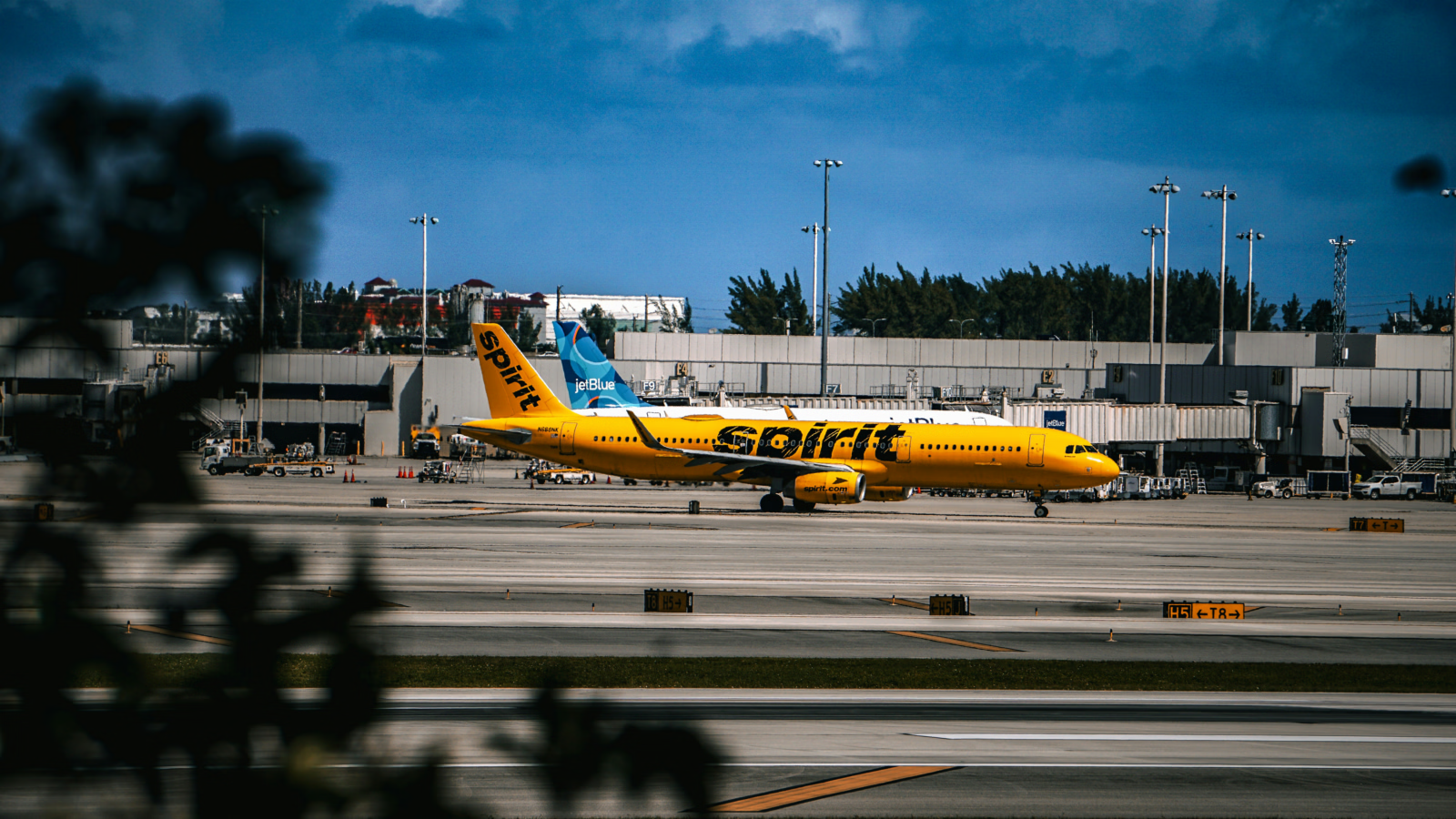
The Spirit Airlines shutdown on May 2 created a void in the domestic market—and legacy carriers wasted no time filling it. While losing an ultra-low-cost carrier might seem like bad news for budget travelers, the resulting route expansions from American, Delta, JetBlue, Southwest, United, Frontier, Breeze, and Avianca present significant opportunities for points and miles enthusiasts.
Here's how to strategically position yourself to earn maximum rewards on these newly available routes, which cards become more valuable, and what this shake-up means for your 2026-2027 travel plans.
Key Points:
- Eight major carriers added over 100 new flights and routes in former Spirit markets, with the heaviest expansion in Fort Lauderdale, Orlando, Las Vegas, and Detroit.
- JetBlue's aggressive 17-route expansion from Fort Lauderdale creates new earning opportunities for TrueBlue members and Chase Ultimate Rewards cardholders.
- Frontier and Southwest added the most domestic service, making their co-branded cards newly valuable for travelers in Spirit's former strongholds.
Understanding the Market Shift
Spirit operated roughly 2% of all domestic flights before shutting down, with Fort Lauderdale (FLL), Orlando (MCO), Newark (EWR), Detroit (DTW), and Atlanta (ATL) as its largest hubs. The carrier's May 2 collapse left approximately 140,000 daily seats empty across the U.S. market.
Within 10 days, competitors announced plans to fill most of that capacity—but at higher price points. Early data from booking platforms shows average fares on former Spirit routes increasing 22-35% as legacy carriers step in. This makes strategic credit card use and points redemptions more critical than ever.
The Winners: Which Airlines Expanded Most
JetBlue's Fort Lauderdale Takeover
JetBlue made the boldest move, adding 17 new routes from Fort Lauderdale starting July 9. The additions include twice-daily service to Detroit and Chicago O'Hare, three-daily to Baltimore, Charlotte, Houston, and Nashville, plus new Caribbean and Latin American destinations.
Strategy: If you frequently fly through FLL, the JetBlue Plus Card (70,000-point bonus after $1,000 spend) now delivers outsized value. You'll earn 6x points on JetBlue purchases, and the card's free checked bag saves $35 each way on these new routes. For high-volume travelers, the JetBlue Business Card offers 6x points plus anniversary bonuses worth $100-$300 depending on annual spend.
The Chase Sapphire Reserve also becomes more valuable here—transfer Ultimate Rewards to JetBlue at 1:1, and you'll get the 3x points on travel when booking direct. With JetBlue's Miami-Fort Lauderdale hub concentration, this card combination lets you manufacture value on routes Spirit previously dominated.
Frontier's Volume Play
Frontier added 19 new routes focusing heavily on Orlando and Las Vegas—Spirit's second and fifth-largest markets. The carrier will operate two daily MCO-Boston flights, new daily Detroit-FLL service, and significantly expanded Las Vegas-California connectivity.
Strategy: The Frontier Airlines World Mastercard (40,000 bonus miles after $500 spend) offers limited ongoing value with just 5x miles on Frontier purchases. However, if you live in Orlando, Las Vegas, or Detroit and these new routes match your travel patterns, the card's annual companion certificate (after $2,500 in purchases) can offset one trip yearly.
The better long-term play: Use a 2x everywhere card like the Citi Double Cash or Wells Fargo Active Cash for Frontier purchases, then rely on Frontier's frequent 50-75% off flash sales rather than accumulating miles in their devaluation-prone program.
Southwest's Measured Response
Southwest added four new Las Vegas routes launching March 2027—Boston, Knoxville, Miami, and Philadelphia. While fewer routes than competitors, Southwest's additions strategically target East Coast business and leisure travelers who previously used Spirit for Vegas connections.
Strategy: The Southwest Rapid Rewards Performance Business Card (80,000-point bonus after $5,000 spend) delivers 4x points on Southwest purchases and 3x on rideshare/social media. With Southwest's no-blackout-date award chart, these new Vegas routes create redemption opportunities during peak periods when other carriers charge premium award rates.
Southwest points typically value at 1.3-1.5 cents each—book one of these new routes during spring break or March Madness when cash fares spike, and your points stretch further than usual. If you're serious about Southwest travel, consider working toward the Southwest Companion Pass, which becomes significantly more valuable with expanded route options.
United's Strategic Additions
United focused on Fort Lauderdale and its Newark hub, adding 10 new flights including twice-daily Houston-FLL service and five-weekly Los Angeles-FLL. The carrier also increased Newark-Detroit, Newark-Las Vegas, and Newark-Raleigh frequencies.
Strategy: United's expansion makes the Chase Sapphire Preferred (60,000-point bonus after $4,000 spend) more valuable for East Coast travelers. Transfer Ultimate Rewards to United at 1:1, or use the card's 5x on travel booked through Chase to effectively earn 6.25 United miles per dollar (assuming 1.25-cent Ultimate Rewards valuation).
The United Explorer Card (60,000-mile bonus after $3,000 spend) works for frequent United flyers on these routes, but the Sapphire Preferred provides more flexibility unless you need United's free checked bag and priority boarding. For a comprehensive comparison of your options, check our guide to the best United Airlines credit cards.
Delta's Detroit Dominance
Delta added seven new flights focusing on its Detroit hub and Orlando expansion. The carrier now operates 12 daily Detroit-Atlanta flights and seven daily Detroit-Orlando—routes Spirit previously served with 3-4 daily flights.
Strategy: If you live in Detroit, a Delta Airlines credit card now delivers better value with increased flight options. The Delta SkyMiles Gold American Express (60,000-mile bonus after $2,000 spend) earns 2x miles on Delta purchases, restaurants, and U.S. supermarkets—categories that align well with everyday spending.
However, Delta's dynamic award pricing makes straight cashback cards like the Capital One Venture X (75,000-mile bonus after $4,000 spend) equally attractive. Venture miles transfer to multiple partners including Air France-KLM, and you can book Delta flights directly using Venture's 5 miles per dollar "erase travel purchases" feature.
Pricing Reality: What to Expect
Early booking data reveals the Spirit shutdown's immediate impact on fares. Routes where Spirit held 30%+ market share saw the steepest increases:
- Fort Lauderdale-Detroit: Up 28% (now $180-240 roundtrip versus Spirit's $140-180)
- Orlando-Baltimore: Up 32% (now $170-220 versus Spirit's $130-160)
- Las Vegas-Los Angeles: Up 19% (now $110-150 versus Spirit's $90-120)
These increases make points redemptions more valuable. A route that previously cost 10,000 miles roundtrip (valued at $140 cash) now represents $200+ in cash savings—improving your redemption value from 1.4 to 2+ cents per mile.
Tactical Moves for the Next 90 Days
1. Book Award Travel Early on New Routes
Airlines typically release standard award availability on new routes before dynamic pricing kicks in. JetBlue's July launches are bookable now at standard 5,000-8,000 TrueBlue points each way. Wait until June, and those same flights may jump to 12,000-15,000 points under dynamic pricing.
2. Target Frontier and Breeze for Cash Bookings
Frontier and Breeze (which added four Atlantic City routes) will likely discount heavily to fill planes during launch periods. Set Google Flights alerts for these new routes—you'll often find $49-89 one-way fares during the first 60 days of service. Pay cash with a 2x everywhere card rather than burning miles.
3. Use Credit Card Category Bonuses Strategically
Many of these route additions favor specific earning categories:
- United's Newark expansion: Use cards earning 3-5x on "travel" for United.com purchases
- JetBlue's FLL build-up: Maximize JetBlue Plus Card 6x or use Sapphire Reserve for 3x plus transfer options
- Southwest's Vegas routes: Performance Business Card's 4x rate beats most alternatives
4. Consider Positioning Flights to Hubs
With expanded service to Fort Lauderdale and Orlando, you may find it cheaper to position yourself to these hubs for international connections rather than flying from your home airport. Run the math: A $150 positioning flight to FLL plus a $600 JetBlue flight to Aruba beats an $850 direct flight from your home city—and you'll earn significantly more points on two separate bookings.
Long-Term Strategy Implications
Hub Concentration Increases
Spirit's shutdown accelerates hub concentration among remaining carriers. Fort Lauderdale becomes increasingly JetBlue-dominated, Orlando tilts toward Southwest and Frontier, and Detroit solidifies as a Delta fortress.
Adaptation: Diversify your points currencies across these hub carriers. If you live near FLL, maintain balances in both JetBlue TrueBlue and Chase Ultimate Rewards. Detroit residents should split between Delta SkyMiles and American Express Membership Rewards (for transfer flexibility).
Companion Certificates Gain Value
With fewer ultra-low-cost options, companion certificates from cards like the Southwest Companion Pass or Delta SkyMiles Reserve American Express deliver more value. A companion certificate saving $300 on a Detroit-Orlando round-trip (versus Spirit's former $180 fare) represents a 67% value increase.
International Connection Opportunities Expand
JetBlue's new Fort Lauderdale routes to Colombia (Barranquilla and Cali) create strategic connection points for travelers using points for Caribbean or Central American redemptions. Book awards to FLL, then position on these new routes for total costs often below direct flight options from northern cities.
Cards to Consider Based on Your Home Airport
If you live near Fort Lauderdale:
- Primary: JetBlue Plus Card or Chase Sapphire Preferred
- Secondary: Amex Gold for 4x dining/groceries, transfer to JetBlue when needed
If you live near Orlando:
- Primary: Southwest Rapid Rewards card (any version) for domestic travel
- Secondary: Frontier card only if you fly them 4+ times yearly
If you live near Detroit:
- Primary: Delta SkyMiles credit card (Gold or Platinum Amex)
- Secondary: Chase Sapphire Preferred for transfer flexibility
If you live near Las Vegas:
- Primary: 2x cashback card (Citi Double Cash or Wells Fargo Active Cash)
- Secondary: Southwest card for the new East Coast routes
If you're route-agnostic:
- Best flexibility: Chase Sapphire Preferred or Reserve (transfers to United, JetBlue, Southwest)
- Best value: Capital One Venture X (portal bookings, transfer partners, statement credits)
Understanding Chase's 5/24 rule becomes particularly important if you're planning to apply for multiple Chase credit cards to take advantage of these route expansions.
What This Means for Award Availability
The Spirit shutdown will likely decrease overall domestic award availability in the short term. Here's why:
Legacy carriers adding frequencies doesn't proportionally increase award seats. An airline might add 150 seats to a route but release only 4-6 award seats per flight. Spirit's shutdown removed budget cash options, forcing more travelers toward points redemptions—increasing competition for the same limited award inventory.
Counter-strategy: Book domestic awards 330 days out when availability opens. Set ExpertFlyer alerts for routes you frequently fly. Consider positioning flights to secondary airports (like flying Southwest to Fort Lauderdale instead of Miami) where award availability remains stronger.
The Bottom Line
Spirit's shutdown eliminates the easiest ultra-low-cost option but creates strategic opportunities for savvy points earners. The eight carriers adding routes collectively offer better loyalty programs, more reliable service, and stronger credit card partnerships than Spirit ever provided.
Focus your efforts on the carrier dominating your home airport's new routes. If you're in Fort Lauderdale, go all-in on JetBlue and Chase Ultimate Rewards. Detroit residents should build Delta loyalty. Orlando and Las Vegas travelers gain the most flexibility by splitting between Southwest (for reliable domestic coverage) and a transferable currency like Chase or Amex points.
Most importantly, expect higher cash fares on former Spirit routes for the next 12-24 months while the market adjusts. This makes strategic credit card use and points redemptions more valuable than ever—the gap between cash prices and award costs just widened significantly in your favor.
Ready to maximize these new routes? Check the current offers on the JetBlue Plus Card, Chase Sapphire Preferred, or browse our complete guide to the best travel credit cards to find the perfect fit for your travel patterns.
This article contains affiliate links. If you apply through our links, we may earn a commission at no cost to you, which helps us continue sharing points and miles strategies with the community.