


If you have travel booked through Dubai, Doha, or Abu Dhabi in the coming days, your plans just got complicated. Multiple Middle Eastern countries have closed their airspace due to escalating military conflict, causing widespread flight cancellations across Emirates, Qatar Airways, and other Gulf carriers.
Here's what you need to know right now and what to do if you're affected.
What's Happening Right Now
As of this morning, several countries in the Middle East have shut down their airspace following U.S. and Israeli military operations targeting Iran. The closures have created a domino effect across the region's busiest aviation hubs.
Current airspace closures include Iran, Iraq, Kuwait, Bahrain, and Qatar. These closures have forced major Gulf carriers to suspend operations entirely from their hubs.
Emirates has temporarily suspended all flights to and from Dubai due to regional airspace closures. The airline is urging passengers to check their website and app for updates before heading to the airport.
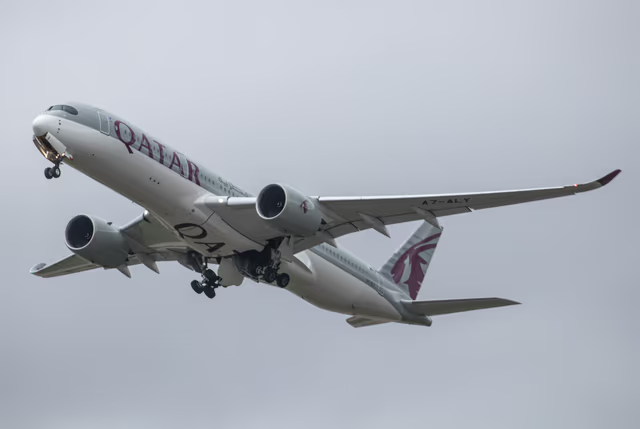
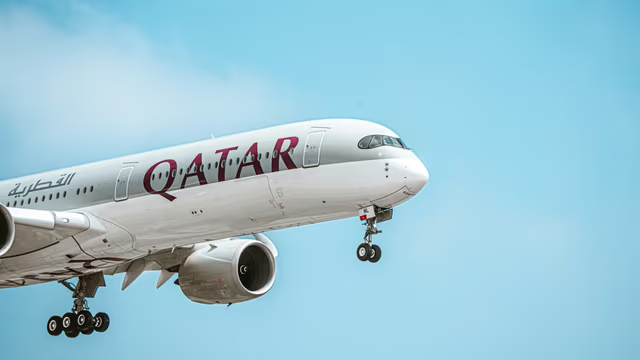
Qatar Airways has confirmed the temporary suspension of all flights to and from Doha following the closure of Qatari airspace. The airline is working with government stakeholders to monitor the situation.
Etihad Airways is facing similar operational challenges with Abu Dhabi-based flights affected by the regional restrictions.
Beyond cancellations, dozens of in-flight aircraft have diverted to alternate airports or returned to their origins mid-journey. Flight tracking data shows significant disruption to normal routing patterns across the entire Middle East region.
How This Affects Your Travel Plans
The timing couldn't be worse for travelers. Gulf carriers operate massive hub-and-spoke networks where passengers connect through Dubai, Doha, or Abu Dhabi to reach destinations worldwide. When these hubs shut down completely, the recovery process becomes extremely complex.
Unlike weather delays that might resolve in hours, geopolitical airspace closures are unpredictable. There's no clear timeline for when normal operations will resume.
If you have flights booked in the next 48-72 hours through any Gulf carrier hub, assume disruption is likely. The longer this situation continues, the more complicated the recovery becomes as aircraft and crews end up scattered across the wrong airports.
For connecting passengers: You're particularly vulnerable. If your routing includes a connection through Dubai, Doha, or Abu Dhabi, you may find yourself stranded at your origin or first connection point with limited rebooking options.
For nonstop passengers: Even direct flights from the U.S. or Europe to Gulf hubs are being canceled or may divert to alternate airports if airspace remains closed upon arrival.
What You Should Do If You're Affected
First, don't panic. Airlines will rebook you, though it may take time given the scale of disruption.
Check your flight status immediately. Don't rely on the airline to contact you. Visit the airline's website or app directly for the most current information. Emirates, Qatar Airways, and Etihad are all updating their platforms with real-time changes.
Contact the airline now if your flight is within 72 hours. Phone lines will be jammed, but try the airline's app, Twitter support accounts, or consider using services like ExpertFlyer that may have alternative contact methods. The earlier you act, the better your rebooking options.
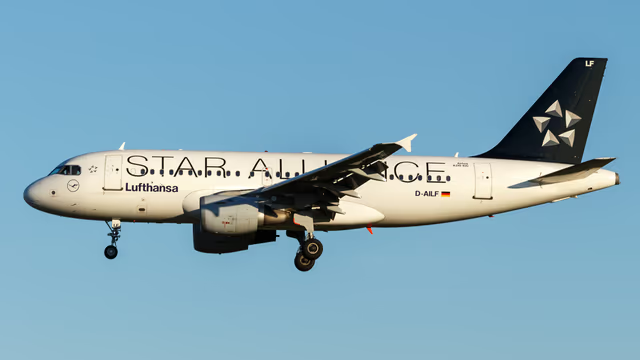
Look at alternative routing. If time is critical, consider rebooking on a completely different routing that avoids the Middle East entirely. European carriers like Lufthansa, Turkish Airlines, or Asian carriers like Singapore Airlines might have space available through their hubs, though you'll likely pay change fees or fare differences.
If you booked with points or miles, the same rebooking policies apply. Most programs will allow changes without redeposit fees for flight cancellations caused by airline operational issues. However, award availability on alternate flights may be extremely limited during this disruption.
Don't go to the airport unless your flight shows as operating. Airport check-in won't have more information than what's available online, and you'll waste valuable time in line when you could be arranging alternatives.
For travel insurance holders: This situation likely qualifies as an unforeseeable event depending on your policy. Document everything including cancellation notices, rebooking attempts, and any out-of-pocket expenses. Our credit card travel insurance guide explains which cards offer trip delay coverage that may apply if you're stranded mid-journey. You can also file compensation claims through AirHelp for EU-protected flights.
What Happens Next
Nobody knows exactly when Gulf carrier operations will resume. The situation depends entirely on when airspace restrictions lift, which is determined by regional governments responding to ongoing military developments.
Even after airspace reopens, expect continued disruption. Gulf carriers operate complex hub banking systems where waves of flights arrive and depart in coordinated windows. When the entire system stops, aircraft and crews end up in the wrong places. Full schedule normalization could take 24-48 hours after airspace reopens.
If you have travel booked more than a week out, monitor the situation but don't make hasty changes yet. The situation could stabilize within days. Most airlines offer flexible change policies and won't penalize you for rebooking later if needed.
For premium cabin award tickets, the recovery could be particularly challenging. Business and first class award seats are already scarce, and thousands of disrupted passengers will be competing for limited premium cabin space on alternate flights. Tools like ExpertFlyer can help you set alerts for when premium award space opens up on alternative routes.
Alternative Booking Options
If you need to reach your destination urgently and can't wait for Gulf carriers to resume operations, consider these alternatives:
European hubs: Lufthansa through Frankfurt or Munich, Air France through Paris, or British Airways through London provide extensive connectivity to Asia, Africa, and the Middle East once airspace reopens.
Asian carriers: Singapore Airlines, Cathay Pacific, and ANA offer premium service and may have award availability if you're using transferable points.
Turkish Airlines: Istanbul serves as an alternative hub connecting Europe, Asia, and Africa, though monitor the geopolitical situation as Turkey borders the affected region.
You can search for alternative award flights using Point.Me to quickly compare availability across multiple frequent flyer programs.
The Bottom Line
This is a developing situation with no clear resolution timeline. If you have travel through the Middle East in the next few days, prepare for significant disruption and have backup plans ready.
The good news is that airlines will eventually get you to your destination. The bad news is that "eventually" might involve significant delays, multiple rebookings, and considerable frustration.
Stay flexible, monitor your booking closely, and act quickly when rebooking options become available. This is one of those rare situations where the usual points and miles optimization strategies take a backseat to simply getting where you need to go.
For ongoing updates about award availability and rebooking strategies, check our complete guide to award travel for tips on maximizing your options during irregular operations.