

Back

JetBlue Surveillance Pricing Controversy: What Really Happened and What It Means for You

Airlines
April 21, 2026
The Points Party Team
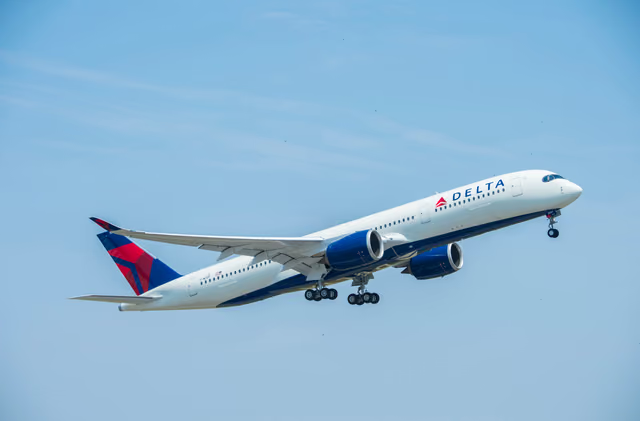
JetBlue airplane taking off in clear blue sky

Key Points

  • A JetBlue social media employee mistakenly suggested the airline uses surveillance pricing based on cookies and browsing history.
  • JetBlue confirmed fares are determined by traditional revenue management, not personalized tracking or cached data.
  • The incident highlights growing concerns about airline pricing transparency but doesn't change how you should book flights.

Introduction

A viral social media exchange has thrust JetBlue into a surveillance pricing controversy that has politicians calling for investigations and travelers questioning whether airlines are tracking their searches to raise prices. The short answer: they're not. But the confusion reveals important truths about how airline pricing actually works and what you can do to find the best fares for your next redemption or paid booking.

On April 18, 2026, a passenger complained on social media about a $230 overnight fare increase for a flight to a funeral. JetBlue's response suggesting they clear cookies and use incognito mode sparked outrage and accusations of admitted price discrimination. The airline has since clarified this was an employee error, not actual company policy. If you're wondering which travel credit cards offer the best protection against fare volatility, you're asking the right questions.

What Actually Happened

The controversy began when a traveler posted about finding a JetBlue ticket for a funeral, only to see the price jump $230 the next day. That's frustrating but not unusual in airline revenue management. What made this different was JetBlue's official response recommending the passenger "try clearing your cache and cookies or booking with an incognito window."

That advice triggered a firestorm. Arizona Senator Ruben Gallego tweeted about investigating "surveillance pricing" and suggested JetBlue was charging more because they knew the passenger needed to attend a funeral. The post has been viewed over 1.5 million times, with countless responses from travelers sharing similar suspicions.

JetBlue quickly issued a correction, stating that fares "are not determined by cached data or other personal information." The airline confirmed this was a simple employee mistake, someone who likely found that common internet advice about clearing cookies and passed it along without realizing it would be interpreted as an admission of personalized pricing practices.

Why Airlines Don't Use Cookie-Based Pricing

Despite the persistent myth that airlines track your searches to raise prices, there's no evidence any major carrier does this. Here's why:

Revenue management is already sophisticated. Airlines use complex algorithms considering hundreds of factors: historical demand, current bookings, competitor pricing, seasonality, events in the destination city, and remaining inventory in each fare class. They don't need to track individual browsers because they already know which routes and times are in high demand.

The technology doesn't work that way. Airline pricing systems update based on actual bookings and availability, not website cookies. When you search for a flight, you're pulling current prices from their inventory system. The price you see is the same price everyone sees at that moment for that fare class.

It would be terrible business. If an airline raised prices specifically for someone who'd searched before, that person would just book with a competitor. Airlines compete aggressively on price, especially on routes with multiple carriers.

The confusion often comes from timing. If you search on Monday and the price is higher on Tuesday, it's usually because other people booked the cheaper seats in the meantime, not because the airline recognized your browser and targeted you personally. Award search tools like Point.Me can help you track availability across multiple programs to find the best value for your points.

What Does Affect Airline Pricing

Understanding real pricing factors helps you book smarter:

Fare class availability. Airlines sell seats in buckets with different price points. Once the cheapest bucket sells out, everyone pays the next tier up. This is why prices fluctuate day to day or even hour to hour.

Route characteristics. One-way tickets often cost more than half a roundtrip because airlines assume business travelers booking one-way have less price sensitivity. Routes with limited competition tend to be pricier.

Booking patterns. Prices typically rise as departure approaches, especially in the final two weeks. They also spike during high-demand periods like holidays or major events.

Competition. When multiple airlines serve the same route, prices stay more competitive. JetBlue's prices on routes where they compete with Southwest or Delta tend to be more favorable than on routes they dominate.

The Real Lesson for Points and Miles Enthusiasts

This controversy doesn't change best practices for booking with JetBlue TrueBlue points or paying with a JetBlue card for bonus points, but it does reinforce some important strategies:

Book when you find a good price. If you see a fare that works for your budget or a reasonable award price, don't wait hoping it'll drop. Revenue management algorithms are designed to increase prices as seats fill, not decrease them.

Use award availability to your advantage. Award pricing through TrueBlue points is often more stable than cash fares. While JetBlue uses revenue-based pricing (where points required roughly track cash fares), you won't see the same wild swings you might with cash tickets. Understanding how to maximize your travel rewards can help you build a points cushion for unexpected fare increases.

Set alerts for routes you want. Tools like Google Flights let you track specific routes and get notifications when prices change. This is smarter than repeatedly searching and potentially missing a deal while you wait.

Compare redemption values. On routes where JetBlue has award space, compare the cash price to the points price. Sometimes paying cash and earning points is better than redeeming, especially if you're working toward elite status or a specific redemption goal. Our guide on what Chase points are worth can help you evaluate whether to transfer points or book differently.

Should You Clear Cookies When Booking Flights?

The short answer: it won't hurt, but it probably won't help either.

The myth about clearing cookies came from e-commerce sites that do sometimes show different prices based on your browsing history or device type. Some online retailers have been caught charging Mac users more than PC users, for example. But airlines don't appear to engage in this practice.

That said, using different search methods can occasionally reveal different inventory or pricing for legitimate reasons:

  • Meta-search sites like Google Flights sometimes show cached prices that are a few hours old
  • Different booking channels (airline website vs. OTA vs. travel agency) may have different fare rules or inventory allocations
  • Corporate or group rates might be available through certain portals but not others

If you want to be thorough when booking, try searching on both the airline's website and through Google Flights or Point.Me for award availability. But don't obsess over clearing cookies for each search.

What This Means for Airline Transparency

While JetBlue isn't using surveillance pricing, this controversy highlights legitimate concerns about airline pricing transparency. Dynamic pricing is legal and widespread, but it's increasingly complex and often feels arbitrary to consumers.

The incident also shows how quickly misinformation spreads, especially when it confirms existing suspicions. Many travelers already believe airlines manipulate prices against them, so a suggestion from an official airline account seemed to confirm those fears.

For lawmakers looking at this issue, the real concerns aren't about cookies and browsers. They're about disclosure and fairness in how algorithms set prices, particularly during emergencies or when travelers have limited alternatives.

FAQ

Does JetBlue track my searches to raise prices?

No. JetBlue confirmed their pricing is based on traditional revenue management factors like demand, availability, and competition, not on individual browsing history or cached data. The social media response suggesting otherwise was an employee error.

Why did the JetBlue employee suggest clearing cookies?

The employee likely found this as common internet advice and shared it without realizing it would be interpreted as admitting to surveillance pricing. It was a mistake, not company policy.

Do any airlines use personalized pricing based on my browsing?

There's no evidence major U.S. airlines use cookie or browser-based pricing. Airlines use sophisticated revenue management systems, but these track overall demand and inventory, not individual searches.

Should I use incognito mode when booking flights?

It won't hurt, but it likely won't change prices either. Focus instead on booking when you find a good deal, using price alerts, and comparing across different booking channels.

How can I find the best JetBlue fares?

Set Google Flights alerts for your routes, be flexible with dates when possible, book in advance (but not too far in advance), compare cash vs. points options, and consider using a JetBlue Plus Card for bonus points on purchases. If you're looking for award redemptions specifically, Point.Me can help you find availability across multiple programs.

Conclusion

The JetBlue surveillance pricing controversy turned out to be much ado about nothing, but it sparked important conversations about airline pricing transparency. The good news: airlines aren't tracking your cookies to charge you more. The reality: airline pricing is complex enough without adding conspiracy theories.

Your best strategy remains unchanged. Watch for good deals, book when prices work for your budget, maximize points earning through strategic credit card use, and don't waste time repeatedly searching hoping to trick an algorithm that isn't watching you anyway.

Focus your energy on the factors you can control: flexible travel dates, strategic point transfers, and knowing when award redemptions beat cash fares on your favorite routes. Learn more about maximizing your points and miles strategy to build resilience against pricing fluctuations.

This article contains affiliate links. If you apply through our links, we may earn a commission at no cost to you, which helps us continue sharing points and miles strategies with the community.

No items found.
Tags: 
Airlines