
Back

How to Avoid Baggage Fees: 9 Proven Strategies That Actually Work

Travel
May 20, 2026
The Points Party Team
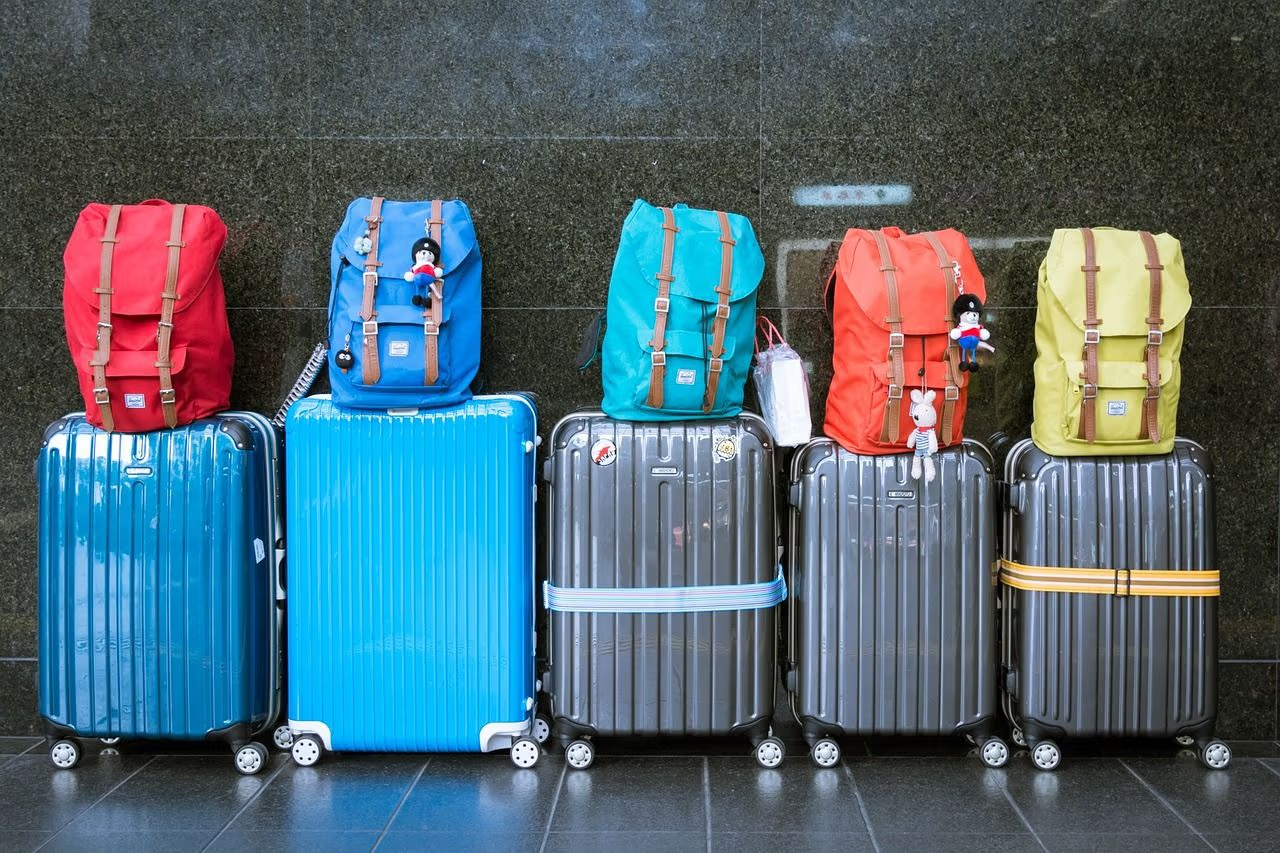
Traveler with checked baggage suitcases

Key Points

  • Airlines collected over $7.1 billion in baggage fees in 2025, with costs continuing to rise across most carriers.
  • Credit cards with baggage fee perks can save families hundreds of dollars per trip, often paying for themselves after just one round-trip flight.
  • Smart packing strategies and understanding carry-on rules eliminate fees entirely without requiring elite status or premium cards.

Baggage fees have become one of the most frustrating parts of air travel. What started as a $15 charge for the first checked bag has ballooned into a complex web of fees that can easily add $100 or more to a round-trip ticket for a family. Southwest Airlines, once the lone holdout with its "Bags Fly Free" policy, now charges for checked bags on most fares. Even basic economy fares on legacy carriers now restrict carry-ons in some cases.

The good news? You don't have to pay these fees if you know what you're doing. Whether you're flying once a year or every week, there are proven strategies to avoid baggage fees entirely. Some require a bit of planning, others need a specific credit card, and a few just come down to smart packing. Let's break down exactly how to keep more money in your pocket and less in the airlines' coffers.

Why Baggage Fees Keep Rising

Airlines aren't raising baggage fees out of nowhere. These charges have become a critical revenue stream that helps keep base fares competitive while extracting money from travelers who need the service.

In 2024, U.S. airlines collected $6.8 billion in baggage fees alone. By 2025, that number jumped to $7.1 billion, and industry analysts expect it to continue climbing. What's driving this increase?

Unbundling continues to accelerate. Airlines have stripped more services from base fares, pushing costs into optional fees. Basic economy tickets now often exclude overhead bin access on some carriers, forcing travelers to check bags or pay for the privilege of bringing a standard carry-on.

Fee amounts keep climbing. American Airlines raised checked bag fees from $30 to $35 for the first bag in early 2024. United followed suit. Even budget carriers like Frontier and Spirit regularly adjust their baggage fee structures upward.

Corporate policy changes. When Southwest Airlines announced it would start charging for checked bags on certain fare types in late 2025, it marked the end of an era. The last major holdout had fallen, signaling that free checked bags are no longer the industry standard.

For travelers, this means baggage fees aren't going away. If anything, they're becoming more complex and more expensive. Understanding how to navigate this landscape isn't just about saving a few bucks anymore—it's about protecting your travel budget from unnecessary erosion.

Strategy 1: Get the Right Airline Credit Card

This is the most straightforward solution for frequent flyers on a specific airline. Most airline co-branded credit cards include free checked bags as a standard benefit, and the math often works out in your favor after just one or two trips.

How it works: When you have an eligible airline credit card and use it to purchase your ticket, you (and often travel companions on the same reservation) get free checked bags. The benefit typically covers your first checked bag, though some premium cards extend this to your second bag as well.

Which cards offer this?

Entry-level airline cards ($0-$99 annual fee):

Premium airline cards ($150+ annual fee):

The break-even analysis: Let's say you're a family of four taking two round-trip flights per year on American Airlines. Checked bag fees are $35 each way per bag. If you check one bag per person:

  • 4 people × 2 bags (round trip) × 2 trips = 16 bag fees
  • 16 × $35 = $560 in annual baggage fees

A Citi AAdvantage Platinum Select card costs $99 per year and covers all of those bags. You save $461 annually.

Important limitations:

  • You must purchase the ticket with the credit card to get the benefit
  • The benefit typically only applies to the specific airline
  • Award tickets may or may not qualify (varies by card and airline)
  • Some cards only cover you, not companions

Who this works for: Anyone who flies the same airline 2-3+ times per year and checks bags regularly. The annual fee pays for itself quickly, and you often get other perks like priority boarding and bonus miles. Learn more about maximizing airline credit card benefits.

Who should skip it: Travelers who fly different airlines constantly or only travel once a year. The annual fee might not be worth it if you're not using the card's other benefits.

Strategy 2: Leverage Flexible Travel Credit Cards

If you don't have loyalty to a specific airline, premium travel credit cards with flexible airline credits can cover baggage fees across multiple carriers. This gives you more versatility than an airline-specific card.

The Platinum Card from American Express ($695 annual fee) offers up to $200 in annual airline fee credits. Here's how it works: You select one qualifying airline at the beginning of the year, and eligible incidental purchases—including checked bag fees in most cases—automatically receive statement credits up to $200.

Sapphire Reserve for Business ($795 annual fee) provides a $300 annual travel credit that applies automatically to any travel purchase, including baggage fees. Unlike Amex, you don't have to select a specific airline in advance.

How to maximize these credits:

For Amex Platinum:

  1. Select the airline you fly most frequently (you can change this once per calendar year)
  2. Purchase your tickets with any card, but pay for checked bags separately using your Platinum card
  3. Credits post within a few days, though some purchases may require manual review

For Chase Sapphire Reserve Business:

  1. Use the card for ANY travel purchase
  2. Credits apply automatically—no airline selection needed
  3. Covers baggage fees, TSA PreCheck, Global Entry, and more

Real-world example: You take three trips per year on different airlines—Delta to Atlanta, United to San Francisco, Southwest to Denver. You check one bag each way on all trips (6 bag fees at $35 each = $210). The Sapphire Reserve Business's $300 travel credit would cover all your bag fees plus leave $90 for other travel purchases. The Amex Platinum would cover $200 worth if you select your most-flown airline.

The hidden value: Both cards come with other premium benefits—airport lounge access, hotel status, insurance coverage—that can justify the annual fee beyond just baggage coverage. If you're only using these cards for baggage fees, they're probably not worth it. But for frequent travelers who use multiple benefits, they're excellent tools. Check out our complete guide to the Platinum Card from American Express for details on maximizing all perks.

Strategy 3: Earn Airline Elite Status

Elite status is the gold standard for avoiding baggage fees. Once you hit even the lowest tier, most airlines waive checked bag fees automatically on every flight, regardless of which credit card you use or how you book.

What you get with entry-level status:

American Airlines AAdvantage Gold (30,000 Loyalty Points or 30 qualifying flights):

  • First checked bag free on American and partner airlines
  • Complimentary upgrades on domestic flights (when available)
  • Priority check-in and boarding

Delta SkyMiles Silver Medallion (25,000 Medallion Qualification Miles):

  • First checked bag free on Delta and partner airlines
  • Priority boarding
  • Complimentary upgrades on select flights

United MileagePlus Silver (12 qualifying flights or 15,000 Premier Qualifying Points):

  • First checked bag free on United and partner airlines
  • Free Economy Plus seating at check-in
  • Priority boarding

Southwest A-List (25 qualifying one-way flights or 35,000 tier points):

  • Priority boarding (A1-A15)
  • 25% points bonus
  • Free same-day standby

The math on status: Entry-level elite status typically requires 25,000-30,000 miles or points of qualifying activity. For most travelers, that translates to about 10-15 round-trip domestic flights or 5-6 transcontinental/international trips per year. If you're flying that much, you should absolutely be targeting status.

Status matching and challenges: Don't want to earn status the traditional way? Many airlines offer status matches or challenges. If you have elite status with one airline, you can often match to a comparable tier with a competitor. These matches usually last 90 days, during which you need to complete a challenge (fly a certain number of segments or earn specific points) to convert it to full status for the year.

Who this works for: Business travelers, frequent flyers, and anyone taking 12+ flights per year on the same airline. The baggage benefit alone doesn't justify status, but combined with upgrades, priority boarding, and bonus miles, it becomes extremely valuable.

Who should skip it: Leisure travelers flying once or twice a year, or those who spread flights across multiple airlines. You won't hit the thresholds, and chasing status isn't worth it for occasional travel.

Strategy 4: Book Award Tickets in Higher Cabins

Here's a strategy that often flies under the radar: When you book award tickets using points or miles, they're frequently ticketed into higher fare classes than basic economy. This usually means included baggage allowances, even when you're sitting in economy.

How it works: Airlines use fare class codes to determine which rules apply to your ticket. Award tickets typically book into "saver" or "standard" economy fare classes (like "X" or "U" on American Airlines), which include at least one free checked bag. Basic economy tickets, on the other hand, book into restricted codes (like "B" on American) that exclude checked bags.

Real examples:

American Airlines: Book an economy award ticket using AAdvantage miles, and you'll get Main Cabin boarding and baggage allowance—not basic economy restrictions. This means one free checked bag (sometimes two, depending on the route).

United: MileagePlus award tickets in economy book into fare classes that allow standard checked baggage, unlike basic economy cash fares.

Alaska Airlines: When you book partner awards through Alaska Mileage Plan, you typically get the fare rules of a mid-tier economy ticket, including checked bag allowances.

Where this gets complicated: Not all award tickets follow this pattern. Some programs have introduced "saver" versus "standard" award pricing, and the cheapest award seats may have restrictions similar to basic economy. You need to check the fare rules before assuming your award ticket includes bags.

Cost comparison:

  • Cash ticket (basic economy): $150 + $35 checked bag fee = $185
  • Award ticket: 12,500 miles (valued at roughly $150-$175) + $0 bag fee = Better value if you're checking bags

Who this works for: Anyone with a stash of airline miles and flexibility in their travel dates. If you're going to redeem miles anyway, this strategy gives you free bags as a bonus rather than requiring any additional effort. Learn more about using Chase Ultimate Rewards for travel and transferring Amex points strategically.

Who should skip it: Travelers without miles to burn, or those on tight award calendars where you can't afford to be selective about the fare class.

Strategy 5: Master the Carry-On Only Approach

If you can fit everything into a carry-on and personal item, you eliminate baggage fees entirely. This requires some discipline and the right gear, but it's the most universally applicable strategy—no credit cards, status, or airline loyalty required.

The carry-on rules (most airlines):

  • Carry-on bag: 22" × 14" × 9" (including wheels and handles)
  • Personal item: Purse, briefcase, or small backpack that fits under the seat
  • Total weight: Usually no limit for carry-ons (though some international carriers enforce this)

How to pack for a week in a carry-on:

  1. Choose the right bag. A 22" wheeled carry-on with compression straps gives you maximum space while staying within airline limits. Bags like the Travelpro Platinum Elite or Away Bigger Carry-On are designed to fit perfectly in overhead bins.
  2. Roll, don't fold. Rolling clothes saves space and reduces wrinkles. Use packing cubes to organize items by type (shirts, pants, underwear) and compress them as much as possible.
  3. Wear your bulkiest items. Traveling with boots or a heavy jacket? Wear them on the plane instead of packing them. This frees up valuable carry-on space.
  4. Limit shoes. Shoes are space killers. Bring one pair of comfortable walking shoes and wear them. If you absolutely need a second pair (dress shoes for business, flip-flops for the beach), choose the lightest, most compact option.
  5. Embrace the 3-1-1 rule for liquids. All liquids, gels, and aerosols must fit in a single quart-sized clear bag, with each container 3.4 ounces or smaller. Buy travel-sized toiletries or use solid alternatives (bar shampoo, toothpaste tablets).
  6. Use your personal item strategically. A small backpack can hold a lot: laptop, chargers, book, water bottle, and overflow from your carry-on. Choose one that maximizes space without looking overstuffed.

The benefits beyond saving fees:

  • No waiting at baggage claim
  • No risk of lost luggage
  • Faster through airports (especially on short connections)
  • More flexibility to catch earlier/later flights

When this doesn't work:

  • Trips longer than 7-10 days (unless you're comfortable doing laundry)
  • Travel requiring formal attire, bulky gear, or specialty equipment
  • Families with young children (diapers, formula, and extra clothes add up fast)
  • Cold-weather destinations (winter coats and boots eat up space)

Who this works for: Solo business travelers, weekend warriors, minimalists, and anyone comfortable re-wearing clothes or doing laundry mid-trip.

Who should skip it: Families, extended trips, or anyone who needs specific equipment (golf clubs, photography gear, etc.). Trying to force everything into a carry-on when you clearly need a checked bag will just make your trip miserable.

Strategy 6: Use Companion Baggage Benefits

Some credit cards don't just cover your own baggage fees—they extend the benefit to companions traveling with you on the same reservation. This turns a personal perk into a family-wide savings tool.

Cards with companion coverage:

Delta SkyMiles Gold American Express Card ($0 intro annual fee, then $99):

  • First checked bag free for you + up to 8 companions on the same reservation
  • Must purchase tickets with the card

JetBlue Plus Card ($99 annual fee):

  • First checked bag free for you + up to 3 companions
  • Works even on Blue Basic fares (where bags aren't normally included)

Citi AAdvantage Platinum Select ($99 annual fee):

  • First checked bag free for you + up to 4 companions

United Explorer Card ($0 intro annual fee, then $95):

  • First checked bag free for you + 1 companion

The family math: Let's say you're a family of four flying Delta twice a year. Checked bag fees are $35 each way.

  • Without coverage: 4 people × 2 bags (round trip) × 2 trips × $35 = $560
  • With Delta Gold card ($99 annual fee): $99
  • Net savings: $461 per year

The card pays for itself in one trip, and you get other benefits like priority boarding and bonus miles on Delta purchases.

Important details:

  • Companions must be on the same reservation booked with your card
  • The benefit usually applies to the cardmember's airline only
  • Some cards specify "domestic companion" only—check terms for international flights
  • Award tickets may not qualify for companion baggage benefits (varies by issuer)

Who this works for: Families or groups who consistently travel together on the same airline. The return on investment is enormous when you're multiplying the savings across multiple people. Check out our guide on choosing the right travel credit card for families.

Who should skip it: Solo travelers who don't need companion coverage. In that case, a basic airline card without companion benefits might have a lower annual fee and still cover your individual bag.

Strategy 7: Know Your International Flight Rights

International flights follow different baggage rules than domestic flights, and understanding these can save you serious money—especially if you're ticketing a multi-leg journey.

Key international baggage facts:

Piece concept vs. weight concept:

  • Piece concept (most flights to/from the U.S.): Bags are counted by number of pieces, not total weight. Most airlines allow 1-2 checked bags up to 50 pounds each in economy.
  • Weight concept (common in Asia, Middle East, Africa): Total weight matters more than number of bags. You might be allowed 40kg (88 pounds) total, which you can split across multiple bags.

Through-checked baggage on partner airlines:If you're flying American Airlines from New York to London, then switching to British Airways for London to Paris, your bags can be checked all the way through to Paris. The baggage allowance is determined by the "most significant carrier"—usually the airline operating the longest segment.

Example: Book an American Airlines flight from Dallas to London Heathrow, connecting to a British Airways flight to Athens. Even though the BA segment is separate, your baggage allowance follows AA's international economy rules (usually 1 free checked bag). If you booked these as separate tickets, you'd pay BA's baggage fees separately.

Exceptions that matter:

  • Basic economy international: Some airlines now offer basic economy on long-haul flights with restricted or no checked bags. Always verify before booking.
  • Partner airline confusion: If you book a codeshare flight (AA flight number operated by BA), baggage rules can get murky. Check the operating carrier's policy.
  • Upgrading with points: If you use miles to upgrade from economy to business class, your baggage allowance usually increases to 2-3 bags, even if you paid a low base fare.

Who this works for: International travelers booking complex itineraries, especially those connecting across multiple airlines or continents. Understanding these rules prevents surprise fees at check-in.

Strategy 8: Time Your Purchases Around Promotions

Airlines occasionally run limited-time promotions that waive baggage fees or offer discounted bag rates. These aren't common, but when they happen, they're worth jumping on.

Types of promotions to watch for:

Seasonal sales: During slow travel periods (January-March, September-November), some airlines offer promotional fares that include free checked bags as a sweetener. These are usually marketed as "spring break deals" or "fall getaway sales."

Credit card application bonuses: When airlines launch new credit cards or refresh existing ones, they sometimes include "first year free" checked bag benefits even without elite status. Chase and American Express have done this with several co-branded cards.

Loyalty program perks: If you hit a certain spending threshold in your airline's shopping portal or credit card, you might unlock free checked bag vouchers as a reward. Southwest, Delta, and United all periodically offer these.

Military and family discounts: Most airlines waive baggage fees for active-duty military members traveling on orders. Some also extend this to dependents traveling with them. Additionally, families with children in car seats or strollers often get free checked items beyond the standard allowance.

How to find these deals:

  • Subscribe to airline newsletters (they announce promotions here first)
  • Follow airlines on social media (flash sales often drop on Twitter/X)
  • Use deal aggregators like The Points Guy, Scott's Cheap Flights, or Going
  • Check airline websites directly during major booking periods (post-Thanksgiving, New Year)

Who this works for: Flexible travelers who can adjust dates to take advantage of promotions, or those planning far enough ahead to wait for seasonal sales.

Who should skip it: Anyone with fixed travel dates or urgent bookings. You can't always wait for a promotion when you need to fly next week.

Strategy 9: Understand Airline-Specific Loopholes

Every airline has quirks in their baggage policies. Some are widely known; others are buried in the fine print. Knowing these can turn a standard trip into a fee-free experience.

Southwest Airlines (Limited Free Bags):Southwest still offers two free checked bags on most fares—but not all. Their "Wanna Get Away Basic" fare, introduced in 2025, charges for checked bags similar to competitors. However, the standard "Wanna Get Away" fare (just slightly more expensive) still includes two free checked bags. Always compare fare types before booking.

Alaska Airlines (generous partner benefits):If you're flying Alaska but have elite status with any of their oneworld partners (American, British Airways, Qatar, etc.), Alaska honors your baggage benefits. Gold status on American? Free checked bags on Alaska flights, even if it's a paid ticket and you didn't use your AA card.

JetBlue (bag fees even on Blue Basic):JetBlue's Blue Basic fare normally charges for both checked AND carry-on bags. However, if you have the JetBlue Plus Card, it waives the first checked bag fee even on Blue Basic—a rare exception that can save $65+ per round trip.

Spirit and Frontier (personal item only):These ultra-low-cost carriers charge for everything, including carry-on bags. But both airlines allow one free "personal item" that must fit under the seat (typically 18" × 14" × 8"). Dedicated "personal item" backpacks from brands like Matador or TravelPro are designed to maximize this allowance, letting you carry surprising amounts without paying.

United's "Basic Economy" carry-on ban:United restricts overhead bin access on most Basic Economy fares, forcing you to check your bag at the gate (for a fee). However, United credit cardholders bypass this restriction and can bring a full-size carry-on even on Basic Economy tickets.

Who this works for: Travelers willing to do a bit of research before booking and who fly a mix of different airlines. These loopholes stack up over time and can save hundreds.

When Paying the Fee Actually Makes Sense

Let's be honest: Sometimes you should just pay the baggage fee.

You're checking something valuable or fragile. Camera equipment, musical instruments, or fragile souvenirs are better off checked if you can't carry them safely. The $35 fee is a small price compared to replacing a broken item.

It's a long trip requiring more gear. Two-week European vacations or ski trips need more than a carry-on can handle. Paying $70 for round-trip checked bags beats buying clothes at your destination or doing laundry every other day.

You're traveling with family. Kids under two often fly free, but they still need diapers, formula, extra clothes, and gear. A family of four with a toddler can easily justify checked bags just to avoid hauling everything through the airport.

You value convenience over savings. Not everyone wants to master the art of minimalist packing. If you'd rather check a bag and walk through the airport unburdened, that's a valid choice—especially if you can afford it without stress.

The opportunity cost isn't worth it. Spending three hours researching credit cards to save $35 twice a year ($70 total) values your time at $23/hour. If you make more than that, it might not be worth the effort.

The key is being intentional. Pay the fee when it makes sense, but don't pay it automatically just because you didn't know better.

Building Your Personal Baggage Fee Strategy

You don't need to use every strategy in this guide. In fact, trying to do so would be exhausting and probably counterproductive. Instead, pick the 2-3 approaches that fit your travel patterns and stick with them.

For occasional leisure travelers (1-3 trips/year):

  • Focus on carry-on only travel when possible
  • Get one airline credit card if you have a preferred carrier and take at least two trips per year
  • Don't chase elite status—it's not worth it at your flight volume

For frequent business travelers (12+ trips/year):

  • Earn elite status on your most-flown airline
  • Use a premium travel credit card for non-preferred airlines
  • Master carry-on packing for short trips; check bags for longer ones

For families traveling together:

  • Get an airline credit card with companion baggage benefits
  • Focus on airlines where kids' bags fly free or discounted
  • Plan one checked bag per family member instead of carry-on for everyone

For budget-conscious travelers:

  • Master carry-on only travel (free and works everywhere)
  • Book award tickets when possible to access better baggage allowances
  • Watch for seasonal promotions and time purchases accordingly

For international frequent flyers:

  • Understand piece vs. weight concept rules
  • Use premium credit card airline fee credits for international segments
  • Book through-ticketed journeys to maximize allowances

The airlines aren't going to stop charging baggage fees anytime soon. If anything, expect more restrictions, higher fees, and increasingly complex policies. But armed with these strategies, you don't have to be at their mercy. Whether you're checking two bags for a family vacation or traveling for a week with just a backpack, there's a way to avoid—or at least minimize—what you pay.

The real win isn't just saving $35 here or $70 there. It's understanding the system well enough that baggage fees become a choice, not an inevitability. And that knowledge is worth far more than any single checked bag.

FAQ

Do all airline credit cards offer free checked bags?

Not all airline credit cards include free checked bags. Entry-level cards (typically $0-$99 annual fee) from major carriers usually do, but you need to verify the specific card's benefits. Budget airline cards like Spirit or Frontier may not include this perk. Always check the card's terms before applying.

Can I use multiple strategies at once?

Absolutely. You can have elite status on one airline while using a credit card for baggage benefits on another. You can also book award tickets (Strategy 4) while being a carry-on only traveler (Strategy 5) for shorter trips. The strategies complement each other rather than conflict.

What happens if I have a credit card but forget to use it to book my ticket?

Most airline credit cards require you to purchase your ticket with that specific card to receive free checked bags. If you used a different card, you won't get the baggage benefit. However, some elite status benefits (Strategy 3) don't depend on which card you used—they're automatically applied to your frequent flyer account.

Are international baggage rules different from domestic?

Yes. International flights typically allow at least one free checked bag in economy class (sometimes two), even on basic fares. However, some airlines now offer "Light" or "Basic" international fares with no checked bags included. Always verify the baggage allowance before booking international flights.

Do kids get free checked bags?

Baggage policies for children vary by airline. Infants under two traveling on a lap typically get one checked bag (often a stroller or car seat) but no carry-on. Children with their own seat usually follow the same baggage rules as adults. Some airlines offer slightly more generous allowances for families—check your specific carrier's policy.

Will airlines ever go back to free checked bags?

Unlikely. Baggage fees have become too lucrative to abandon. Southwest's shift to charging for bags in 2025 signaled the end of widespread free checked bags. The trend is moving toward more restrictions and higher fees, not fewer. Your best bet is learning to navigate the current system rather than hoping for policy reversals.

What if I have a connecting flight on a different airline?

If your flights are on a single ticket (booked together), your bags are typically checked through to your final destination, and the baggage policy of the "most significant carrier" usually applies. If you booked separate tickets, you'll need to collect and re-check bags, potentially paying fees twice. Always book connecting flights on one ticket when possible.

This article contains affiliate links. If you apply through our links, we may earn a commission at no cost to you, which helps us continue sharing points and miles strategies with the community.

No items found.
Tags: 
Travel