


Key Points
- The core travel documents you need are your passport, a physical Global Entry or TSA PreCheck card, a backup credit card, and both digital and printed copies of your itinerary.
- Splitting your documents and payment methods across your bag, wallet, and hotel safe protects you if any single item gets lost or stolen.
- A ten-minute pre-trip checklist prevents the most common travel disasters, from a dead phone at check-in to a denied entry at customs.
Nothing derails a trip faster than realizing you're missing the one document you actually needed. Maybe it's your passport at the airport counter, your Global Entry card at a Canadian border crossing, or a working credit card after your primary one gets frozen for suspicious activity overseas. The right travel documents, backed up in the right places, are what separate a minor inconvenience from a ruined vacation.
This guide walks through exactly what to pack, how to back it up, and why each item matters more than you'd think. None of it requires expensive gear or hours of prep. It just requires knowing what actually goes wrong on trips and planning around it.
Your Passport Is Non-Negotiable, Even Domestically
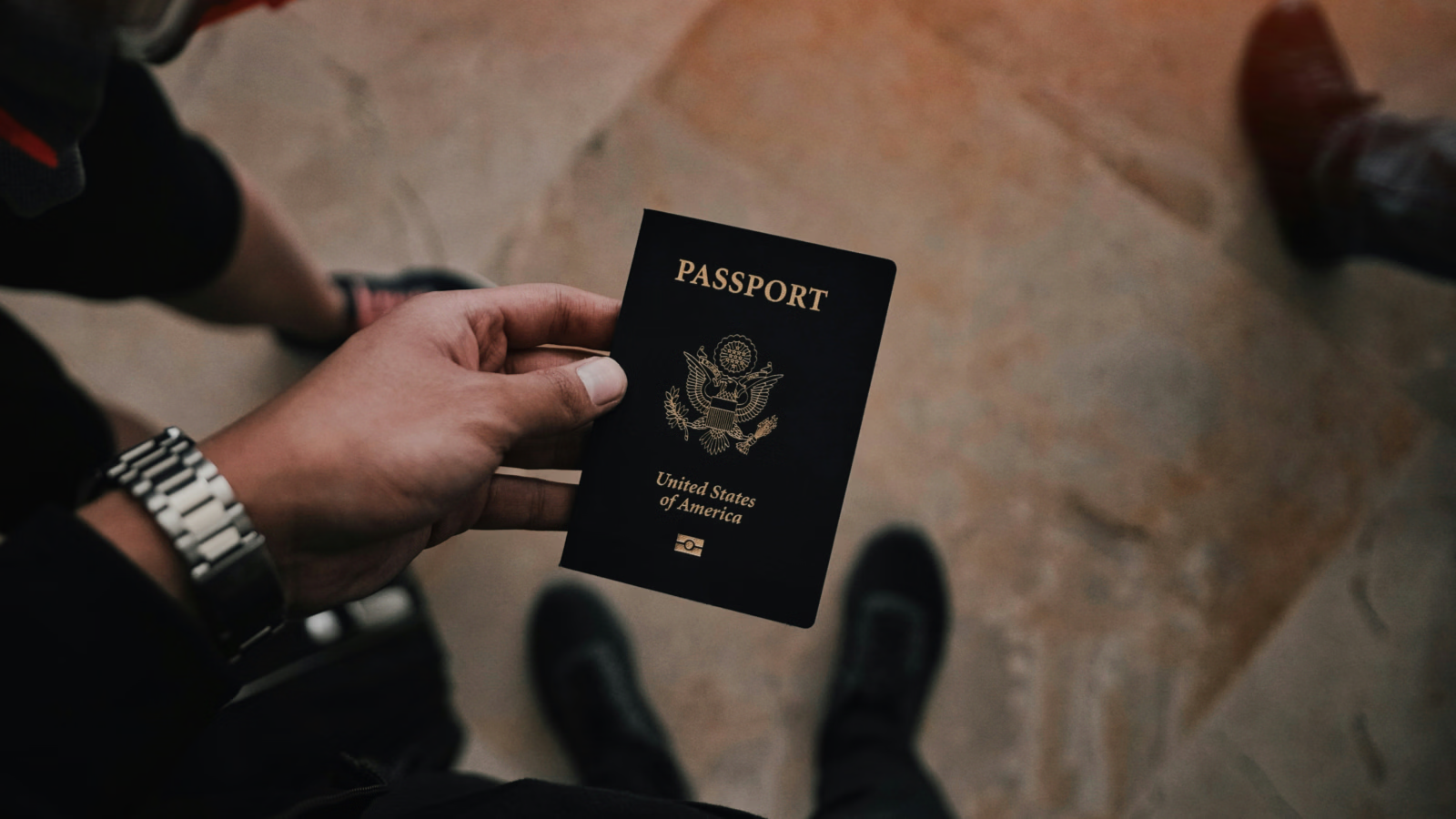
If you're leaving the country, your passport is obvious. What's less obvious is how many frequent travelers carry theirs on domestic trips too. It sounds excessive until you consider the upside: a passport works as backup photo ID if you lose your wallet, and it means you're never one impulsive booking away from being unable to leave the country.
A few habits make a real difference here. Store your passport in an RFID-blocking sleeve inside a zipped, interior pocket rather than an outer one. Photograph the information page and any active visas, then save those photos somewhere you can access without your phone, like a secure cloud folder or an email to yourself. Print a physical copy too. If your passport is lost or stolen abroad, that printed page is often what speeds up an emergency replacement at a U.S. embassy.
If you're traveling somewhere with a history of tight document checks, such as parts of Asia or the Middle East, keep the physical passport on you rather than locked in a hotel safe. Some countries expect visitors to produce it on demand.
For a broader packing rundown before an international trip, our 6 Essentials to Get Right on Your First Trip to Europe covers the planning side beyond documents alone.
Carry Your Physical Global Entry Card, Not Just the Number
This one catches even experienced travelers off guard. Global Entry membership lives in an app and a number, but there are specific moments where only the physical card will do:
- Airports with TSA preclearance facilities, including several in Canada, Aruba, and Ireland
- Any trip where you'll use Global Entry before flying back into the U.S.
- Entering the U.S. by car through SENTRI or Nexus lanes, or via a cruise terminal
Miss that card at the wrong checkpoint and you lose the entire benefit you paid for. It's a small plastic card, so there's no real reason to leave it home. Pair it with a physical Priority Pass card if you have lounge access, since both tend to matter most exactly when your phone battery doesn't cooperate. If you're regularly stuck in slow security lines, a Clear+ membership solves a related problem by speeding up the identity check before you even reach TSA.
If you don't have Global Entry yet, several premium travel cards cover the application fee as a statement credit, which makes it close to free to obtain. Our guide to the best credit cards for international travelers breaks down which cards include that perk.
Printed and Digital Backups of Your Itinerary
Phones die. Apps glitch. Wi-Fi disappears right when you need to check in. A surprising number of trip disasters trace back to a single point of failure: everything living on one phone with one battery.
The fix is redundancy, and it doesn't take much effort. Keep a Google Doc or a simple note with every confirmation number, hotel address, and emergency contact, and share it to a second email account so you can access it from any device. Print a physical copy too, especially for international trips where you might need to show proof of onward travel or hotel reservations at customs.
Include the basics people forget until they need them: hotel phone numbers, the address of anywhere you're staying, and a couple of emergency contacts written out in full. If your phone dies on the way to your hotel at midnight in an unfamiliar city, a folded piece of paper in your bag is worth more than any app.
Backup Credit Cards Protect You From a Single Point of Failure
Fraud alerts, chip readers that won't read, cards that mysteriously stop working abroad. There are a dozen ways your primary card can fail mid-trip, which is why it's worth splitting your payment methods before you even leave.
A workable system looks like this: carry one card in your wallet, leave a second one in your hotel safe, and keep a third somewhere separate from your main luggage, like a packing cube or a hidden interior pocket. If one wallet gets stolen, you're not stranded.
The card you choose for backup matters too. Look for one with no foreign transaction fees, since a 3 percent surcharge on every purchase adds up fast on a longer trip. The Capital One Venture Rewards Credit Card is a solid pick for this specifically because it charges no foreign transaction fees and earns a flat 2 miles per dollar on every purchase, which means your backup card is still working for you even when it's not your primary spender.
Some airlines, especially on routes to parts of Africa, will ask you to present the exact card used to book your ticket at check-in. If someone else booked your travel, or you paid with a card you no longer carry, call the airline ahead of time to confirm you won't hit a snag at the counter. Our guide on how to save money on foreign transaction fees while traveling breaks down which cards handle this best, and if you're a Chase cardholder specifically, it's worth checking whether Chase charges foreign transaction fees before you assume your card is fee-free.
Travel Insurance Documents Belong in Your Bag, Not Just Your Inbox
If you've purchased travel insurance, print the policy number and claims hotline before you leave. It sounds unnecessary until you're standing in a foreign hospital or dealing with a canceled connection and realize your policy details are trapped in an email you can't load.
Faye Travel Insurance handles this well with app-based claims, which means you can file directly from your phone without hunting for paperwork, though it's still worth screenshotting your policy number as a backup in case you lose connectivity when you need it most. Travel insurance is also worth pairing with a plan for the more mundane version of this problem: lost luggage. If an airline loses your bag, our guide on how to maximize your coverage after an airline loses your bag walks through exactly what to file and when.
Traveling With Kids Means Extra Paperwork
If you're traveling internationally with children, especially without both parents present, border agents can and do ask for proof that you're allowed to travel with them. This isn't rare. It happens most often at land border crossings, but it can come up at airport immigration too.
Pack these for any international trip with minors:
- Birth certificates or notarized copies
- A signed, notarized letter of consent from any parent or guardian not traveling, specific to the travel dates and destination
- Adoption papers, if applicable
- Custody documentation, if parents are separated or divorced
Keep these in a dedicated folder, ideally in a waterproof or fireproof pouch, separate from your everyday travel documents. It's not a fun thing to think about, but a five-minute conversation with a border agent is far better than being denied entry over paperwork you could have brought.
Your Pre-Trip Document Checklist
Run through this the night before any trip, domestic or international:
- Passport, plus a printed and digital copy of the information page
- Physical Global Entry or TSA PreCheck card
- Printed and digital copy of your full itinerary, shared to a second email
- Backup credit card stored separately from your primary wallet
- Travel insurance policy number and claims contact, printed
- For international trips with kids, consent letters and birth certificates
- A written list of hotel addresses and emergency contacts, on paper
None of this takes more than fifteen minutes to assemble, and it's the kind of prep you only regret skipping once.
FAQ
Do I need to bring my passport on a domestic flight?
You don't need it to fly domestically within the U.S., since a Real ID or standard driver's license works at TSA checkpoints. Many frequent travelers still carry it as backup photo ID and in case a trip extends internationally unexpectedly.
What is a Global Entry card actually used for?
Beyond the Global Entry lanes themselves, the physical card is required at airports with TSA preclearance, when using Global Entry before a flight back to the U.S., and when entering the U.S. by car through SENTRI or Nexus lanes or via a cruise terminal.
How many backup credit cards should I travel with?
Two is usually enough for most trips: one as your daily spender and one kept in a separate location, like a hotel safe, as a true backup. Make sure at least one has no foreign transaction fees.
Should I keep my documents on my phone or on paper?
Both. Digital copies are convenient until your phone dies or loses signal, and paper copies are convenient until they get lost or wet. Redundancy across both formats is what actually protects you.
The Bottom Line
Most travel disasters are preventable with about fifteen minutes of prep. Pack your passport even on domestic trips, keep your physical Global Entry card in your wallet, split your payment methods, and back up your itinerary in more than one place. It's not glamorous advice, but it's the kind that saves a trip when something inevitably goes wrong.
If you're building out your travel wallet for the year ahead, start with a no-foreign-transaction-fee backup card and a Clear+ membership for faster security lines, then layer in the paperwork habits above. This article contains affiliate links. If you apply through our links, we may earn a commission at no cost to you, which helps us continue sharing points and miles strategies with the community.