


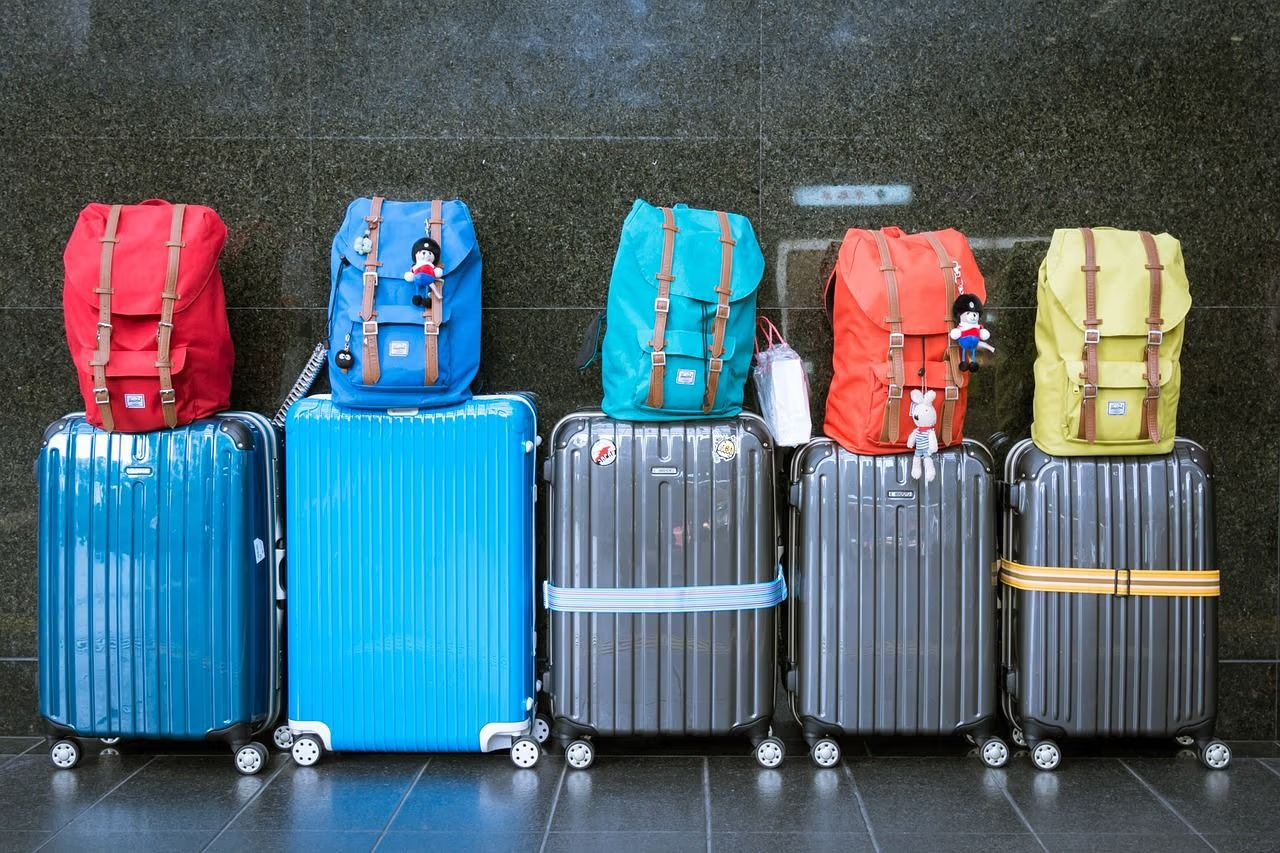
Checked baggage fees have crept past $40 each way at most US airlines, and the math gets ugly fast. Delta puts the first-bag fees for a family of four at up to $360 per round trip. Even Southwest now charges for checked bags on most fares. The free-bag landscape has narrowed, but the right credit card still removes the fee entirely for you and often for everyone traveling with you.
This guide walks through the cards that get you and your companions a free first or second checked bag, the elite status tiers that do the same, and the general travel cards that quietly reimburse bag fees through annual travel credits. The strategy that saves the most money usually combines one airline cobrand card for your primary carrier with a general travel card as backup for the trips when you fly someone else.
Why Baggage Fees Keep Going Up
Most big U.S. airlines now charge $45 or more each way for a first checked bag on domestic flights: $45 on Delta, Alaska and Southwest, $45 online or $50 at the airport on American, and $45 to $49 on JetBlue depending on season, if you add the bag at least 24 hours before departure. A second bag runs $55 on Delta, Alaska and Southwest. Those prices are for standard bags up to 50 pounds; heavier bags cost more.
The Department of Transportation passed a 2024 rule requiring airlines to automatically refund baggage fees when a checked bag is delayed more than 12 hours on domestic flights, or 15 to 30 hours internationally. That helps if your bag goes missing, but it does nothing to prevent the upfront fee.
Southwest now charges $45 for the first bag and $55 for the second on Basic, Choice and Choice Preferred fares booked on or after April 9, 2026. The carry-on still flies free, and A-List members and Choice Extra fares get free checked bags, while Southwest's own cobrand cards waive the first bag for cardmembers and up to eight others on the same reservation.
Airline Cobrand Cards That Get You a Free Checked Bag
The cleanest way to avoid bag fees is a credit card tied to the airline you fly most often. The fee waiver typically extends to several companions on the same reservation, which is where these cards pay for themselves quickly for families and groups.
American Airlines
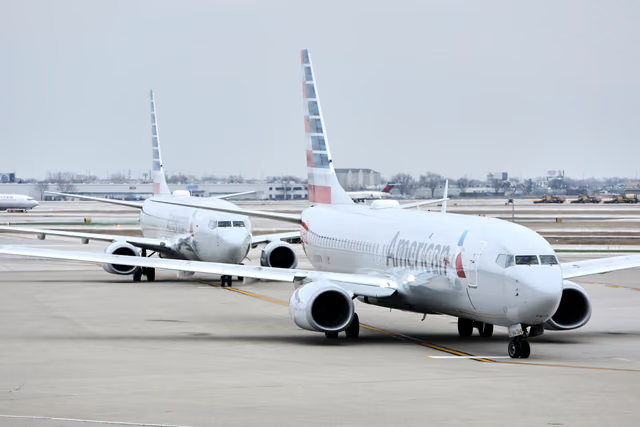
American Airlines cobrand cards from Citi waive the first checked bag fee on domestic American Airlines itineraries for the cardholder and companions on the same reservation: up to four companions on the Citi AAdvantage Platinum Select ($99 annual fee, waived for the first year) and up to eight on the Citi AAdvantage Executive ($695 annual fee, which includes Admirals Club membership).
Say a family of four flies one domestic round trip with a bag each, paying American's $45 online fee: that's $360 in waived fees against the Platinum Select's $99.
Delta SkyMiles
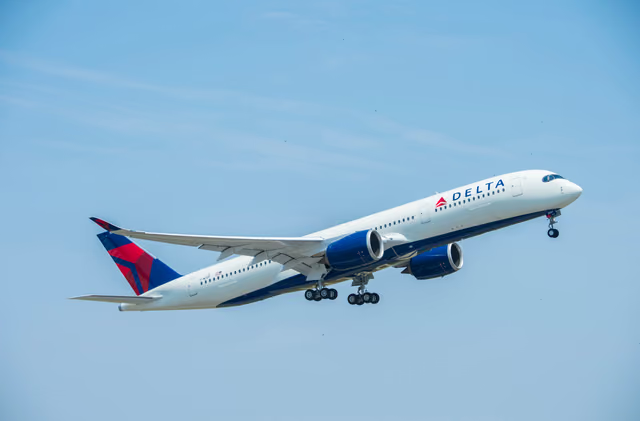
Delta extends its free first checked bag perk to the cardholder plus up to eight companions on the same reservation. The eligible cards are the Delta SkyMiles Gold ($0 introductory annual fee the first year, then $150), Platinum ($350) and Reserve ($650), plus the Gold, Platinum and Reserve Business cards. Since June 4, 2026, Basic Card Members on these cards also get their own second checked bag free on domestic Delta-operated flights. The Gold card is the value play if you only fly Delta a few times a year, while the Reserve adds Sky Club access and other premium perks.
United Airlines
United structures its bag benefits differently. The United Explorer card ($0 introductory annual fee the first year, then $150) covers the first checked bag for the cardholder and one companion on the same reservation, on United-operated flights, when you buy the tickets with the card. The United Quest card ($350) covers the first and second bags. The United Club Card ($695) also covers two bags and adds United Club membership. The United Business Card ($150) matches Explorer at one bag.
If you regularly travel as a couple or with one companion, the United Quest covers a first and second bag each for you and that companion on United-operated flights.
Alaska Airlines
Alaska's Atmos Rewards Ascent Visa Signature card waives the first checked bag fee for you and up to six guests on the same reservation when you pay for the flight with the card. The annual fee is $95. Alaska's smaller route network makes this card less universally useful than the AA or Delta options, but if you live in the Pacific Northwest or fly Alaska to Hawaii, the math is straightforward.
JetBlue
The JetBlue Plus card waives the first checked bag fee for the cardholder and up to three eligible companions on JetBlue-operated flights. JetBlue otherwise charges $45 to $49 for a first bag within the U.S., depending on season, if you add the bag at least 24 hours before departure. The annual fee is $99.
What About Southwest?
Southwest's cobrand cards (the Rapid Rewards Plus, Premier, and Priority) waive the first checked bag for cardmembers and up to eight others on the same reservation, as long as the Rapid Rewards account number is included at the time of booking. The Plus card's annual fee is $99.
Elite Status As a Bag-Fee Solution
If you fly enough to earn elite status, the airline waives bag fees as part of the status benefit. The thresholds vary by carrier, and Delta, American, Alaska and Southwest all list free checked bags among their status benefits.
American's AAdvantage Gold members get a free first checked bag, and depending on your status you may get up to three free checked bags on itineraries American markets and operates.
Delta Silver, Gold, Platinum and Diamond Medallion members all get free checked bags within the U.S. and Canada: one for Silver, two for Gold and three for Platinum and Diamond.
Alaska's Atmos Rewards status members get free checked bags on Alaska, Hawaiian and American flights.
For most travelers, chasing status purely to avoid bag fees does not pencil out. Delta's Silver Medallion, for example, takes $5,000 in Medallion Qualification Dollars in a calendar year, and a cobrand card gets you a free first bag for $95 to $150 a year. Status makes sense if you already fly heavily for work or have a clear path to qualification. Otherwise, the card route wins.
General Travel Cards That Reimburse Bag Fees
If you fly different airlines often enough that no single cobrand makes sense, premium travel cards reimburse baggage fees through annual travel credits. These credits typically post automatically when the charge codes correctly.
The Chase Sapphire Reserve gives up to $300 in statement credits each account anniversary year for travel purchases, which Chase calls the most flexible travel credit compared to any other card. The credit is broad enough that it usually consumes itself without effort. The annual fee is $795, so the card only makes sense if you value the broader travel insurance, Priority Pass and Sapphire Lounge access, and its earning: 8x on Chase Travel, 4x on flights and hotels booked direct and 3x on dining.
The Amex Platinum offers up to $200 a calendar year in airline fee credits. You select one qualifying airline, and incidental fees it charges to your card, such as checked bags and in-flight refreshments, get reimbursed up to the $200 cap. The card's annual fee is $895, so the bag-fee credit is a small piece of the value calculation.
The Hilton Honors Aspire card includes a $200 flight credit (up to $50 a quarter) for flight purchases made directly with an airline or through Amex Travel. The annual fee is $550, and the card primarily makes sense for Hilton loyalists who use the free anniversary night and Diamond status.
The Capital One Venture X carries a $300 travel credit that runs through the Capital One Travel portal. You can apply it to hotels, flights and vacation rentals booked through the portal, freeing up other budget for incidental charges.
The Bank of America Premium Rewards card offers $100 per year in airline incidental credits, including bag fees, with a more modest annual fee of $95. This card flies under the radar but works well as a secondary card for people who already have a primary cobrand.
Bag Fee Math: When Each Card Pays for Itself
The fastest way to evaluate a card is to count round trips per year. Say the first checked bag costs $45 each way, or $90 per round trip per person.
For a solo traveler on the Citi AAdvantage Platinum Select at $99 annual fee, you break even after two round trips with one checked bag. A family of four flying together once a year breaks even on the first trip and comes out $261 ahead of the fee.
For the Delta SkyMiles Gold at $150, two round trips for a couple ($360) clear the fee with $210 left over. A family of four on a single round trip ($360) covers the fee plus $210.
For the United Quest at $350, Chase puts the first- and second-bag savings at up to $440 per round trip for you and a companion, so a couple checking two bags each can clear the fee on one round trip before counting other card benefits.
For the Chase Sapphire Reserve at $795 annual fee, the $300 travel credit and the broader travel insurance coverage justify the card only if you put serious travel spending on it. The bag fee benefit alone does not get you there.
These calculations exclude welcome bonuses, which shift the first-year math even further in the cardholder's favor.
Premium Cabin Tickets and Other Workarounds
Buying a first-class, business-class, or premium-economy ticket on most US carriers includes free checked bags as part of the fare. If you are flying premium anyway, you do not need a card or status to skip the fee.
Carry-on only remains the simplest solution for short trips. Most US airlines still allow a personal item and a carry-on bag without charging extra, though basic economy fares on some carriers restrict what you can bring on board.
International flights often include a checked bag in the fare, depending on the carrier and fare; JetBlue's Main fares on transatlantic routes, for example, include the first bag. The bag fee strategies in this guide mostly apply to US domestic travel.
How to Pick the Right Card for Your Travel Pattern
Start by looking at your most-flown airline. If you took five or more flights on a single carrier last year, the cobrand card for that airline almost certainly pays for itself in bag fees alone, before counting the welcome bonus, priority boarding, and accelerated earning on airline purchases.
If you spread flights across two or more airlines, calculate whether you check enough bags annually to justify each cobrand annual fee, or whether a single general travel card with a $200 to $300 travel or airline credit covers your incidental needs more efficiently. For most occasional travelers, one cobrand card on the primary airline plus a Chase Sapphire Reserve or Amex Platinum for everything else creates the right coverage without overlap.
Family travelers benefit disproportionately from cobrand cards because the bag-fee waiver extends to companions on the same reservation. Delta puts its cards' first-bag saving for a family of four at up to $360 per round trip. The annual fee becomes trivial once you compare it to what you would otherwise pay at the counter.
If you are unsure which way to lean, the cobrand card with the lowest annual fee on your most-flown carrier is usually the safest first move. You can always upgrade or add a second card later.
Bottom Line
Checked baggage fees are not going away, and with Southwest charging for bags on most fares, there are fewer options for fee-free domestic travel without a card or status. The good news is that a $95 to $150 annual fee cobrand card for your primary airline typically saves a family hundreds of dollars on a single trip. Pair that with a general travel card that has a $200 to $300 travel credit, and you cover your bag fees on the off-airline trips too.
Updated September 30, 2026: Corrected bag fees across carriers (most now charge $45 for a first bag), card annual fees, companion counts and credits, card and status names (United Club Card, Atmos Rewards), and Southwest's card benefit; added Delta's free second bag for cardholders.