

Back

7 Credit Card Trends Reshaping Your Points Strategy in 2026

Credit Cards
January 22, 2026
The Points Party Team
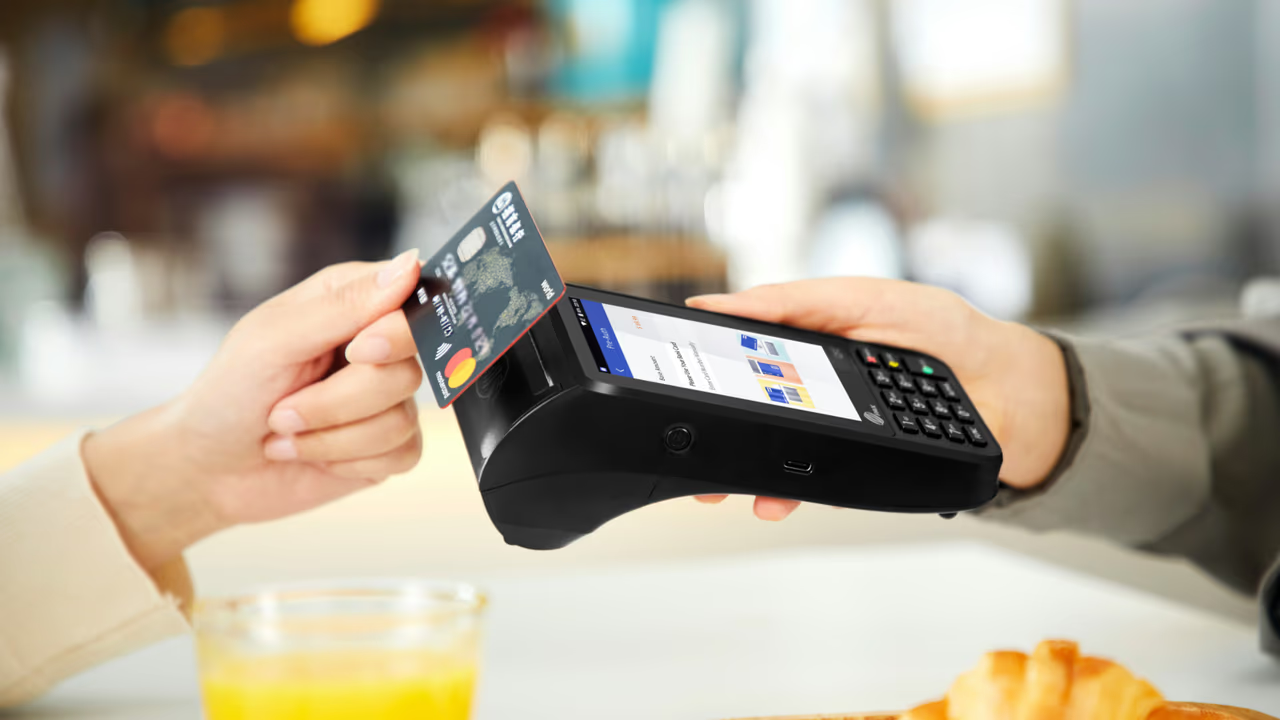
Person using credit card at payment terminal in cafe

Key Points

  • Premium travel cards are losing market share to cash-back options, but savvy travelers can still extract massive value.
  • AI-powered spending insights and dynamic APRs are changing how we optimize credit card usage.
  • The shift toward practical rewards doesn't mean abandoning travel cards—it means being more strategic about which ones you carry.

Introduction

The credit card landscape is shifting under our feet. Premium travel cards that once dominated wallets are facing serious competition from simpler cash-back options. New features like AI spending insights and buy now, pay later integration are changing how cards work. And sustainability is becoming more than just marketing fluff.

Here's what actually matters: these trends aren't just industry noise. They directly affect how you should approach your points strategy in 2026 and beyond. Some changes create new opportunities. Others mean it's time to rethink cards you've carried for years.

Let me walk you through the seven biggest trends and exactly how they impact your ability to maximize travel rewards.

The Premium Travel Card Pullback: What It Really Means

Industry data shows consumers are backing away from high-annual-fee travel cards. Applications for cards with fees over $400 dropped 18% in late 2025. People are questioning whether that $550 or $695 annual fee is worth it.

But here's the truth: for the right traveler, premium cards deliver more value than ever. The shift just means you need to be more intentional about which premium cards earn their spot in your wallet.

Take the Chase Sapphire Reserve. Yes, it's $550 annually. But between the $300 travel credit, Priority Pass access, 10x points on hotels and car rentals through Chase Travel, and trip protection benefits, active travelers easily clear $1,000+ in annual value. The key word is "active." If you're not traveling multiple times yearly, this trend is telling you something important.

The same logic applies to The Platinum Card from American Express. The $695 fee looks steep until you add up the $200 airline credit, $200 Uber credit, $189 CLEAR credit, and $300 in entertainment credits. Use even half these benefits and you're ahead.

What's changing isn't whether premium cards offer value. It's that more people are realizing they weren't using enough benefits to justify the cost. The solution isn't necessarily downgrading—it's being honest about your travel patterns and choosing cards that match them.

For comparison, see our detailed breakdown in Chase Sapphire Preferred vs Reserve to understand which tier makes sense for your spending.

Cash-Back Cards Are Having a Moment (And That's Okay)

Cash-back cards are surging in popularity. Simple, straightforward rewards appeal to people exhausted by transfer partners and award charts. Cards like the Citi Double Cash offering flat 2% back on everything saw application increases of 23% in 2025.

This doesn't mean travel cards are dead. It means the market is maturing. Not everyone should optimize for travel rewards. If you take one trip yearly, cash back might actually be the smarter play.

But if you're reading The Points Party, you're probably not that person. You want luxury travel at a fraction of the retail price. For you, the cash-back trend creates opportunity.

Here's why: as more people shift to cash back, airlines and hotels need to incentivize loyalty program participation. We're seeing bigger welcome bonuses and more generous transfer bonuses as a result. The Chase Sapphire Preferred regularly offers 60,000-75,000 point bonuses worth $900-$1,125 in travel when transferred to partners.

The trend also reinforces why flexibility matters. Cards earning transferable points give you options. Use them for travel when it makes sense. Cash them out when it doesn't. Our Complete Guide to Chase Ultimate Rewards shows you exactly how to maximize this flexibility.

Smart strategy in 2026: Keep one excellent cash-back card for non-bonused spending, but build your core strategy around flexible travel points. You get the best of both worlds.

Co-Branded Retail Cards Are Fading (Good Riddance)

Store-specific credit cards are declining. The Target RedCard and similar retail cards are losing appeal as consumers realize the limitations. These cards typically offer rewards only at one retailer with minimal benefits elsewhere.

This trend barely affects serious points collectors. We've never recommended building a strategy around retail cards. They lock you into one ecosystem without the flexibility that makes travel rewards powerful.

The one exception: cards like the Costco Anywhere Visa that offer strong earning rates beyond the store. Even then, they're supplementary cards, not core strategy pieces.

What this trend does signal: consumer sophistication is increasing. People want rewards they can use anywhere, not just at one retailer. That's exactly what transferable points programs deliver.

Buy Now, Pay Later Meets Credit Cards

Major issuers are integrating buy now, pay later features directly into credit cards. Chase, Capital One, and American Express all rolled out BNPL options in 2025, letting cardholders split large purchases into installment plans.

This feature matters less for travel rewards optimization and more for managing cash flow around large purchases. Here's where it gets interesting: you can trigger welcome bonuses faster.

Most premium travel cards require $4,000-$8,000 in spending within three months to earn the bonus. BNPL features let you make large purchases without the immediate cash flow hit while still earning points toward that bonus.

Example: You need to spend $6,000 on the Marriott Bonvoy Brilliant to earn 185,000 points. Buy a $3,000 laptop using BNPL, and you're halfway there while spreading payments over six months.

The catch: interest charges negate any points value. Only use BNPL if you'd make the purchase anyway and can afford the payments comfortably. And remember, you still earn points on the full purchase amount upfront.

AI-Powered Spending Insights Are Getting Smarter

Credit card apps now use AI to analyze your spending and suggest optimization strategies. Chase's app tells you when you're close to maximizing quarterly bonus categories. American Express suggests which cards to use for specific purchases to maximize Membership Rewards earning.

This trend helps casual users optimize without deep knowledge. For serious points collectors, these features are table stakes—you're already tracking this manually or with apps like AwardWallet.

Where AI gets interesting: predictive recommendations. Some issuers are testing features that suggest optimal redemptions based on your earning patterns and travel preferences. American Express Platinum cardholders see personalized flight deals using their points.

The opportunity: let AI do the heavy lifting on category optimization while you focus on strategic decisions like which transfer partners to use and when. Our guide to maximizing Chase points still applies, but AI tools make execution easier.

Sustainability Features Are Real Now

Eco-friendly credit cards moved beyond greenwashing. Issuers are offering cards made from recycled materials, carbon offset programs tied to spending, and rewards bonuses for sustainable purchases.

Cards like the Aspiration Zero card plant trees based on spending. Some premium cards offset flight emissions automatically when you book travel.

Does this affect your points strategy? Not directly. But if sustainability matters to you, you can now choose cards that align with your values without sacrificing rewards earning potential.

The Capital One Venture X offsets carbon from rental cars and hotels booked through Capital One Travel. You get the same 10x miles while reducing environmental impact.

This trend signals card issuers are responding to consumer preferences beyond just rewards rates. Expect more differentiation based on values, not just points earning.

Dynamic APRs Based on Payment Behavior

Here's the trend with the biggest potential downside: some issuers are testing APRs that adjust based on your payment behavior. Pay on time consistently? Your rate drops. Miss a payment? It increases.

For points collectors who pay in full monthly, this barely registers. Your APR doesn't matter if you never carry a balance. But it's worth understanding because it affects how issuers view cardholders.

The shift suggests issuers are segmenting customers more aggressively. Profitable customers who pay in full and generate interchange fees get better treatment. Those carrying balances face higher costs.

What this means for you: continue paying in full every month. The gap between rewards-focused users and people carrying balances is widening. Stay on the profitable side of that equation.

If you're working on building credit or occasionally need to carry a balance, see our guide to credit cards with low APRs for better options than premium travel cards.

How These Trends Change Your 2026 Strategy

Let's make this practical. Here's how to adjust your approach based on these trends:

If you have premium cards with high annual fees: Audit your benefits usage annually. Set calendar reminders to use credits before they expire. If you're not clearing $500+ in value beyond the annual fee, consider downgrading. The Chase Sapphire Preferred at $95 annually might be a better fit than the Reserve.

If you're choosing your first travel card: Don't let the premium card pullback scare you away from travel rewards entirely. Start with a mid-tier card like the Sapphire Preferred or Capital One Venture. Build experience with transfer partners before jumping to premium options.

If you're optimizing for 2026: Embrace AI tools in your card apps but verify the recommendations. Use BNPL features strategically for large purchases that help meet welcome bonus requirements. Consider sustainability features as a tiebreaker between similar cards.

If you're building a multi-card strategy: Keep one strong cash-back card for non-bonused spending. Build around 2-3 cards earning transferable points. Add co-branded cards only for specific redemption goals. Our best overall travel credit cards guide shows proven combinations.

The biggest strategic shift: be more intentional about every card in your wallet. The days of carrying five premium cards "just in case" are fading. Focus on cards you actively use and optimize.

The Trend That Matters Most

Among all these changes, one trend overshadows the rest: the increasing importance of flexibility.

Premium cards, cash-back surges, BNPL features, and AI insights all point to one truth. Consumers want options. They want to choose how to use rewards based on current needs, not locked into one path.

That's why cards earning Chase Ultimate Rewards, American Express Membership Rewards, Capital One Miles, and Citi ThankYou Points remain the foundation of smart points strategies.

Transfer to airline partners when you find sweet spot redemptions. Cash out when you need flexibility. Book through travel portals when it makes sense. The choice is yours.

As the industry evolves, that flexibility becomes more valuable, not less.

FAQ

Should I cancel my premium travel card based on these trends?

Not necessarily. Calculate the actual value you're extracting from benefits and credits. If you're using at least $500+ beyond the annual fee, keep the card. If not, consider downgrading to a mid-tier option. The trend is about consumer awareness, not card value disappearing.

Are cash-back cards actually better than travel cards now?

For some people, yes. If you travel once yearly or less, cash back might be simpler and more valuable. But for 2+ trips annually, travel cards with flexible points still offer 30-50% better value through transfer partners. It depends entirely on your travel frequency and redemption strategy.

How do I know if AI recommendations in my card app are good?

Verify them against your strategy. AI tools are helpful for category optimization but may suggest suboptimal redemptions. For example, an app might recommend booking through a portal at 1.5 cents per point when transferring to partners gets you 2+ cents per point value. Use AI for tracking, not strategy.

Will dynamic APRs affect my points earning?

No, if you pay in full monthly. Dynamic APRs only matter if you carry balances, which you shouldn't do on rewards cards anyway. The high interest rates negate any points value. This trend affects balance carriers, not points optimizers.

Should I add BNPL features to my points strategy?

Use BNPL only for planned large purchases you can afford. The feature helps meet welcome bonus spending requirements faster without cash flow pressure. Never use it to buy things you couldn't otherwise afford. Interest charges will eliminate any points value.

Conclusion

Credit card trends in 2026 tell a clear story. The industry is maturing. Consumers are getting smarter. Premium cards face pressure while cash-back options gain ground. New features like AI insights and BNPL integration are becoming standard.

For points collectors, these trends create both challenges and opportunities. You need to be more intentional about which premium cards justify their annual fees. But the core strategy—building around flexible transferable points—becomes more valuable as the market demands flexibility.

The winning approach: combine the best of these trends. Keep one cash-back card for non-bonused spending. Build your strategy around 2-3 cards earning flexible points. Use AI tools to optimize category earning. Take advantage of BNPL for large purchases that help meet welcome bonuses. And always, always pay in full monthly.

The fundamentals haven't changed. Travel rewards still offer the best value for frequent travelers. These trends just mean you need to be smarter about execution.

This article contains affiliate links. If you apply through our links, we may earn a commission at no cost to you, which helps us continue sharing points and miles strategies with the community.

No items found.
Tags: 
Credit Cards