

Key Points:
- Credit card fraud protection in the United States makes you safer than using cash or debit cards, with zero liability for unauthorized charges when reported promptly.
- Many common credit card security fears are selective and inconsistent, like worrying about online purchases but handing cards to restaurant servers without concern.
- The real risks worth monitoring include identity theft and account takeovers, not individual fraudulent transactions which are easily reversed.
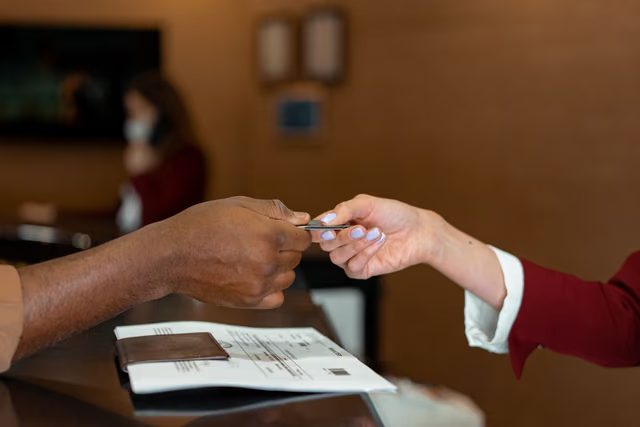
I've watched countless people refuse to book hotels online because "what if my credit card gets stolen?" while they happily hand that same card to a restaurant server who walks away with it for five minutes.
This disconnect fascinates me. After years in the points and miles world, I've seen fraud happen to me and countless readers. Here's what I've learned about credit card fraud anxiety and whether your concerns are actually protecting you.
The Credit Card Fraud Protection Reality You Need to Know
Let's start with what credit card fraud actually costs you in the United States: nothing.
Under the Fair Credit Billing Act, your maximum liability for unauthorized credit card charges is $50. In practice, you'll pay zero dollars because every major card issuer waives even that $50 for fraud claims reported promptly.
Compare this to alternatives:
Cash: Stolen money is gone forever. No fraud protection exists. If someone pickpockets $500, you've lost $500.
Debit cards: While regulations provide some protection, your actual bank account gets drained immediately. You might recover the money eventually, but you're without those funds during the investigation period, which could be weeks. Try paying rent when your checking account shows $0 because of fraud.
Credit cards: The money isn't yours yet (it's the bank's loan to you). Fraudulent charges get reversed before you pay anything. Your bank account balance doesn't change. You receive a new card number within days.
I've had my credit card information stolen at least a dozen times over the past decade. My total out-of-pocket cost: $0. My total time investment: maybe 30 minutes across all incidents combined.
Understanding how different credit card programs protect you is crucial, but the key point remains: you're financially protected regardless of which card you carry.
Why Your Credit Card Fears Are Completely Selective
Here's where credit card fraud anxiety gets irrational. People create arbitrary rules about when to worry that make no logical sense.
The Restaurant Paradox
You hand your credit card to a server at dinner. They walk to the back of the restaurant, completely out of your sight, with full access to your card number, expiration date, CVV code, and zip code (everything needed for online fraud).
Do you panic? Demand they run the card at your table? Refuse to pay by credit card at restaurants?
Of course not. You probably don't even think about it.
Yet these same people won't enter their credit card details into a secure, encrypted checkout page on a legitimate website because "the internet isn't safe."
The restaurant scenario is objectively higher risk. Your card disappears from view. The server could photograph it. A dishonest employee in the back could skim it. Other staff members could access it.
But we've normalized this risk while demonizing online payments that actually offer better security through tokenization and encryption.
The Data Breach Double Standard
Massive data breaches happen constantly. Target, Equifax, Capital One, Marriott all the major companies you already shop with have leaked customer data, including payment information.
Your credit card details are probably already floating around on the dark web from some breach you'll never even hear about.
Yet people still shop at these compromised retailers without concern, then refuse to make a single online purchase at a small business because "how do I know they're secure?"
You don't control data breaches at major corporations. You absolutely cannot prevent them. But somehow this realistic, documented risk generates less anxiety than hypothetical threats.
The Debit Card Confusion
The worst fraud anxiety I see involves people who prefer debit cards for "security."
Their reasoning: "If someone steals my credit card, they could max out my entire credit line. If they steal my debit card, they can only get what's in my checking account."
This backwards thinking reveals a fundamental misunderstanding of who's at risk.
With credit card fraud, the bank loses money (temporarily, until they investigate). With debit card fraud, you lose access to your actual money while the bank investigates.
Would you rather:
- Have fraudulent charges on credit you haven't paid yet (and won't pay), or
- Have your actual cash drained from your account, preventing you from paying bills until the bank maybe returns it weeks later?
One of these scenarios means you can't make rent. The other means you click "dispute charge" in your banking app and move on with your day.
Whether you're using a no annual fee card or a premium rewards card, the fraud protection remains identical and superior to any debit card.
What You Should Actually Worry About
Credit card fraud anxiety misses the real threats while focusing on irrelevant ones.
Identity Theft Versus Transaction Fraud
Someone making a fraudulent purchase with your card number is transaction fraud. Annoying? Yes. Costly to you? No.
Someone opening new accounts in your name using stolen identity information is identity theft. This can damage your credit score, require extensive effort to resolve, and take months to fully fix.
Yet I see people obsess over protecting their 16-digit card number (which changes every few years anyway) while posting their full name, date of birth, and hometown on public social media profiles.
Freeze your credit reports with all three bureaus (Experian, Equifax, TransUnion). This prevents new account openings and actually stops identity theft. It's free and takes 10 minutes.
Worrying about someone stealing your credit card number at a coffee shop? That's security theater.
If you need help monitoring your credit and identity, services like MyFICO provide comprehensive credit monitoring and official FICO scores, while Credit Karma offers free credit monitoring from two major bureaus.
Account Takeovers Matter More Than Card Numbers
The scenario that should concern you isn't someone stealing your card number. It's someone gaining access to your actual credit card account or banking login.
If a fraudster gets into your Chase account, they could:
- Request new cards sent to their address
- Change contact information
- Redeem your points for gift cards
- Add themselves as an authorized user
This requires actual effort to resolve. Card number theft requires one phone call.
Protect account access with:
- Strong, unique passwords for every financial account
- Two-factor authentication everywhere it's offered
- Password manager to track complex credentials (1Password is excellent for this)
- Regular monitoring of account settings and contact information
The Real Cost Is Inconvenience, Not Money
When I talk about my dozen fraud experiences costing me zero dollars, I'm being technically accurate but slightly misleading.
The real cost wasn't money it was inconvenience.
Fraud on a card you use for autopay means updating all those merchants with your new card number. Fraud on a card mid-trip means you might not have access to credit until a replacement arrives (though virtual card numbers help here).
Fraud on a card with pending statement credits or limited-time benefits means potentially missing out on those perks while waiting for the replacement card to activate.
These hassles are worth acknowledging. They're the actual downside of credit card fraud, not imaginary financial liability.
The solution isn't to avoid using credit cards online. It's to:
- Maintain at least two credit cards from different issuers (check out our best overall credit cards for recommendations)
- Keep backup payment methods while traveling
- Use virtual card numbers for recurring subscriptions
- Monitor accounts regularly to catch fraud quickly
When choosing your first credit card, security features should matter less than building good credit habits, since all cards offer identical fraud protection.
Why This Psychological Disconnect Exists
Understanding why credit card fraud anxiety is irrational doesn't make the anxiety disappear. The fear serves a psychological purpose even when it's not serving a practical one.
Visible versus invisible risk: We fear scenarios we can visualize (someone stealing our card online) more than abstract ones (massive data breach we never see happening).
Control illusion: Refusing to enter your card online feels like taking protective action, even when it doesn't actually protect you better than the alternatives.
Loss aversion: People fear potential losses more than they value equivalent gains. The fear of fraud outweighs the convenience and rewards benefits, even when the math says fraud costs you nothing.
Social proof: If everyone around you expresses anxiety about online credit card use, you internalize that anxiety even without personal negative experience.
These are normal human psychology quirks. Recognizing them doesn't make them go away, but it might help you make more rational security decisions.
The Actually Rational Credit Card Security Approach
Skip the security theater. Focus on what actually matters.
Do These Things
Enable fraud alerts: Let your card issuer text or email you for unusual charges. Catch fraud quickly without obsessing over every transaction.
Review statements monthly: Scan for charges you don't recognize. Most people never check statements until there's a problem they could have caught earlier.
Freeze credit reports: This stops identity theft. It's the single highest-impact security action you can take for the least effort.
Use strong authentication: Password managers and two-factor authentication protect account access, which matters more than protecting card numbers.
Maintain backup payment methods: Multiple cards from different issuers mean fraud on one card doesn't strand you without payment options. Our best Chase credit cards and best Citi credit cards roundups can help you diversify.
Dispute charges immediately: The faster you report fraud, the faster it gets resolved. Don't wait to see if it resolves itself.
Skip These Things
Refusing to use cards online: Online transactions are safer than in-person ones in many ways. The encryption, tokenization, and fraud monitoring on e-commerce is often better than physical retail.
Carrying only debit cards: You're trading the illusion of security for actual vulnerability. Credit cards protect you better.
Avoiding rewards cards due to fraud concerns: Fraud protection is identical across all credit cards. Get the rewards.
Checking your credit score daily: Monthly is plenty. Obsessive monitoring wastes time without improving security.
Using different cards for different risk levels: All your credit cards have the same fraud protection. There's no benefit to "saving" certain cards for specific situations.
When Credit Card Anxiety Actually Helps
I don't want to completely dismiss credit card fraud concerns. Sometimes the anxiety drives genuinely useful behavior.
If credit card fraud anxiety makes you:
- Check your statements regularly
- Enable account notifications
- Use secure websites instead of sketchy ones
- Question unusual charges immediately
- Keep backup payment methods while traveling
Then great. The anxiety is serving a productive purpose.
The problem is when anxiety leads to counterproductive behavior:
- Using debit cards instead of credit cards
- Avoiding legitimate online merchants
- Carrying excessive cash while traveling
- Refusing to apply for valuable cards due to "fraud risk"
- Limiting credit card benefits out of unfounded fear
The goal isn't eliminating all credit card caution. It's calibrating your caution to match actual risks.
For students and young adults, our guide on building credit when you're young can help establish good habits without excessive anxiety.
Practical Security Steps That Actually Matter
If you want to take meaningful action to protect yourself, here's what actually works:
For credit monitoring: Use Credit Sesame for free monitoring and personalized recommendations, or upgrade to MyFICO for official FICO scores used by lenders.
For password security: Invest in 1Password to generate and store unique passwords for every account. This prevents account takeovers, which matter more than card number theft.
For business owners: Check Nav for business credit monitoring, and consider Dunn & Bradstreet to establish your business credit profile properly.
For maximizing rewards safely: Understand how to protect yourself from fraud while still earning points, and learn which credit card benefits you might not know about that provide additional protection.
Bottom Line
Credit card fraud anxiety persists because it feels intuitive, even when it's not rational. We fear visible, controllable threats (entering our card number online) more than invisible, uncontrollable ones (data breaches we never see happening).
But the data is clear: Credit cards offer the best fraud protection of any payment method. The federal law protects you. The banks protect themselves by protecting you. The technology continues improving.
I've experienced fraud repeatedly. It's never cost me money. The inconvenience is manageable. And I've earned hundreds of thousands of points that enabled travel I couldn't otherwise afford.
That's the tradeoff: Accept minimal inconvenience risk in exchange for substantial rewards benefit, all while being financially protected from actual loss.
Your credit card anxiety probably won't disappear after reading this. Human psychology doesn't work that way. But maybe next time you hesitate to enter your card number on a secure website, you'll remember that it's objectively safer than handing that same card to a stranger at a restaurant something you did yesterday without a second thought.
This article contains affiliate links. If you apply through our links, we may earn a commission at no cost to you, which helps us continue sharing points and miles strategies with the community.