


Breeze Airways doesn't run a hub-and-spoke network like the big carriers. It sells nonstop flights between smaller and mid-sized markets that often only get connecting service elsewhere, and its fares come in tiers named Nice, Nicer and Nicest. Here's what the upper tiers get you and what to check before you book.
Who Breeze Is
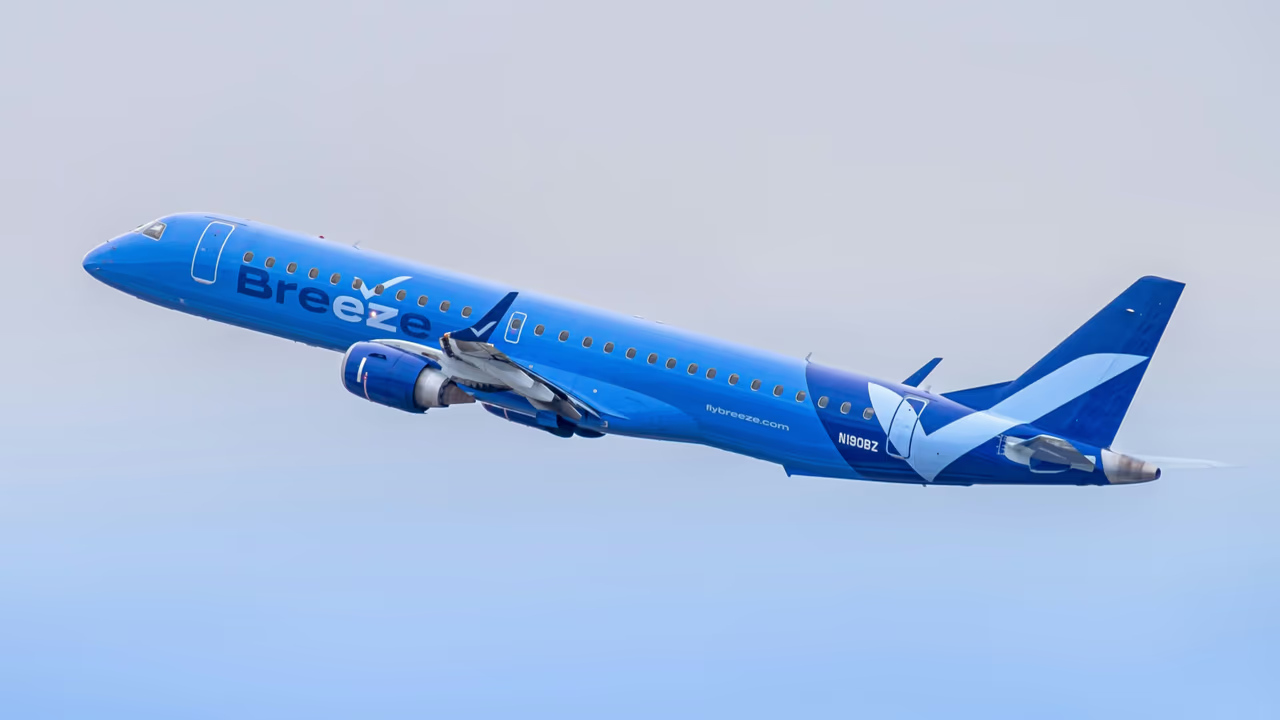
Breeze was created by David Neeleman, the founder of JetBlue and other airlines, and began flying in 2021. The pitch is point-to-point service from secondary airports, which means a nonstop where a legacy carrier would route you through a hub. It flies Airbus A220-300 and Embraer E190 and E195 aircraft.
What Each Fare Includes
Every fare includes one free personal item. That's the same on Nice, Nicer and Nicest.
Nicer and Nicest include a carry-on and a checked bag, and Nicer also comes with an extra-legroom seat. Nice is the cheapest tier, so confirm on Breeze before you book what it includes for a carry-on and checked bags. Breeze prices bag fees by route and date, so there's no single fee chart to quote.
How to Compare a Breeze Fare
The headline fare is usually the cheapest tier, so price the whole trip before you compare it with another airline. If you're traveling with more than a backpack, add the bag fees to the lower fare, then compare that total with Nicer. Breeze has a bag price checker on its site, and the number changes with the route and when you buy.
If you've seen sale fares quoted for Breeze in the past, treat them as a snapshot. Fares change constantly, and the price you'll pay is whatever the booking page shows for your dates.
Who Breeze Fits
Breeze makes sense if you live near one of its smaller airports and want a nonstop instead of a connection. It's a weaker fit if you need to check bags and want the lowest total price, since the add-ons can close the gap with other carriers quickly.
Updated October 19, 2026: fares and bags.