

Back

How to Book Caribbean Cruises with Points and Miles: Your 2026 Wave Season Strategy

Cruises
February 11, 2026
The Points Party Team
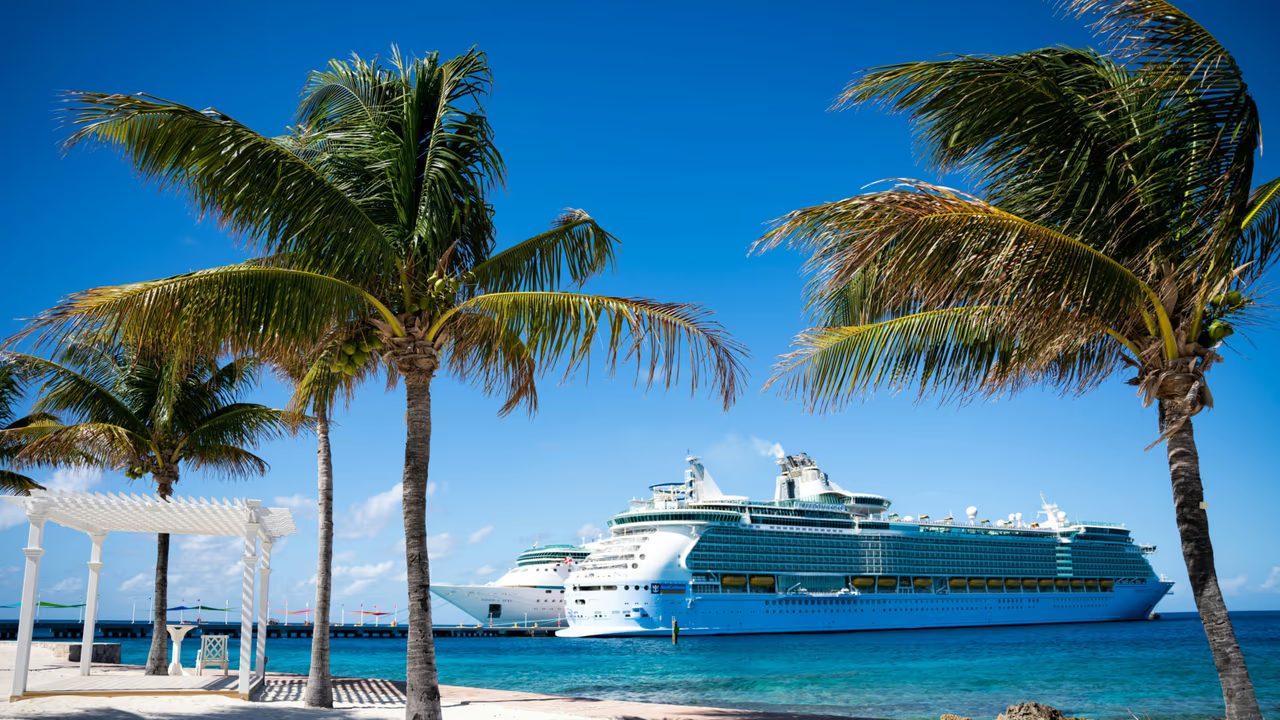
Caribbean cruise ship docked by tropical beach with coconut trees

The Caribbean cruise industry is experiencing unprecedented growth. With 21.7 million Americans projected to cruise in 2026 and the Caribbean capturing 72% of all cruise bookings, now is the perfect time to leverage your points and miles for that tropical escape you've been dreaming about.

Key Points:

  • Caribbean cruises account for 72% of U.S. cruise bookings in 2026, with wave season (January through March) offering the best redemption opportunities.
  • You can book cruises using transferable points through travel portals at 1 to 1.5 cents per point, or use co-branded cruise line credit cards for onboard credits and companion discounts.
  • The best strategy combines using transferable points for the cruise fare, co-branded cards for perks, and credit card travel credits to offset additional costs.

Wave season is here, cruise demand has never been higher, and your points balance is sitting there waiting to be used. The problem? Most people don't realize how many options exist for booking Caribbean cruises with points and miles. Let me show you exactly how to turn those hard-earned rewards into a week of island hopping without touching your bank account.

Why Caribbean Cruises Are Perfect for Points Redemptions Right Now

The numbers tell an incredible story. According to AAA's latest forecast, cruise passenger volume will hit 21.7 million Americans in 2026, marking the fourth consecutive record-breaking year. The Caribbean dominates this growth, accounting for 15.6 million cruisers, with peak season running November through March.

Here's what makes this relevant for your points strategy: wave season (January through March) traditionally offers the deepest discounts and best cabin selection. Cruise lines are competing aggressively for bookings, which means both cash prices and award availability tend to be more favorable during this window.

The industry has also recovered remarkably from the pandemic, with 2025 projected to surpass pre-pandemic levels by 34%. This means more ships, more itineraries, and crucially for points enthusiasts, more inventory to book with rewards.

Your Four Main Options for Booking Cruises with Points

Option 1: Transferable Points Through Travel Portals

The most straightforward method involves booking directly through your credit card's travel portal using transferable points. Here's how each major program handles cruise bookings:

Chase Ultimate Rewards offers arguably the best cruise booking experience among transferable point programs. However, there's a catch: you can't book cruises through the online portal. You'll need to call Chase's travel hotline at 855-234-2542 and work with a cruise specialist.

Before you call, find your exact itinerary on the cruise line's website, including cabin category and sailing date. The agent will search their system and book it for you. Redemption rates depend on which Chase card you're using:

  • Chase Sapphire Reserve holders who applied before June 23, 2025: Redeem at 1.5 cents per point on non-Points-Boost travel (for points earned before October 26, 2025 and redeemed by October 26, 2027, then 1 cent thereafter)
  • Chase Sapphire Reserve holders who applied on or after June 23, 2025: Redeem at 1 cent per point on non-Points-Boost travel
  • Chase Sapphire Preferred holders who applied before June 23, 2025: Redeem at 1.25 cents per point on non-Points-Boost travel (for points earned before October 26, 2025 and redeemed by October 26, 2027, then 1 cent thereafter)
  • Chase Sapphire Preferred holders who applied on or after June 23, 2025: Redeem at 1 cent per point on non-Points-Boost travel

A seven-night Caribbean cruise typically costs $800 to $2,000 per person for an inside or ocean view cabin during wave season. At 1.5 cents per point, you're looking at 53,333 to 133,333 Ultimate Rewards points per person with the Sapphire Reserve (for qualifying cardholders). That's very achievable with one or two card sign-up bonuses.

American Express Membership Rewards allows you to book cruises through Amex Travel at 1 cent per point for most cardholders. However, if you hold the American Express Platinum Card, you'll get 1 cent per point plus access to Fine Hotels + Resorts properties at ports of call, which can enhance your pre- or post-cruise experience.

The Amex Travel portal includes most major cruise lines: Royal Caribbean, Carnival, Norwegian, Celebrity, Princess, and more. You can search and book online without needing to call, though calling can sometimes reveal additional inventory.

For maximizing your Amex Membership Rewards, consider pairing cruise bookings with the Amex Business Platinum Card, which offers additional travel credits that can offset pre-cruise expenses like flights and hotels.

Capital One Miles provide excellent flexibility for cruise bookings. You can book through Capital One Travel and redeem miles at 1 cent each, or transfer miles to participating partners. The Capital One Venture X Rewards Credit Card comes with a $300 annual travel credit that works on Capital One Travel bookings, including cruises, effectively offsetting most of the annual fee.

What makes Capital One particularly valuable for cruises is their price match guarantee. If you find a lower publicly available price for an identical reservation within 24 hours of booking, you'll receive the difference as a travel credit. I've personally price-matched cruise bookings and the process took less than 15 minutes by phone.

Citi ThankYou Points can be transferred to several airline partners, but for cruise bookings specifically, you're better off booking through the Citi Travel portal at 1 cent per point. The portal includes major cruise lines and allows online booking without calling.

Option 2: Co-Branded Cruise Line Credit Cards

Several cruise lines offer co-branded credit cards that provide unique benefits beyond simple point redemptions. These work best when combined with other strategies.

Royal Caribbean Visa Signature Card earns MyCruise Rewards points on purchases. The sweet spot is using accumulated points for companion discounts. For example, you can redeem 25,000 points toward your companion's cruise fare on a three- or four-night sailing, with the value capped at $500.

The card also provides:

  • 10,000 bonus points after first purchase
  • 1 point per dollar on all purchases
  • 2 points per dollar on Royal Caribbean purchases and gas
  • Onboard credit of $100 on seven-night sailings (up to $250 on longer cruises)
  • No blackout dates on point redemptions

This card makes sense if you're loyal to Royal Caribbean and want to stack benefits. Book your cruise with Chase or Amex points, then use this card for onboard expenses to earn points toward future sailings.

Carnival Mastercard and Norwegian Cruise Line Credit Card offer similar structures with onboard credits and points toward future cruises. The value proposition is typically stronger for frequent cruisers who will use the onboard credits and book multiple sailings per year. Check current offers for Carnival's credit card and Norwegian's credit card to see if welcome bonuses make sense for your situation.

Option 3: Marriott Bonvoy Points for Ritz-Carlton Yacht Collection

Here's a premium option most people overlook: The Ritz-Carlton Yacht Collection participates in Marriott Bonvoy. You can redeem at least 180,000 points toward $1,000 in savings on the cruise fare, then continue redeeming in increments of 90,000 points for $500 off.

This redemption rate (approximately 0.56 cents per Marriott point) falls below TPG's February 2026 valuation of 0.7 cents per point. However, if you're sitting on a large Bonvoy balance and want an ultra-luxury cruise experience, this provides a way to use those points for something beyond hotel stays.

The Ritz-Carlton Yacht Collection offers intimate ships carrying fewer than 400 guests, with all-suite accommodations and included beverages. Standard Caribbean sailings start around $4,000 per person, making this a potential use for 720,000+ Bonvoy points per person if you cover the entire fare with points.

Boost your Marriott Bonvoy balance with the Marriott Bonvoy Brilliant American Express Card or Marriott Bonvoy Bountiful Credit Card for ongoing earning opportunities.

Option 4: Book with Cash, Maximize Credit Card Benefits

Sometimes the smartest move is booking with cash while strategically using credit card benefits to offset costs. This approach works particularly well during wave season sales when cash prices drop significantly.

The strategy:

  1. Book the cruise with a premium travel card that offers travel protection and bonus earning rates
  2. Use credits from cards like the Chase Sapphire Reserve (up to $300 annual travel credit, plus up to $500 in hotel credits through The Edit) or Amex Platinum ($300 Fine Hotels + Resorts credit) for pre-cruise hotel stays
  3. Apply co-branded cruise card benefits like onboard credits and free companion sailings
  4. Use dining credits and entertainment credits from your premium cards for restaurants and shows at ports of call

For example, the Chase Sapphire Reserve cardholders who applied before June 23, 2025 earn 5 points per dollar on Chase Travel purchases, including cruises booked through their portal. A $2,000 cruise booked this way generates 10,000 Ultimate Rewards points, worth at least $100 toward future travel. For cardholders who applied on or after June 23, 2025, you'll earn 4 points per dollar on flights and hotels but only 1 point per dollar on other travel like cruises.

Finding the Best Caribbean Cruise Deals for Your Points

Now that you understand the booking mechanisms, let's talk about maximizing value through timing and itinerary selection.

Peak Season vs. Shoulder Season Pricing

Caribbean cruise pricing follows a predictable pattern. Peak season (November through March) sees higher prices but also higher demand, which can actually make finding good award availability easier since cruise lines release more inventory.

The sweet spot for points redemptions often falls during "shoulder season" periods:

  • Late April through early May (after spring break, before summer)
  • September through early October (after summer travel, before peak season)

During these periods, cash prices drop 30-40%, which means your points go further if you're redeeming through travel portals at a fixed cent-per-point rate.

However, there's a trade-off. Shoulder season coincides with higher hurricane probability. Most cruises won't be cancelled, but you might experience itinerary changes or rougher seas. Book with a credit card offering trip delay insurance and trip cancellation coverage.

Port Intensity: More Stops vs. Longer Port Stays

Standard seven-night Caribbean cruises typically visit 3-4 ports. From a pure points-and-miles perspective, cruise length affects total cost but not necessarily points per night of travel.

Consider this comparison:

  • Three-night Bahamas cruise: $400 per person = 40,000 Chase points at 1 cent per point
  • Seven-night Eastern Caribbean: $1,400 per person = 140,000 Chase points at 1 cent per point

The three-night sailing costs more per night, but requires fewer total points. If you're sitting on a moderate points balance (50,000-75,000) and want to test the cruise experience, shorter sailings make sense.

For maximum value, seven-night or longer cruises deliver better points-per-night ratios and include more destinations, but require larger point balances.

Interior vs. Balcony: The Points Math

Here's where your points strategy gets interesting. An interior cabin on a seven-night Caribbean cruise might cost $1,200, while a balcony runs $1,800. That $600 difference equals 60,000 Chase Sapphire Preferred points.

Should you spend the extra points for a balcony? It depends on how you plan to spend your time. If you're the type to wake up early for port days and stay busy with activities and entertainment, the interior cabin makes sense. You're basically sleeping there and getting ready, nothing more.

If you value having a private outdoor space and plan to spend significant time in your cabin, the balcony becomes worth those extra points. On Caribbean itineraries with several sea days, the balcony upgrade can significantly enhance your experience.

The Hybrid Strategy: Combining Multiple Redemption Methods

The absolute best value comes from combining approaches. Here's a real-world example:

Scenario: Booking a seven-night Western Caribbean cruise for two people on Royal Caribbean

Step 1: Transfer 120,000 Chase Ultimate Rewards points to your account and book the cruise through the Chase travel portal at 1 cent per point ($1,200 in cruise fare for two people)

Step 2: Apply for the Royal Caribbean Visa Signature Card and receive the 10,000-point sign-up bonus plus $100 onboard credit per stateroom on sailings of 7+ nights

Step 3: Book pre-cruise hotel using your Amex Platinum $300 Fine Hotels + Resorts credit

Step 4: Use your Capital One Venture X $300 annual travel credit toward airfare to the departure port

Step 5: Book port excursions with a card offering strong travel protections like the Chase Sapphire Reserve

Total cost: 120,000 Chase points + annual fees for cards you're already holding. Out-of-pocket: minimal to zero.

This approach stacks multiple benefits while using points efficiently. You're not overpaying for the base cruise fare, and you're maximizing ancillary benefits that would otherwise come out of pocket.

Wave Season 2026: Book Now or Wait?

We're currently in wave season, which traditionally runs January through March. Cruise lines offer their best promotions during this window: reduced deposits, onboard credits, free upgrades, and companion discounts.

For points and miles bookings, wave season matters for two reasons:

First, award availability tends to be better during promotional periods. Cruise lines want to fill ships early, so they release more inventory to all booking channels, including travel portals and partner programs.

Second, cash prices serve as the baseline for portal redemptions. When cruise lines slash prices 20-30% during wave season, you need fewer points to book through Chase, Amex, or Capital One portals.

However, here's what's different in 2026: industry analysts report that cruise lines are already exceptionally well-booked for 2026. Some sailings are at 80-90% capacity already. This means waiting might cost you availability, even if prices drop slightly.

My recommendation: If you have specific dates and itineraries in mind, book during wave season. The combination of current promotions, better availability, and the ability to use points at lower prices creates the optimal booking window.

If you're flexible on dates and destinations, you might find better deals in late spring or early fall when cruise lines try to fill remaining inventory for shoulder season sailings.

Learn more about when to book cruises for maximum value in our comprehensive timing guide.

Mistakes to Avoid When Booking Cruises with Points

Don't Book Last-Minute with Points

Unlike hotels where last-minute award availability can yield great value, cruise lines rarely discount unsold cabins through points programs. If a sailing isn't filling up, you'll see cash price drops but award rates typically remain static through travel portals.

The exception: some co-branded cruise cards offer last-minute point redemption deals, but these are targeted and unpredictable. Don't count on them.

For strategies on booking last-minute travel with points, see our dedicated guide on maximizing spontaneous redemptions.

Don't Forget About Port Fees and Taxes

When you see a cruise advertised at $999 per person, that's not the final price. Government fees, port charges, and taxes typically add $100-300 per person to the total cost.

Most travel portals include these fees in the points price, but verify before you book. Chase explicitly includes all fees and taxes when booking cruises through their phone line. Amex Travel also includes these in the displayed price.

However, if you're booking directly with the cruise line using their co-branded card points, you may need to pay fees and taxes separately in cash. Budget accordingly.

Don't Ignore Gratuities and Onboard Expenses

Cruise lines automatically charge daily gratuities (typically $14-18 per person per day) to your onboard account. On a seven-night cruise for two people, that's $200-250 in gratuities alone.

Onboard expenses add up quickly: specialty dining ($30-60 per person), drink packages ($60-80 per person per day), spa services, casino, shore excursions. Budget $500-1,000 per person for a week-long cruise beyond the base fare and taxes.

The good news: co-branded cruise cards often provide onboard credits ($50-200 depending on the sailing length) that offset some of these costs. The Royal Caribbean Visa Signature Card, for example, provides up to $100 in onboard credits per stateroom on seven-night sailings.

Getting Started: Your Action Plan for 2026 Caribbean Cruises

Ready to book? Here's your step-by-step strategy:

Phase 1: Assess Your Points Balance

  • Count transferable points (Chase, Amex, Capital One, Citi)
  • Check co-branded cruise card offers and sign-up bonuses
  • Calculate total points available for cruise bookings

Phase 2: Research Itineraries

Phase 3: Book Strategically

  • If using Chase points: Call 855-234-2542 with your chosen itinerary details ready
  • If using Amex or Capital One: Book through online travel portals
  • Consider applying for a co-branded cruise card before booking to maximize onboard benefits

Phase 4: Optimize Ancillary Spending

  • Book pre-cruise hotels with cards offering hotel credits
  • Use airline miles or travel credits for flights to departure city
  • Plan port excursions booked with cards offering travel insurance

The Bottom Line

Caribbean cruises represent one of the best value propositions in travel right now. With record-breaking passenger numbers, unprecedented industry growth, and wave season promotions in full swing, 2026 is the year to use your points and miles for that tropical escape.

The key is understanding which redemption method works best for your situation. If you're sitting on a large Chase Ultimate Rewards balance, booking through their travel line at 1 cent per point (or 1.5 cents for qualifying Sapphire Reserve holders) provides straightforward value. If you prefer Amex Membership Rewards, their travel portal works well for online bookings. And if you're a frequent cruiser, co-branded cards deliver ongoing benefits that compound over multiple sailings.

Don't overthink this. A seven-night Caribbean cruise for two people requires roughly 120,000-280,000 transferable points depending on cabin category and redemption rate. That's achievable with 1-2 credit card sign-up bonuses.

The cruise industry isn't slowing down. Neither should your points redemption strategy. Book your Caribbean cruise now while wave season deals are active and availability is still strong.

This article contains affiliate links. If you apply through our links, we may earn a commission at no cost to you, which helps us continue sharing points and miles strategies with the community.

No items found.
Tags: 
Cruises