


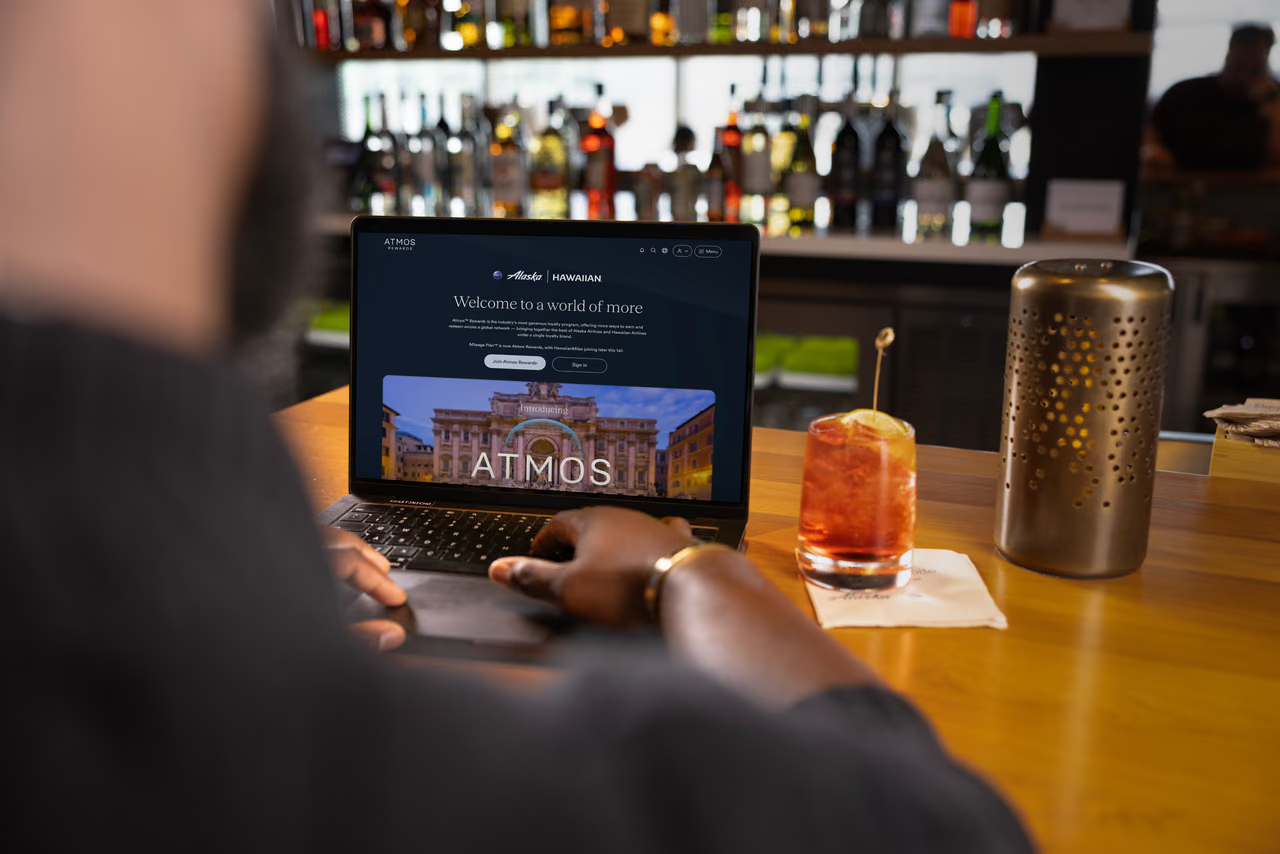
Atmos Rewards is the loyalty program Alaska Airlines and Hawaiian Airlines share. You earn two things in it: redeemable points, which book award flights and other rewards and never expire, and status points, which decide your elite level and unlock milestone rewards along the way. Flying earns both, based on how far you fly and the fare you bought, and so do the Atmos credit cards and a long list of everyday partners.
This is the evergreen guide to how the program works: how you earn, what status gets you, and how to spend points well. For how the 2026 changes were first announced, see our early look at the Atmos Rewards 2026 changes. Everything below comes from Alaska's Atmos Rewards pages, its status points guide and its program terms, all read on September 29, 2026.
Atmos Rewards at a Glance
- Two currencies: redeemable points for rewards, and status points for elite status and milestones.
- Status levels: Atmos Silver at 20,000 status points, Gold at 40,000, Platinum at 80,000 and Titanium at 135,000, earned in a calendar year.
- Flight earning: a percentage of the nonstop distance flown, set by fare class, with a 500 point minimum on short Alaska and Hawaiian flights (except Saver fares).
- Award flights: from as few as 4,500 points, on Alaska, Hawaiian, oneworld airlines and other partners.
- Expiration: Alaska says points never expire.
Points Versus Status Points
This is the first thing to get straight, because Atmos treats them very differently. Alaska's status points guide puts it plainly: "Status points help you reach milestones and unlock higher status levels," while "redeemable points allow you to book award travel."
Most activities earn both, but at different rates. A Lyft ride, a hotel booked through Alaska or a purchase on an Atmos credit card each earns status points at its own published rate, separate from the redeemable points it earns.
Status points count toward the calendar year in which you did the activity, not the year they post. Alaska's example: if a partner records your transaction in 2026, those status points count toward 2026 "even if it posts in 2027."
Earning on Alaska and Hawaiian Flights
Flying is where most members earn the bulk of both currencies, and the rule is distance-based. Alaska's terms say members earn points "based upon a percentage of the nonstop mileage between the origin and destination cities," with the percentage set by your fare class.
A few details make a real difference:
Each flight number counts separately. If you connect and change flight numbers, you earn for each segment. A direct flight with a stop but the same flight number counts as one segment, based on origin and destination.
Short flights earn at least 500 points. Alaska and Hawaiian flights under 500 miles earn a 500 point minimum, except on Saver fares (booked in X class).
Fare bonuses follow what you paid, not where you sat. The terms say class-of-service bonus points are credited "according to the original fare paid, not the cabin flown." A complimentary First Class upgrade doesn't earn the First Class bonus, and neither does a paid upgrade after booking.
Put your Atmos number on the booking. Your Atmos Rewards number has to be in the reservation before you use status benefits like upgrades on that flight.
Earning on Partner Airlines
Atmos members can earn on Alaska and Hawaiian's 30+ airline partners, including the oneworld alliance. The status points guide says what you earn "depends on the airline partner, where you booked your flight, and the fare class of your ticket." Some partners only award status points when you book through Alaska, so check the partner's page before you book.
Two more airlines are on the way. Alaska's airline partners page, read October 3, 2026, lists Air Rarotonga and Air Tahiti (a different airline from Air Tahiti Nui, already a partner) as coming soon.
Two rules catch people out. Award flights on partner airlines don't earn points, and your Atmos number has to be on the reservation with Atmos selected as the program the flight credits to. For partner flights to credit, the terms also say the partner's two-letter airline code must come before the flight number on your ticket receipt or boarding pass, for example AA followed by the number.
Earning Status Points on the Ground
This is where Atmos gets interesting, and where I'd focus if you don't fly Alaska every week. Status points also come from spending, at these rates from Alaska's status points guide (effective January 1, 2026):
- Atmos Rewards Summit Visa Infinite card: 1 status point for every $2 in net purchases, with no cap.
- Atmos Rewards Ascent and Business cards, and the Hawaiian Airlines Mastercards: 1 status point for every $3 in net purchases, with no cap.
- Lyft: 1 status point per $1 of base fare.
- Stays, vacation packages, cruises and Avis or Budget rentals booked through Alaska or Hawaiian: 1 status point per $1 of the base rate.
- Atmos Rewards Shopping, Atmos Rewards Dining, CLEAR and Safeway: 1 status point for every 3 base points earned, with bonus points excluded.
Card fees, including annual fees, don't earn status points, and bonus spend categories don't earn extra status points. Card status points post within 4 to 6 weeks.
Say you put $40,000 a year on the Summit card. At 1 status point per $2, that's 20,000 status points from card spending alone, which is exactly Atmos Silver before you fly anywhere. Our guide to earning status with the Summit card runs that math at higher spend levels, and our Atmos Ascent review covers the lower-fee card.
Award Travel Earns Status Points Too
This one's easy to miss. The status points guide says award flights booked with Atmos points now count toward status: "one status point for every mile you fly," with no class of service bonus. You don't earn redeemable points on them, but the status points count. Alaska says the rate will depend on how you choose to earn later in 2026.
What Each Status Level Gets You
Here's what Alaska's benefits page lists for each level, all within a calendar-year qualifying period:
Atmos Silver (20,000 status points): 25% bonus points on every flight, including partners; complimentary upgrades to First and Premium Class when available; and complimentary preferred seating on Alaska, Hawaiian and American (not on Saver or Basic Economy).
Atmos Gold (40,000): 50% bonus points on flights, including partners; complimentary same-day flight changes on Main Cabin or First Class Alaska flights; and a complimentary premium drink or chocolate on board Alaska.
Atmos Platinum (80,000): 100% bonus points on every flight, including partners; and upgrades to Premium Class at the time of booking on all routes, excluding Saver fares.
Atmos Titanium (135,000): 150% bonus points on every flight; complimentary onboard meals on Alaska; the highest priority for complimentary upgrades; and, from spring 2026, global Business Class upgrades when available.
Alaska also says elite members get complimentary First Class upgrades on Alaska, Hawaiian and eligible American Airlines flights within North America, including Hawai'i, when available. If you already hold status with another airline, Alaska offers a status match you can apply for.
Milestones Between the Levels
Atmos pays you along the way, not just at each tier. The benefits page lists milestone rewards at 10,000, 30,000, 55,000, 95,000, 125,000, 150,000, 200,000 and 250,000 status points.
Most milestones are a menu: you pick one perk at 10,000, 30,000 and 125,000, two perks at 55,000, 95,000 and 150,000, and two one-time perks at 200,000 and 250,000. At 10,000 the choices include 750 bonus points or one Wi-Fi pass, and at 30,000 they include 2,500 bonus points, a $25 flight discount or four Wi-Fi passes. The bigger ones add real value. At 55,000 you pick two from options including 5,000 bonus points, an Alaska Lounge day pass and two upgrade certificates. At 125,000 you pick one from options including 50,000 bonus points, a year of Alaska Lounge+ membership, unlimited Wi-Fi for a year or four upgrade certificates.
Upgrades, Saver Fares and Same-Day Changes
The upgrade rules are in the terms, and they're worth reading before you pick a fare. Complimentary First Class upgrades on Alaska are booked in U class and depend on availability. Saver fares (X class) are eligible for Premium Class and First Class upgrades on Alaska, but they go on the upgrade list 2 hours before departure.
Gold, Platinum and Titanium members get same-day confirmed flight change fees waived on Main or First Class fares on Alaska-operated flights, and the waiver covers everyone on the same reservation. Saver fares can't be changed at all.
Picking a Milestone Perk
One of the milestone choices is double points with non-air partners. The terms say it doubles your points, up to 2,000 bonus points, on qualifying hotel, cruise, car rental, rideshare and everyday transactions for 6 months from the day you pick it. Points from the Atmos credit cards and from transfer partners like Bilt don't count toward it, and the bonus points don't count as status points.
How to Spend Your Points
Alaska's redeem page says you can "use as few as 4,500 points to book flights." Award tickets can be booked online on Alaska, Hawaiian and partners, and the airline partners page explains how to book each one.
The terms have three rules worth knowing before you redeem. First, prices are set when you book: "The number of points needed for an award is determined at the time of redemption, not accrual."
Second, changes are free: "No service fees apply to replace, extend, or exchange award tickets, and to redeposit points into the member's account." Partner award booking fees are the exception, and they aren't refunded if you cancel. Third, Saver fares are rigid, since Alaska's terms say no changes are permitted on them.
One more rule from the terms applies to every balance: changes to Atmos Rewards, including award levels, "apply regardless of when points were earned." In other words, points you're saving are priced at whatever the award costs when you book. The terms also say Alaska would give 180 days' notice before ending the program, and you can see 24 months of account activity online.
Beyond flights, you can book hotels and vacation rentals through Stays by Alaska Vacations, where Alaska says cardholders get exclusive redemption rates and prices are dynamic. Point redemptions on car rentals are temporarily unavailable. You can also buy, share or gift points, and spend them on concerts, sports and other experiences through Atmos Rewards Unlocked.
Unlocked has three newer partners, added in Alaska's October 7, 2026 release. Through Alterra Mountain Company and the Ikon Pass, members will be able to redeem this season for 26/27 Ikon Pass bundles, a CMH heli-skiing package and Steamboat Ski Resort stay-and-ski offers. Nordstrom offers private holiday shopping at its stores in seven markets, including Seattle, Portland, Honolulu, Los Angeles and New York City. At Pebble Beach Resorts, Alaska lists planned stay-and-play packages, hosted golf experiences, and culinary and resort packages.
One thing you can't do: Alaska says upgrades "are currently not available for purchase with points." You'd redeem for a First Class ticket instead, or pay cash for an upgrade.
Other Ways Points Come In
You don't have to fly or swipe to build a balance. The terms mention points arriving from transfer partners, including Bilt and hotel programs, and Alaska's redeem page lets you buy points or have them shared or gifted to you. If you're a Bilt member, our Bilt transfer partners guide covers how that transfer works.
If you had a HawaiianMiles account, Alaska's program page says HawaiianMiles "has become Atmos Rewards." Our HawaiianMiles review walks through what happened to those balances.
The Wi-Fi Perk
Atmos members get free Starlink Wi-Fi on Alaska and Hawaiian flights as it rolls out through 2026, in partnership with T-Mobile. Alaska says it's "free for Atmos Rewards members on Alaska and Hawaiian flights."
Where I'd Start
If you fly Alaska or Hawaiian a few times a year, join free and put your number on every booking, including award trips, which now earn status points. That alone can get you to the first milestone.
If you want status without living on planes, the Summit card is the lever: its 1 status point per $2 is the best status rate of the Atmos credit cards. Pair it with Lyft and hotel stays booked through Alaska, and Silver is realistic from spending alone.
And if you already hold status elsewhere, apply for the status match before you pay for anything. Then use your points on the award that's cheapest in points for the trip you actually want, knowing you can cancel it for free if plans change.
Atmos Is Changing How You Earn
Alaska announced a set of changes to Atmos Rewards on September 29, 2026. The sections above describe the program as it works today, and this is what's coming.
You'll choose how you earn. From January 1, 2027, points on Alaska, Hawaiian and partner flights come from one of three bases you pick: 1 point per mile flown, 5 points per dollar spent excluding taxes and fees, or 500 points per segment flown. Alaska's Choose How to Earn fact sheet, linked from its release, gives those rates.
Enrollment opens October 1, 2026, and you can change the choice once per calendar year for future travel. Choosing is optional. Current members who don't pick keep earning on distance traveled, and members who join on or after January 1, 2027 start on price paid. Earning from credit cards and other partners stays as it is today.
Six Communities open October 1, 2026: Global Locals, Families on the Go, Culinary Journeys, Active Escapes, Club 49 and Huakaʻi by Hawaiian. Alaska describes the benefits across them as free bags, exclusive flight deals, bonus-point challenges, partner offers and 20% off select Atmos Rewards Unlocked experiences, with award-flight discounts for children under Families on the Go.
A debit card is planned for early 2027, with pre-registration open now. Alaska says it earns Atmos Rewards points and status points, carries no foreign transaction fees, and lets members pay certain account fees with points.
Bank of America points will transfer in during 2027. Alaska says eligible Bank of America card products will be able to transfer into Atmos Rewards, and that other select global financial institutions will follow over time.
Other dates Alaska gives: Premium Class companion benefits for Platinum and Titanium members on November 2, 2026, and a refreshed Atmos Rewards Visa Business Card from Bank of America in late 2026.
Our full write-up is in Alaska is letting Atmos members choose how they earn.
Updated October 7, 2026: Atmos Rewards Unlocked partners.